Tag: grow

  • How to Grow 4C Hair Faster and Longer

    How to Grow 4C Hair Faster and Longer

    Many online guides suggest tight, cotton sheets aid hair growth. Rough pillowcases, however, often create friction, leading to brittle, broken strands. Hair needs a supportive environment, not one that pulls at delicate coils. Silky satin bonnets or smooth silk pillowcases reduce snagging, preserving precious length. A consistent moisture regimen also prevents dry, fragile kinks from snapping. The practices collectively cultivate a robust foundation, allowing 4c hair to flourish. Each strategy below offers a tangible step for growing 4c hair faster and longer.

    1. Gentle Detangling Method
    Gentle Detangling Method

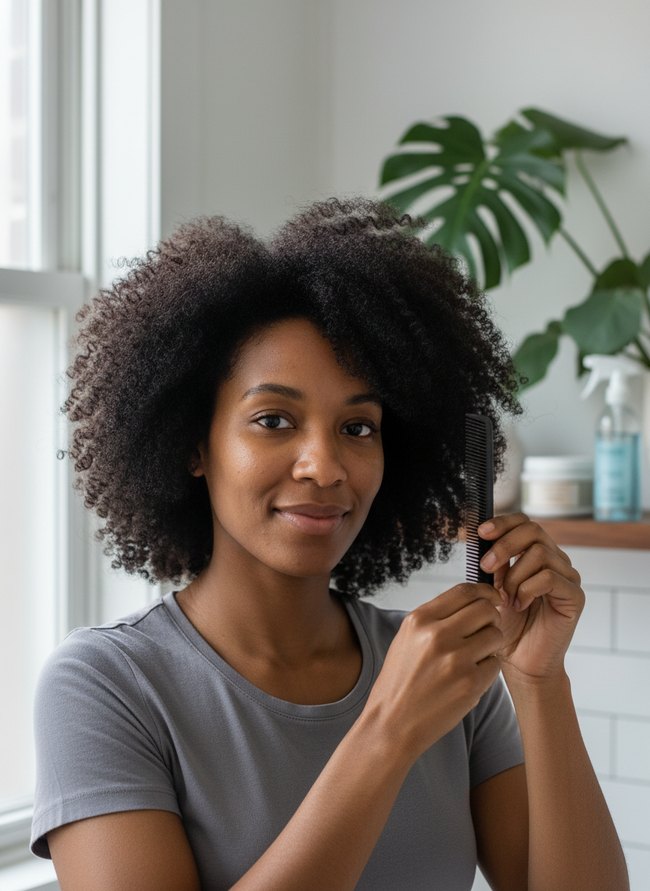
    A wide-tooth plastic comb held by a woman with dark, curly hair shows the beginning of a gentle detangling method. Her natural 4c hair curls softly around her face, suggesting a healthy styling routine. A large green monstera plant and white subway tiles form a clean, bright background. Choose a wide-tooth comb for easy detangling.

    2. Moisture Retention Routine
    Moisture Retention Routine

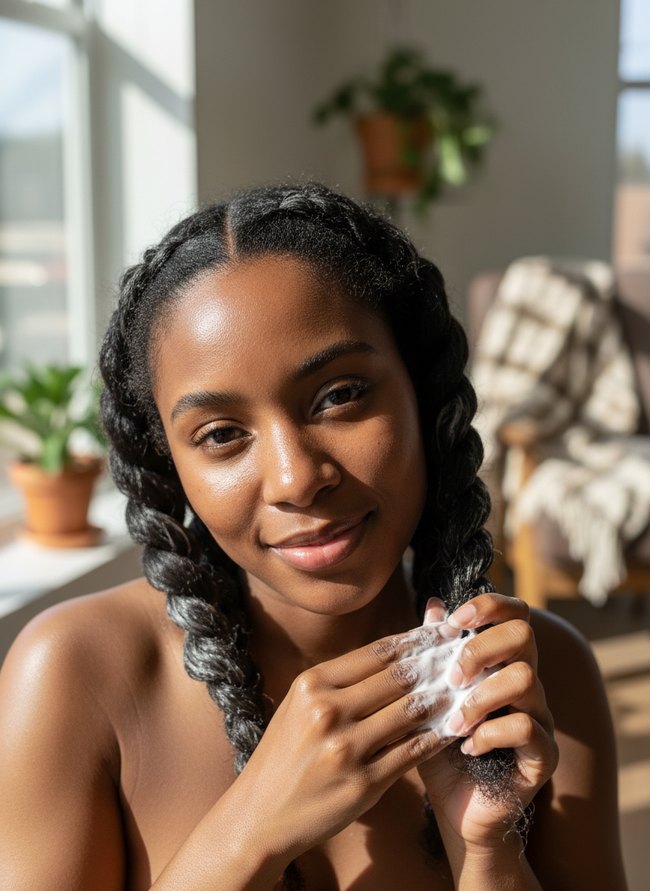
    The stylist applies white foamy product directly to the dark twisted braids, ensuring each hair strand receives deep conditioning. Direct application delivers moisture to the entire hair length, supporting healthy growth for 4c hair. The woman’s skin glows in natural light, showcasing proper hair care. You can steal the move of direct product application to braided hair for maximum moisture.

    3. Scalp Massage Stimulation

    Scalp Massage Stimulation

    The woman’s hands apply gentle pressure to her temples, stimulating blood flow. Her dark, textured hair shows healthy volume and curl definition. A small terracotta pot holding a green plant sits blurred in the background, adding a natural touch. Regular scalp massage stimulates growth.

    4. Protective Styling Technique

    Protective Styling Technique

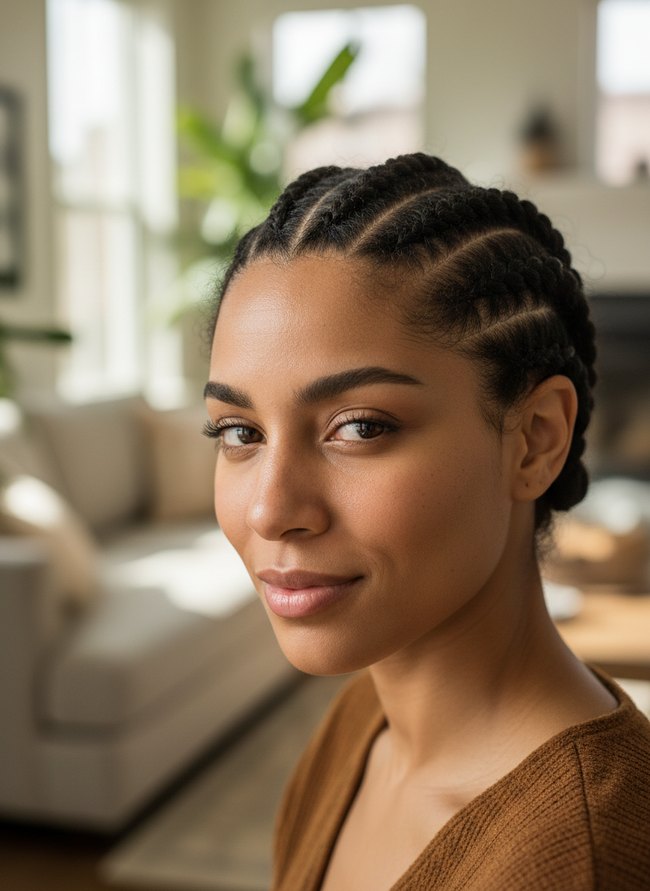
    A large braided bun piled high on the crown provides excellent protection for fragile hair ends. The styling choice works well because the bun keeps delicate 4c hair tucked away from daily friction and manipulation. Small cornrows anchor the braids securely, while a cream knitted sweater adds a soft background element. The move to steal from this look is the high, protective bun.

    5. Deep Conditioning Treatment
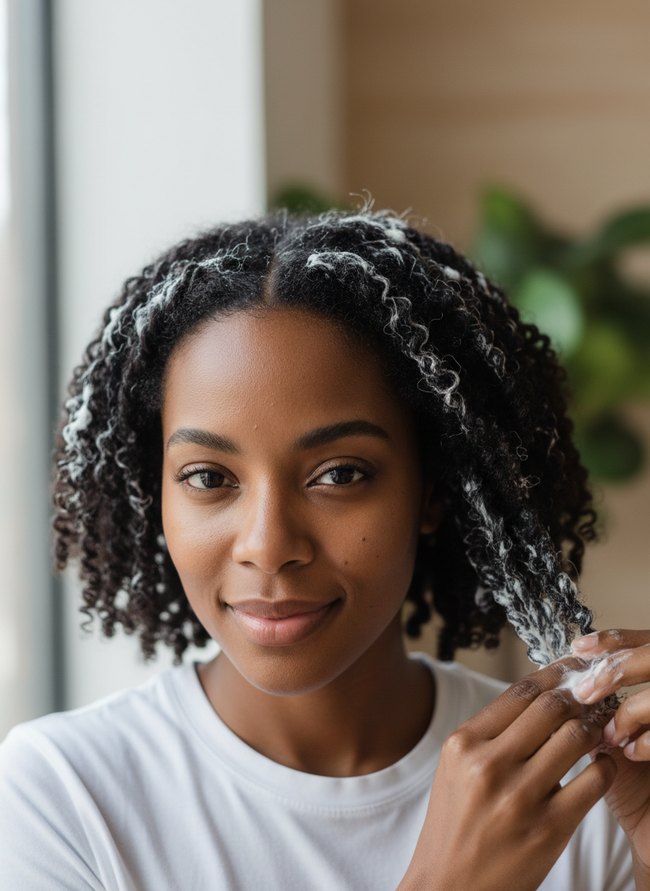
    Deep Conditioning Treatment

    The deep conditioning treatment shows a thick white product applied to dark hair strands. The generous application ensures every curl receives rich moisture, a key step for how to grow 4c hair. The woman’s fingers gently work the product through a small section of her textured hair. The move worth stealing is the thorough, section-by-section product application.

    6. Low Manipulation Strategy

    Low Manipulation Strategy

    Loose, defined curls fall around the face, showcasing the soft texture of 4c hair. The styling choice minimizes daily handling, allowing hair to grow without constant disturbance or breakage. A simple center part and the natural volume of the curls further contribute to the low manipulation look. The move to steal from this entry is to highlight natural curl definition.

    7. Balanced Hydration Regimen
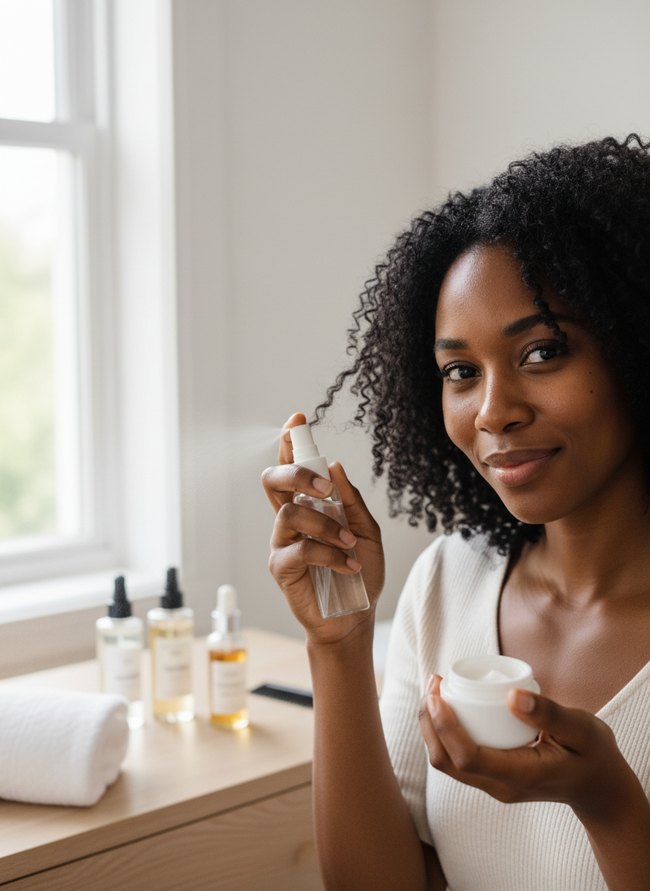
    Balanced Hydration Regimen

    A woman’s hand holds a clear spray bottle, misting her dark curly hair with fine droplets. The direct application method ensures moisture penetrates deep into 4c hair strands, preventing dryness and breakage. Various amber and clear bottles of hair oil sit on the light wood dresser, ready for further conditioning. A spray bottle offers balanced hydration.

    8. Trim Split Ends
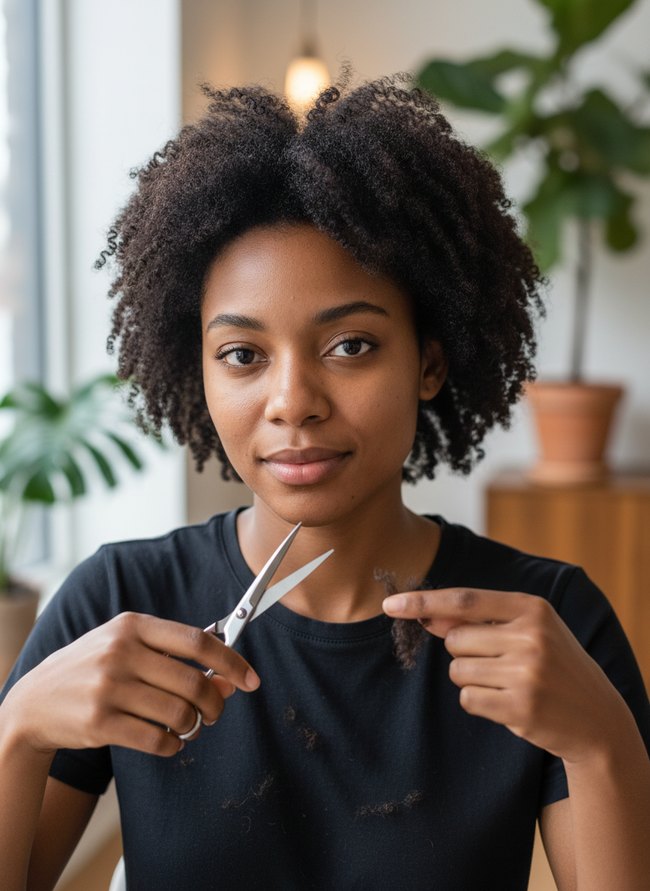
    Trim Split Ends

    A woman holds small silver scissors, ready to trim her dark, coiled hair, demonstrating how to grow 4c hair effectively. Her black crew-neck shirt shows several small, brown hair clippings, indicating recent trimming work. A green potted plant and a light wooden cabinet sit softly blurred in the background. The clear focus on the hair trimming technique is a smart move worth stealing.

    9. Nutrient-Rich Hair Mask
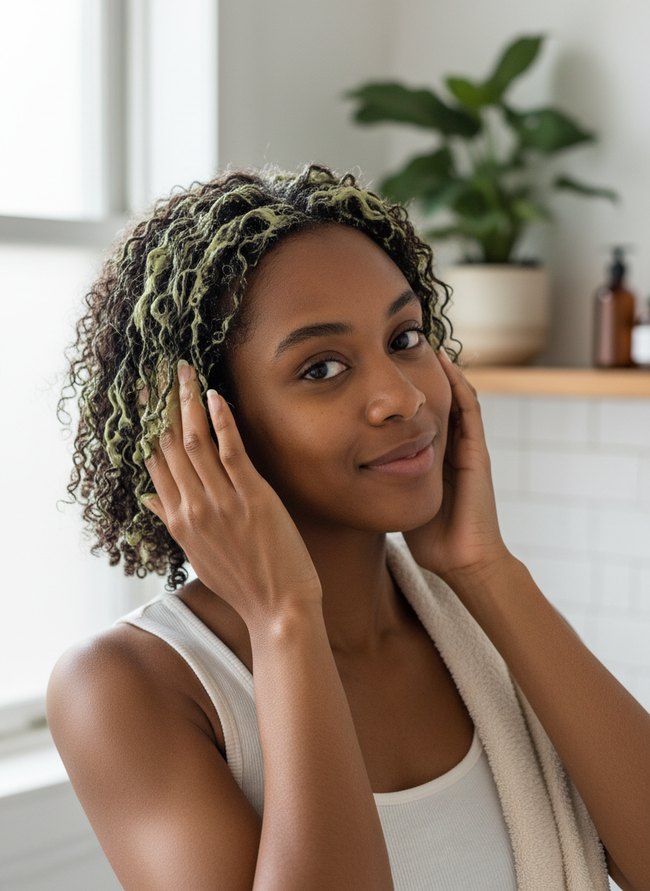
    Nutrient-Rich Hair Mask

    The model’s rich, dark 4c hair showcases a vibrant green hair mask, highlighting the product’s thick texture. Her brown fingers gently press the curls, demonstrating proper application technique for the nutrient-rich mask. A small white plant pot holding a green plant sits on a wooden shelf behind her, providing a natural, fresh background element. Directly apply the mask with your hands.

    10. Silk Scarf Protection

    Silk Scarf Protection

    A green silk turban protects her curly 4c hair, keeping the strands safe from friction. The smooth, shiny fabric minimizes breakage and frizz, promoting healthy growth for the hair. Her matching emerald blouse completes a stylish, protective look. Consider wearing a silk turban to grow 4c hair.

    11. Nighttime Hair Wrapping

    Nighttime Hair Wrapping

    A patterned silk scarf protects the dark 4c hair, holding the curly strands gently in place. The technique prevents friction damage overnight, a key step to growing 4c hair. A light tan wooden nightstand with two silver books sits nearby. The smooth fabric scarf protects delicate hair.

    12. Pre-Poo Application
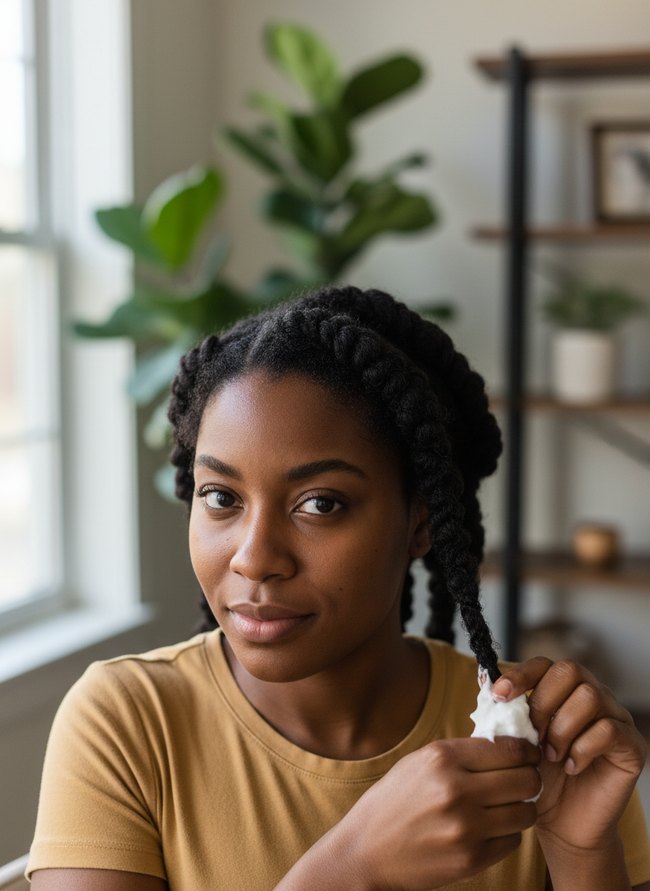
    Pre-Poo Application

    The stylist demonstrates pre-poo application by twisting a section of dark hair, coated in white product. The close-up view clearly shows the 4c hair’s texture, highlighting proper care. A large green plant and a dark wooden shelf provide a soft background. Focusing on product application before washing is a smart move.

    Evaluating the Efficacy of Tension-Free Styling on Follicle Elongation Rates in High-Porosity 4C Strands

    Low tension styling directly supports robust 4C hair growth. Tight braids, pulled back from your scalp, stress individual hair roots. Many stylists mistakenly believe a tight grip makes styles last longer. Your hair follicles, however, respond poorly to constant pulling. Loose twists, for instance, allow each strand a gentle, unhindered elongation pathway. Another common error involves applying strong elastic bands too close to the scalp. Elastic bands compress the fragile hair shaft, hindering its natural expansion. Conversely, using soft silk scrunchies leaves ample room around the hair base. Silk scrunchies prevent friction and unnecessary pressure points on delicate new growth. Gentle manipulation also reduces breakage along the dark, coiled strands. Breakage removes length from the visible hair, masking true growth. Applying a light, oil-based leave-in conditioner before styling further protects the hair’s outer cuticle. This conditioning step creates a slick surface, decreasing friction during detangling. For maximum length retention, consistently choose styles that respect the hair’s natural, springy texture.

    Quantifying the Permeability Flux and Retention Characteristics of Humectant-Rich Conditioners on the 4C Cuticle Layer

    Moisture retention drives 4c hair growth. Many hair strands exhibit a tight, zig-zag pattern, making natural oils struggle to travel down the entire length of each single fiber. Your scalp produces sebum, a natural golden oil, at the root of every hair. A thick cream conditioner helps this natural moisture travel along the coarse strands. Some people mistakenly believe any conditioner works, but thin liquids drip off the dark hair shaft without much benefit. A rich conditioner with humectants, like honey or agave nectar, draws water from the humid air into the hair’s outer cuticle. These tiny water molecules then get trapped inside the hair, keeping the strand supple and strong. Overly dry hair snaps easily, reducing visible length. Consistent use of a heavy, moisturizing product maintains the hair’s elasticity, preventing breakage and allowing those delicate dark curls to grow longer.

    Which Idea Will You Try First?

    That’s 12 different takes on how to grow 4c hair. The best ideas above are usually the smallest moves — one material, one layout shift, one piece of furniture in the right place. Pick whichever room feels closest to your space and start there before tackling the rest.

    Found an idea worth keeping? Save this post to your Pinterest board so it’s waiting for you when you’re ready to start your own project.


  • How to Grow Out a TWA Without Losing Style

    How to Grow Out a TWA Without Losing Style

    Your fresh TWA haircut feels freeing, a short, neat look with clean lines. The dark curls define your face, making your eyes pop. A few months pass, and the short coils start to stretch, turning into a puffy cloud. The in-between stage often makes people want to cut hair off again, back to that tiny cropped style. Many women struggle with frizzy hair texture, feeling frustrated with its shapeless form. You can keep your cool style during this transition phase; a detailed plan for growing out a TWA makes all the difference. The guide offers practical steps and helpful tips, showing you how to grow out the cut gracefully, maintaining your unique flair at every length.

    1. Defined Curl Elongation Method

    Defined Curl Elongation Method

    Tight dark curls frame the woman’s face, showing a soft, rounded shape for growing out a TWA. A broad smile brightens her face, showing off her even white teeth. The natural curl pattern offers a simple, stylish look for growing out short hair.

    2. Braided Transition Style

    Braided Transition Style

    The model’s short dark hair shows a tightly coiled texture, showcasing a neat rounded crown. Her clean-cut hairline frames a confident face, allowing a TWA to grow out with natural beauty. The style demonstrates how to maintain a polished look while hair increases in length.

    3. Twist Out Mid-Length

    Twist Out Mid-Length

    Dark hair twists frame the woman’s face, creating a soft, rounded shape around her cheeks. The mid-length style reaches just past her shoulders, giving growing hair a full, bouncy look. The cropped top allows for easy styling while you grow out a TWA.

    4. Protective Cornrow Foundation

    Protective Cornrow Foundation

    Dark cornrow braids sweep back from your forehead, creating neat sections across your scalp. The long protective rows keep your hair tucked away, allowing you to grow out a TWA with minimal manipulation. The style offers excellent protection for delicate new growth.

    5. Bantu Knot Stretch

    Bantu Knot Stretch

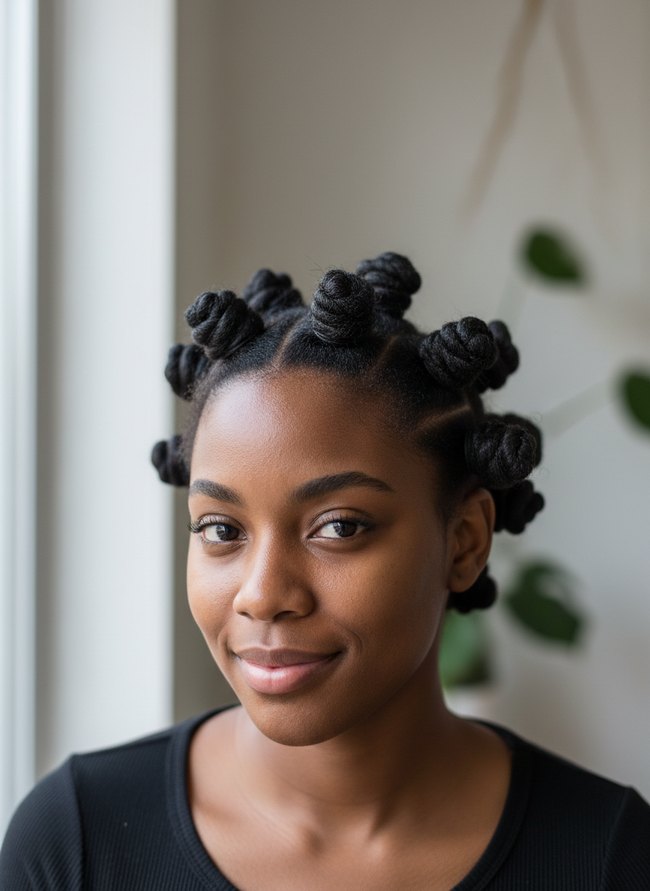
    Black Bantu knots coil tightly on the scalp, offering a neat, protective style for growing hair. Dark hair sections twist and pin, creating small, round buns across the crown. The method keeps hair stretched and safe during the grow-out process.

    6. Rod Set Elongated Curls

    Rod Set Elongated Curls

    Dark, springy curls frame the woman’s face, creating a soft, rounded shape around her head. Hair shows a uniform length, suggesting recent growth from a shorter style. The cropped top provides a stylish way to grow out a TWA.

    7. Headband Updo Growth

    Headband Updo Growth

    A dark brown patterned headband holds back the hair above the forehead, creating a neat frame for the face. Soft, dark curls gather in a high puff above the headband, keeping the growing TWA neatly contained. The style offers a simple way to manage your growing hair with ease.

    8. Finger Coil Definition

    Finger Coil Definition

    Dark finger coils create a defined, textured crown on the model’s head, showing off a stylish way to grow out a TWA. The tiny, tight curls maintain a neat, uniform appearance. The style allows you to keep a polished, intentional look during your hair growth journey.

    9. Crochet Braid Integration

    Crochet Braid Integration

    Dark brown crochet braids fall around the woman’s shoulders, framing her face with soft curls. A light tan t-shirt covers her upper body, providing a neutral backdrop for the rich texture of her hair. Crochet braids offer a simple way to grow out a TWA, giving instant length and volume.

    10. Sleek Ponytail Adapt

    Sleek Ponytail Adapt

    Dark curly hair sweeps back from the face, forming a low, neat ponytail with springy coils. The sleek style keeps short hair contained as you grow out a TWA, showing off your facial features. A polished ponytail is a fantastic option for managing hair length during the grow-out phase.

    11. Silk Scarf Wrap

    Silk Scarf Wrap

    A dark teal and deep gold patterned silk scarf wraps smoothly around the model’s head, covering her short natural hair and creating a chic, polished silhouette. The soft fabric forms a neat, round knot at the front, offering a stylish way to protect coils while growing out a TWA. Golden teardrop earrings dangle near her jawline, adding a bright accent.

    12. Low Manipulative Bun

    Low Manipulative Bun

    A sleek low bun gathers the model’s dark hair at the nape of her neck, offering a gentle way to grow out a TWA. The simple style keeps hair off the face, presenting a clean profile. The bun protects delicate ends from daily friction.

    Beyond the Basics: Customizing Your Moisturizing Routine for Different Hair Porosities

    Then, understanding your hair’s porosity truly changes everything for moisture. Low porosity hair needs lighter liquids that won’t just sit on the shaft. Warm water opens those tight cuticles, allowing your conditioner to actually sink in. Deep conditioners with honey or aloe vera draw moisture inside the strand. High porosity hair, with its open cuticles, drinks up thicker creams. Shea butter or avocado oil creates a substantial barrier. These heavier products seal in moisture, stopping quick evaporation. Normal porosity hair enjoys a balanced approach. A lightweight leave-in conditioner followed by a light oil keeps the hair hydrated without weighing it down. You avoid product buildup, which clogs the scalp. That clogging slows healthy hair growth. Many people believe all hair needs heavy oils. However, those thick oils can block moisture from entering low porosity strands. Your hair becomes dry and brittle, despite all your effort. Light, water-based products are your friends for low porosity. They penetrate the hair shaft, delivering true hydration.

    The Silent Saboteurs: Identifying and Eliminating Common Growth Stalling Habits You Didn’t Know You Had

    But your old fluffy towel works against you. Many people dry their hair with standard cotton towels, not realizing the coarse loops snag tiny strands. Instead, use an old cotton t-shirt for hair drying; the smooth fabric glides over delicate new growth. Another habit involves brushing wet hair from the scalp downward. Wet hair stretches like a rubber band. This practice breaks hair at its weakest point. Always detangle your damp hair starting at the ends, working your way up with a wide-tooth comb. Finger detangling offers even more gentleness for fragile curls. Your hands feel the knots directly. Conditioner helps knots slip apart. Over-styling also causes problems. Frequent tight ponytails or buns pull on the hairline. These styles create tension along your delicate edges, leading to breakage. Give your hair a break with looser styles or protective looks. A satin pillowcase is another small change with big impact. Cotton pillowcases absorb moisture and create friction. Satin keeps your hair hydrated and smooth through the night. Small changes yield big results for your hair journey.

    Which Idea Will You Try First?

    That’s 12 different takes on how to grow out a twa. The best ideas above are usually the smallest moves — one material, one layout shift, one piece of furniture in the right place. Pick whichever room feels closest to your space and start there before tackling the rest.

    Found an idea worth keeping? Save this post to your Pinterest board so it’s waiting for you when you’re ready to start your own project.