Many wig wearers focus solely on styling, overlooking critical long-term maintenance. Your synthetic wig, with its plastic fibers, needs consistent, gentle cleaning and structured storage to maintain its soft texture and intended shape. A natural hair wig, woven from human strands, requires specific moisture treatments to prevent dry brittle ends. Proper wig care extends the life of your hairpiece, keeping its fibers vibrant and its cap snug. Preserving the integrity of the wig cap and hair strands means fewer replacements and more confident wearings. The guide demonstrates practical steps for diligent upkeep.
1. Gentle Detangling Method
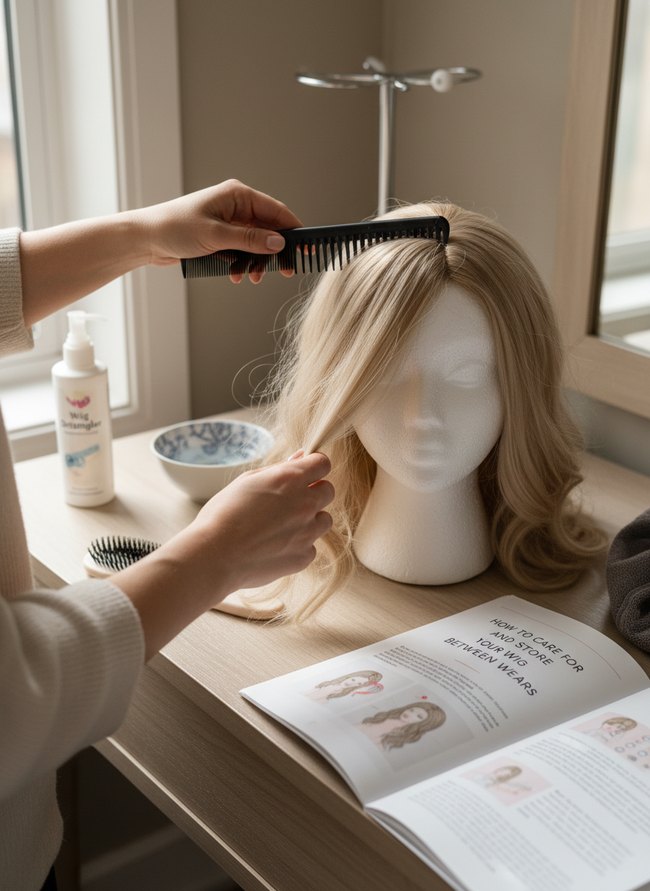
Gentle combing of the blonde wig on a white foam head shows proper detangling technique. Hands carefully separate golden hair strands, preventing snags and damage. A small white bowl with a blue pattern, a wooden paddle brush, and a white bottle of wig detangler sit on the light brown wooden desktop. Always detangle the wig carefully with small sections.
2. Deep Conditioning Treatment
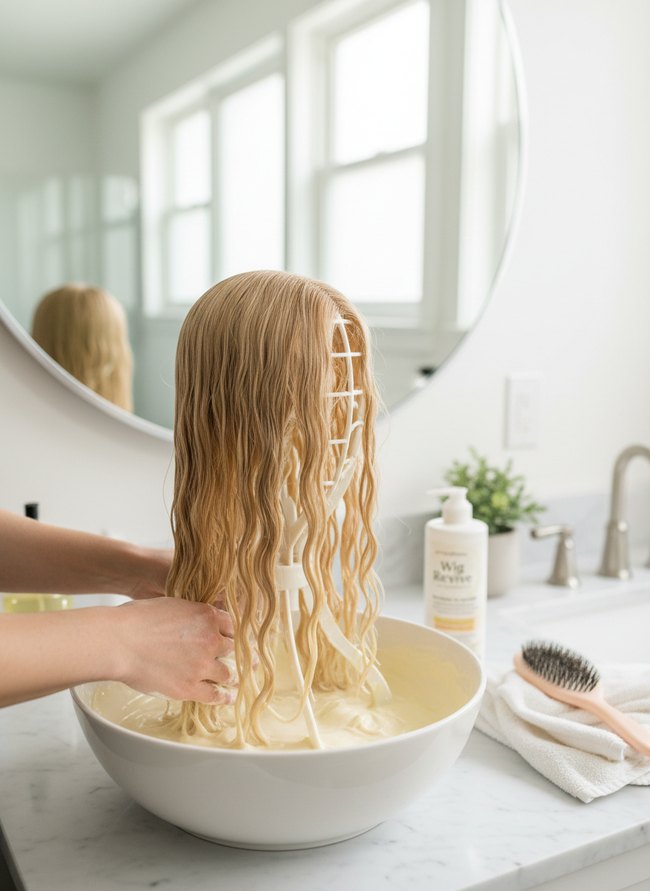
The blonde wig, placed on a white plastic stand, receives a deep conditioning treatment in a wide white bowl. Two hands gently submerge the light hair into the pale yellow liquid. A white pump bottle of “Wig Revive” sits on the white marble countertop, suggesting specialized care for the wig. Always use proper products to care for a wig.
3. Washing Wig Technique
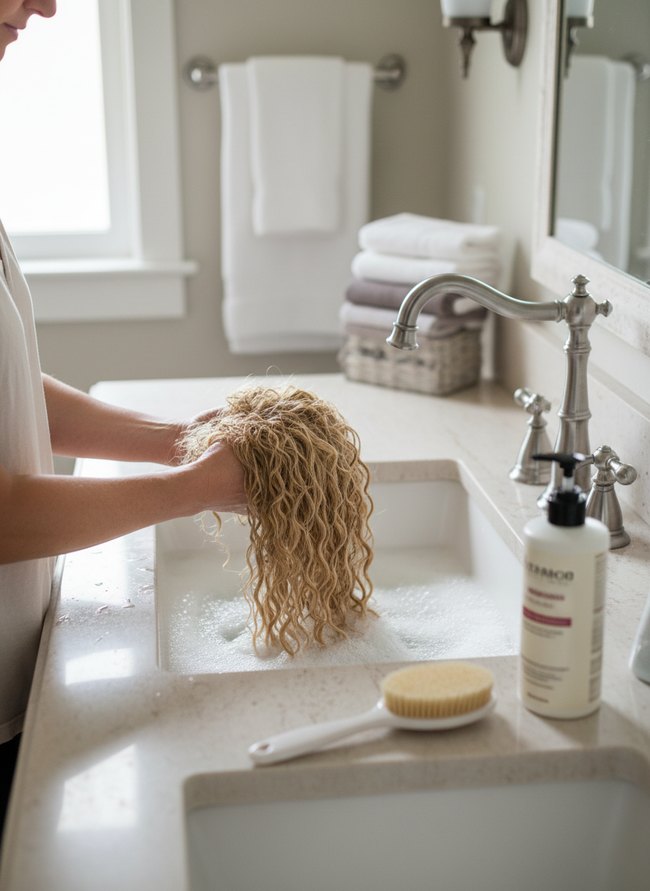
The blonde curly wig, submerged in soapy water, demonstrates proper washing technique. Careful handling prevents tangles and maintains the wig’s soft texture, extending its useful life. The porcelain sink provides a clean, neutral backdrop for the task. Gentle submersion preserves the wig’s delicate fibers.
4. Air Drying Process
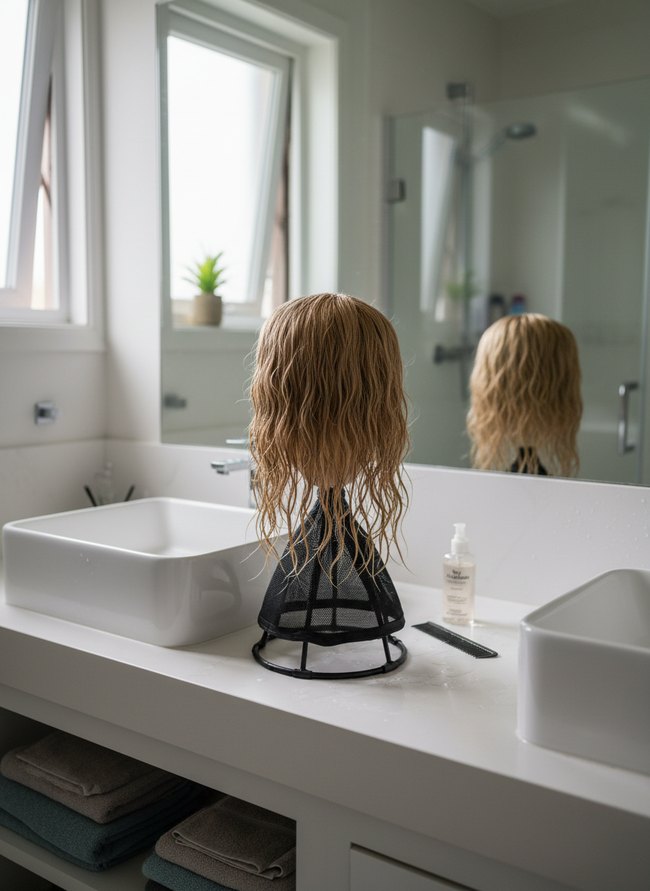
A black mesh wig stand holds a wet, shoulder-length blonde wig, allowing air to circulate freely around the damp fibers. The simple setup prevents mildew growth and helps the wig keep its shape while drying. A white rectangular sink sits nearby, ready for your next wig care session. You can copy the use of a breathable stand for proper air drying.
5. Secure Wig Storage
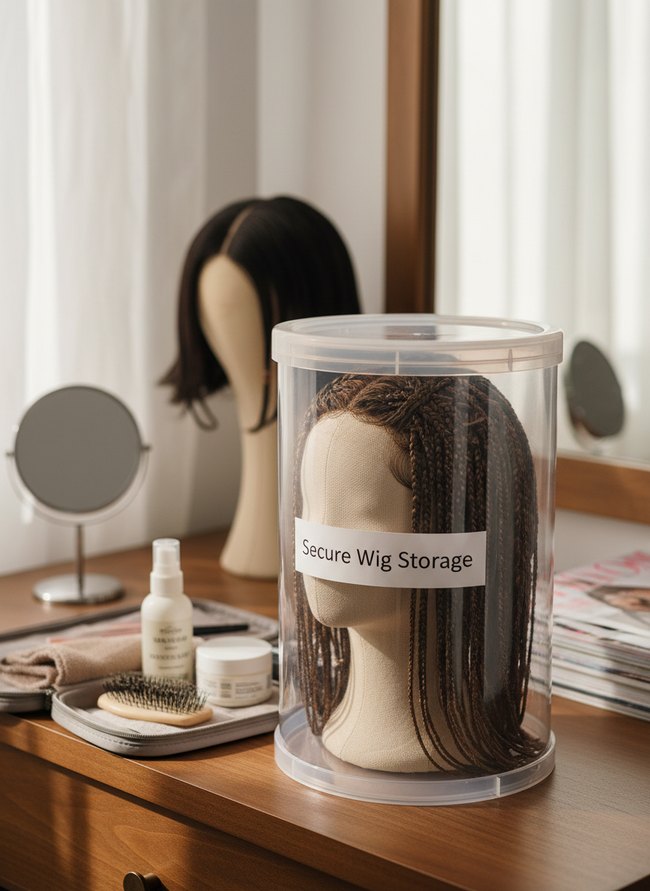
A clear plastic cylinder offers excellent protection for a wig on a canvas head. The clever enclosure keeps dust and environmental particles away from delicate hair fibers, preserving the wig’s clean condition. A second dark wig sits on a cream mannequin head in the background, showing more options for wig care. A small wooden brush and a white spray bottle nearby suggest daily maintenance tools. The transparent container provides visible, protected storage.
6. Styling Heat Protection
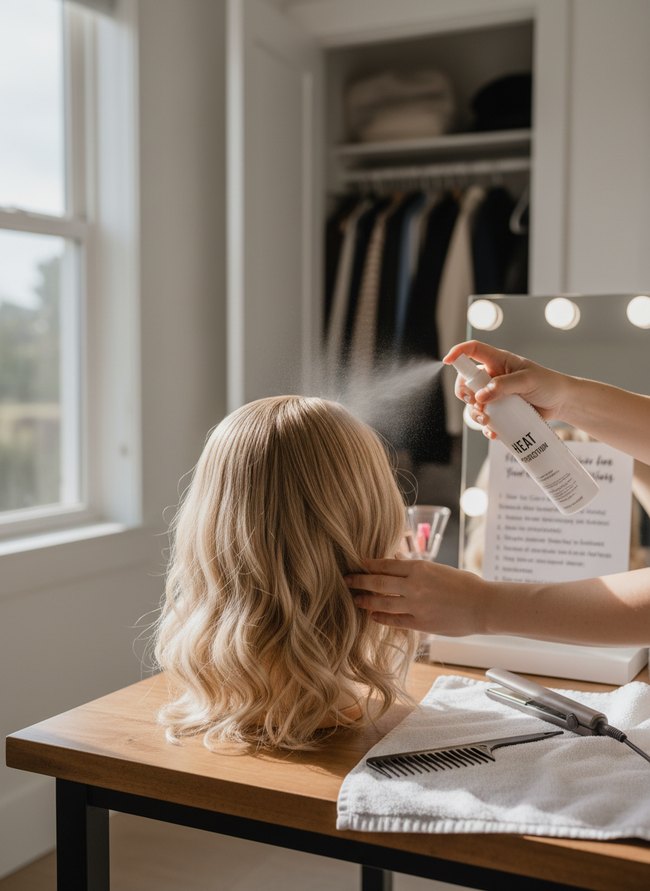
A stylist’s hands spray a white bottle of heat protectant over a blonde wig head. The important step shields delicate wig fibers from damage during hot tool styling. A black comb and a silver flat iron rest on a white towel, ready for use. Stylists apply heat protectant before styling.
7. Brushing Fiber Care
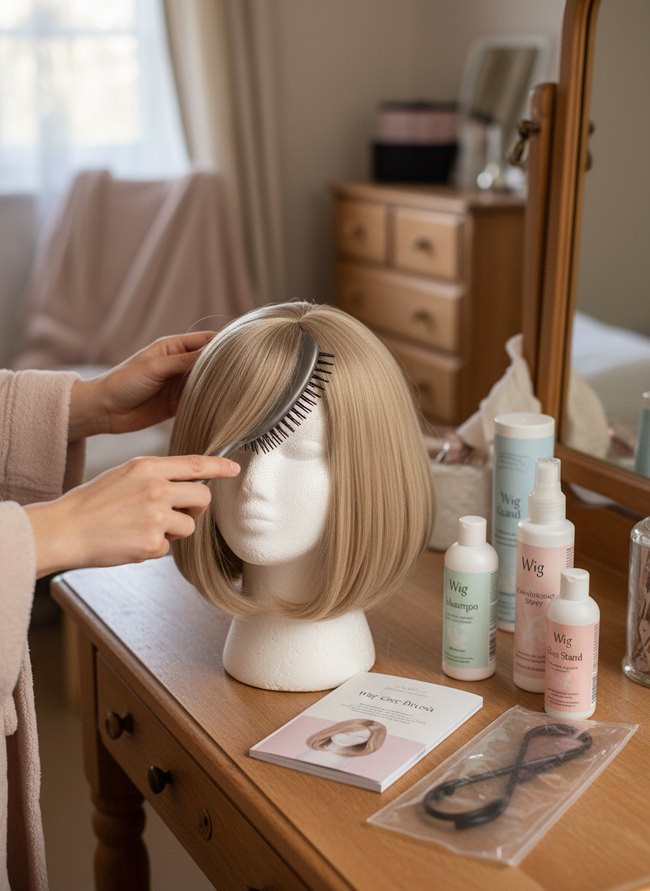
A white foam head holds a short blonde wig, ready for gentle brushing. Fingers guide a black-handled brush through the synthetic fibers, demonstrating wig care. Several labeled bottles of wig shampoo and conditioner stand nearby on the light brown wooden dresser. The gentle brush stroke is the move to steal.
8. Wig Stand Display
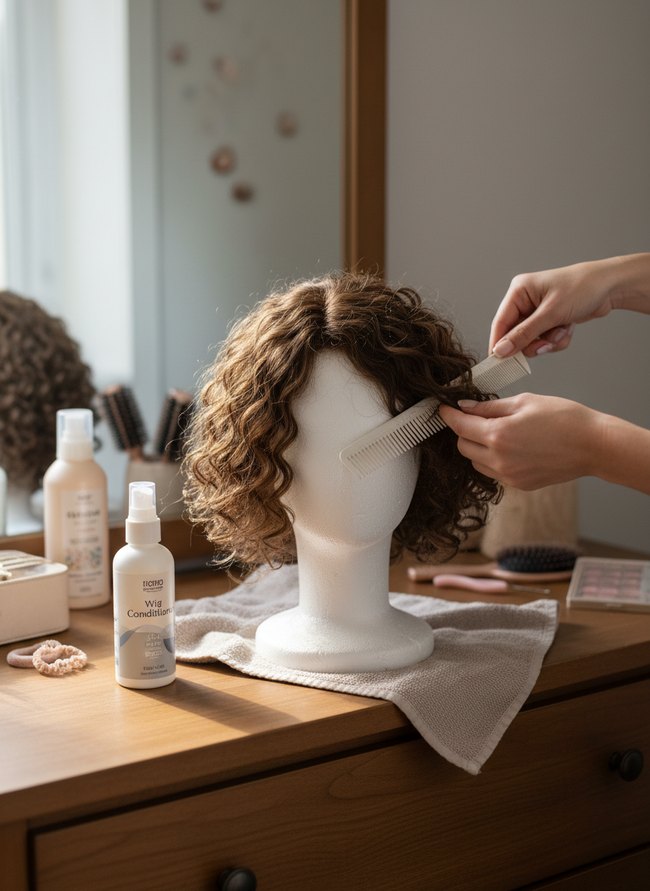
The foam wig head provides a stable, human-like form for styling. A light-brown towel protects the warm wooden dresser surface from stray products. Two plastic combs gently detangle the curly brown wig hair. The wig stand display offers a practical solution for wig care.
9. Travel Case Packing
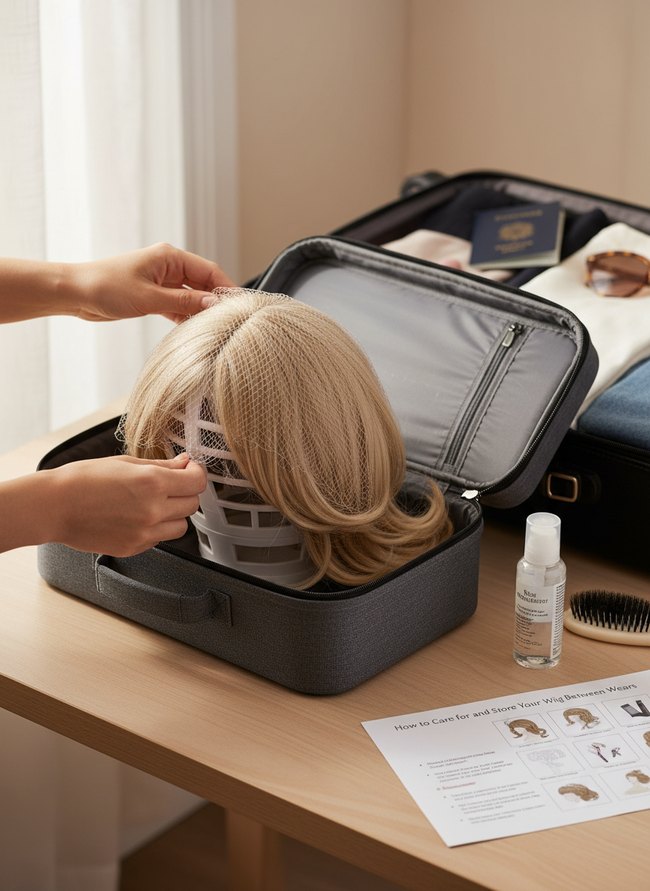
A mesh hairnet covers the blonde wig, keeping its soft curls neat inside a gray fabric travel case. The wig sits on a white plastic stand, preserving its shape and volume during transit. A small clear spray bottle and a light wooden brush lay on the honey-toned wooden table next to the case. Protect your wig’s style with a fine mesh net.
10. Lace Front Maintenance
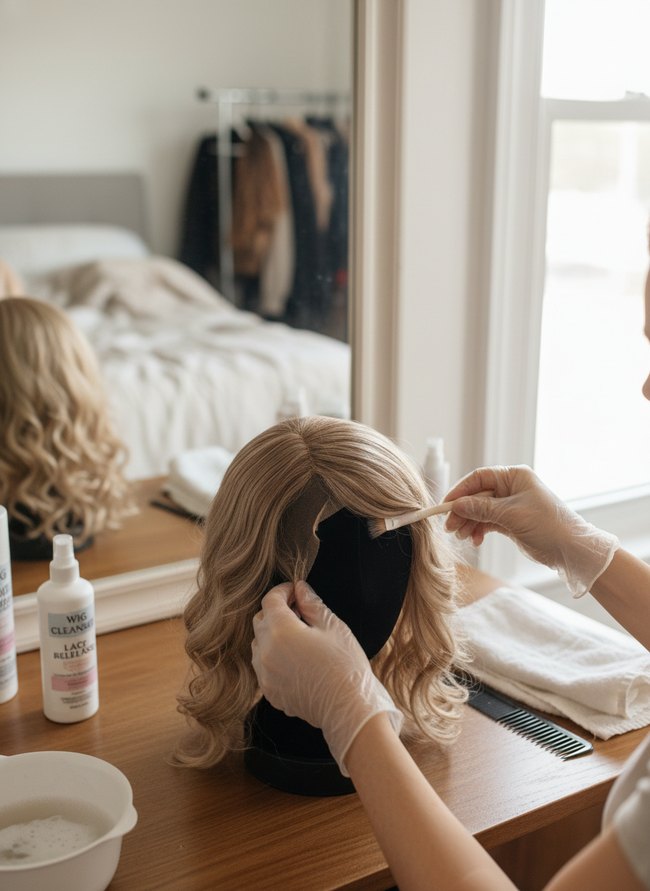
Clear plastic gloves keep hands clean and protect the blonde wig from oils. A small white brush applies product to the delicate lace front, ensuring even coverage. White bottles of wig cleanser sit ready for use on the warm wooden dresser. Protective gloves are useful when caring for a wig.
11. Synthetic Wig Refresh
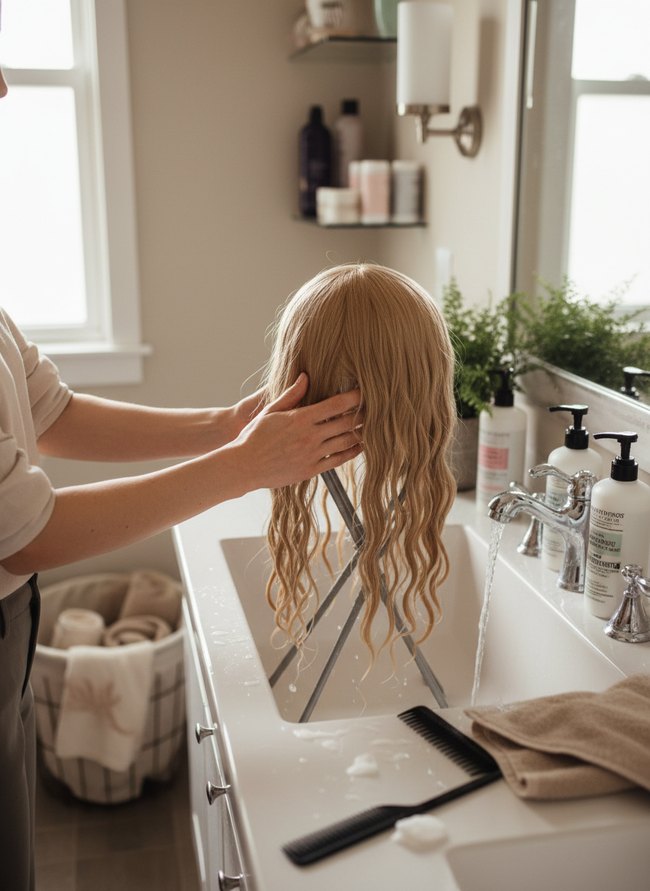
A person’s hands gently hold a light blonde wig over a white porcelain sink. The wig sits on a collapsible gray metal stand, allowing water to drain freely. Black plastic combs and a folded beige towel rest on the countertop nearby. A collapsible wig stand allows for easy washing.
12. Human Hair Restoration
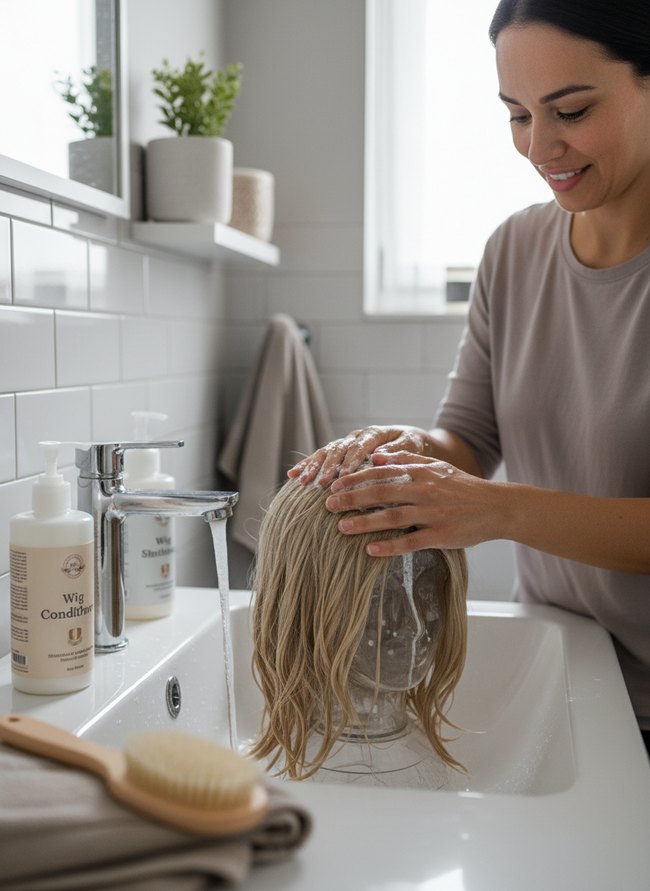
Washing a wig in a white bathroom sink provides a stable, accessible workspace for wig care. A wig stand holds the blonde wig securely during the sudsy cleaning process, preventing tangles. Bottles of wig conditioner and wig shampoo stand ready on the white ceramic counter. A wig stand enables mess-free wig cleaning.
Fiber Morphology and Its Implications for Detangling Efficacy
Fiber structure dictates wig detangling methods. A human hair wig has a rough, scaly cuticle layer. These tiny, overlapping scales on each strand make human hair strong but prone to tangling if not brushed properly. You must use a wide-tooth comb to gently work through wet human hair from the bottom up. Conversely, a synthetic wig features smooth, uniform plastic fibers. Synthetic strands lack the natural cuticle, which prevents deep knots but can build static electricity. A plastic brush with soft bristles works well on dry synthetic wigs, removing surface tangles without snagging the delicate plastic fibers. Brushing a dry human hair wig from the top down can cause breakage. Applying a conditioning spray before brushing either wig type helps reduce friction and makes detangling easier. Ignoring fiber type leads to damaged hair strands and a reduced wig lifespan.
The Physics of Thermal Degradation: A Guide to Heat Styling Thresholds
Synthetic wig fibers possess a low heat tolerance. A hot curling iron on a plastic hair strand quickly melts the material. Wig wearers often overlook this property, causing damage. Human hair wigs endure much higher temperatures without melting. Applying a 400-degree flat iron to delicate synthetic hair strands causes irreversible damage. This high heat warps the fine plastic fibers into a stiff, tangled mess. Cooler styling tools, like a 250-degree wand, protect your synthetic wig from degradation. You preserve the smooth texture and natural movement of the hair. Many individuals mistakenly treat all wig types the same, leading to poor outcomes. Understanding the different thermal limits for each wig fiber type prevents costly mistakes. A heat protectant spray adds a thin, clear barrier, slightly raising the wig’s tolerance. This protective layer helps the hair withstand gentle styling. You extend the lifespan of your beautiful wig with this small step.
Which Idea Will You Try First?
That’s 12 different takes on how to care for a wig. The best ideas above are usually the smallest moves — one material, one layout shift, one piece of furniture in the right place. Pick whichever room feels closest to your space and start there before tackling the rest.
Found an idea worth keeping? Save this post to your Pinterest board so it’s waiting for you when you’re ready to start your own project.