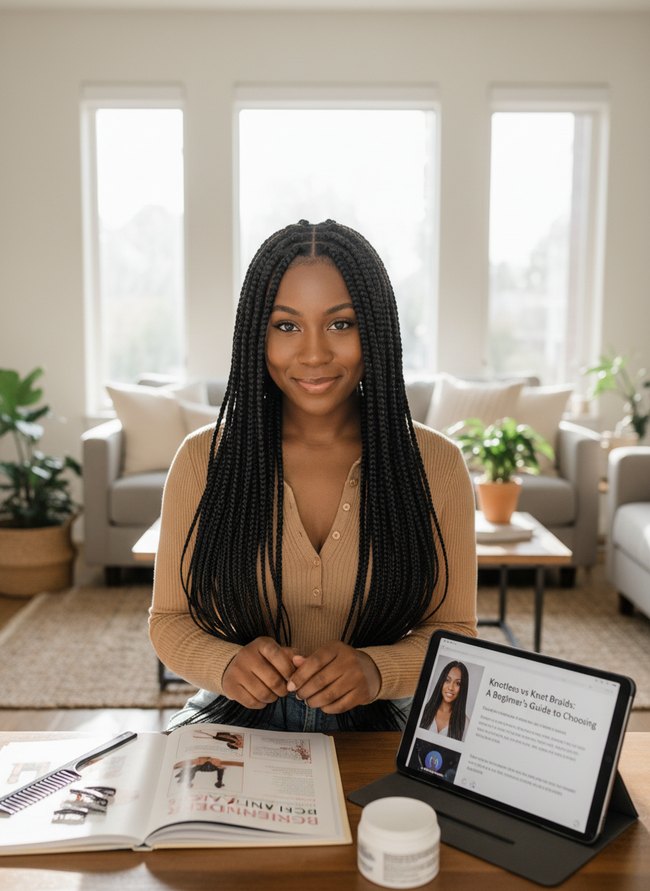
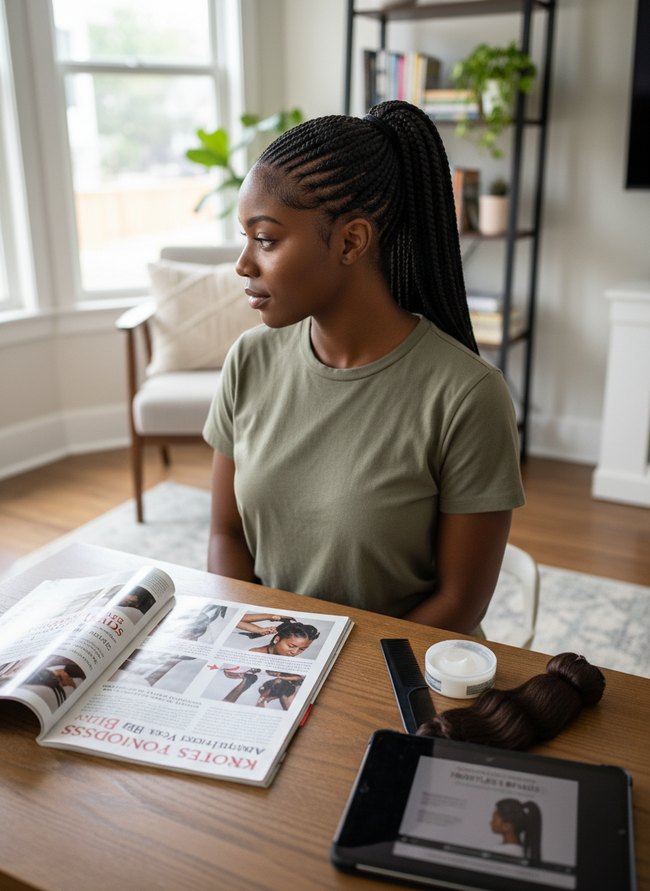
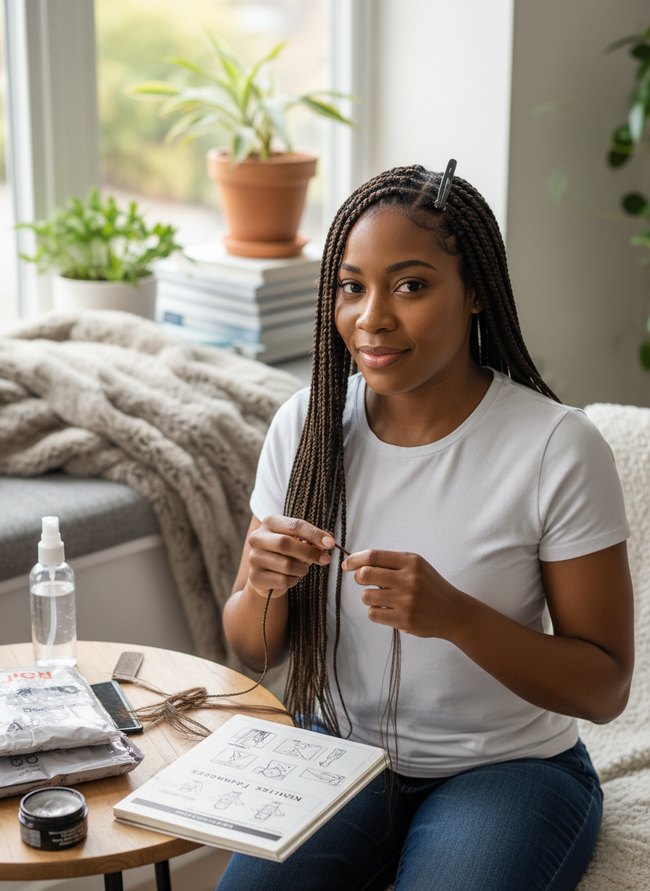
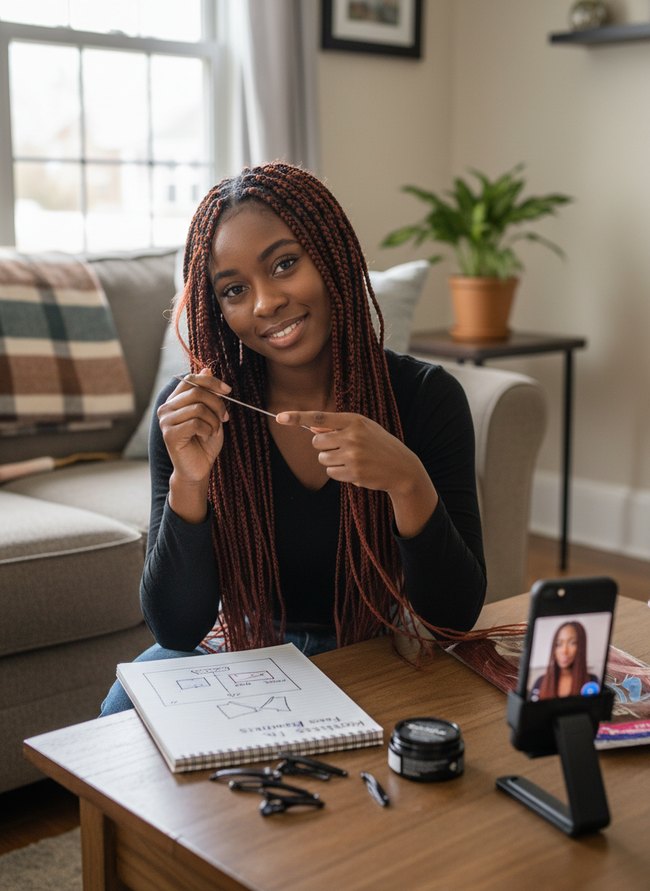
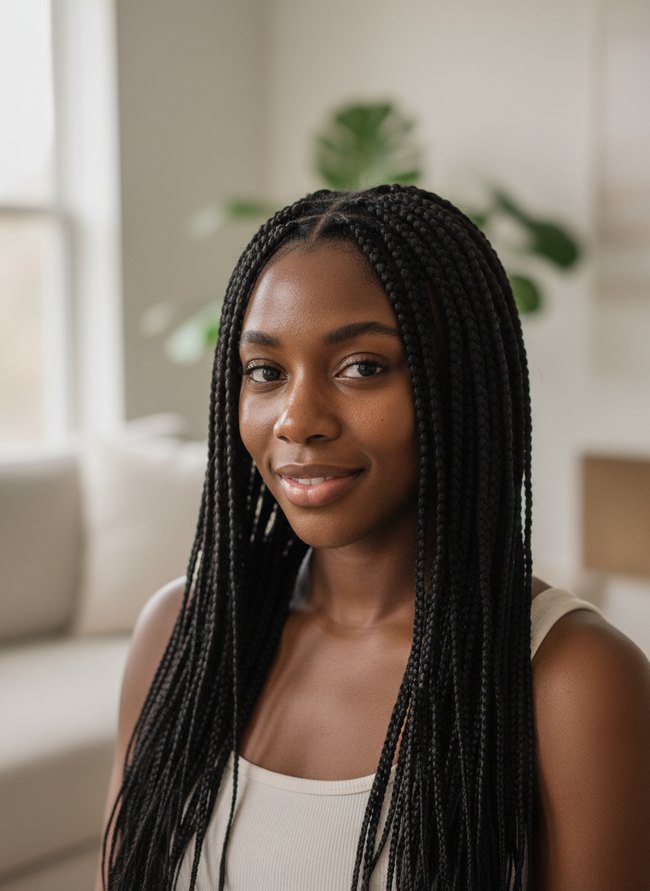
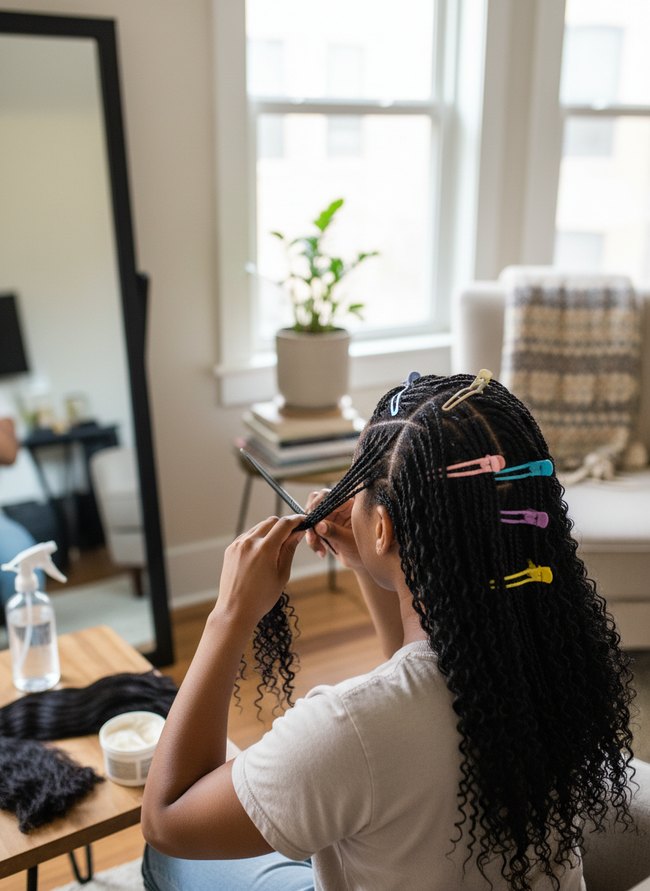
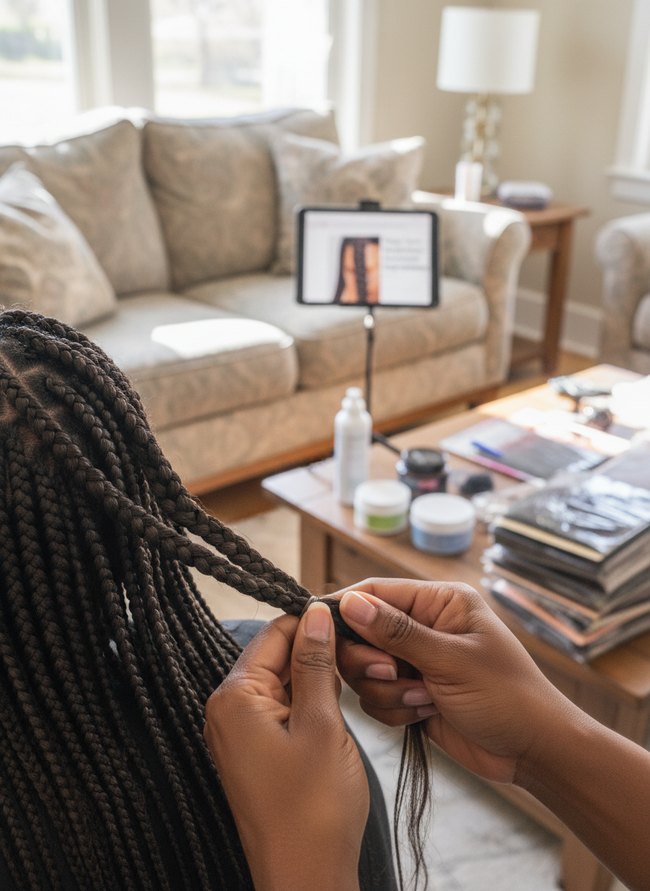
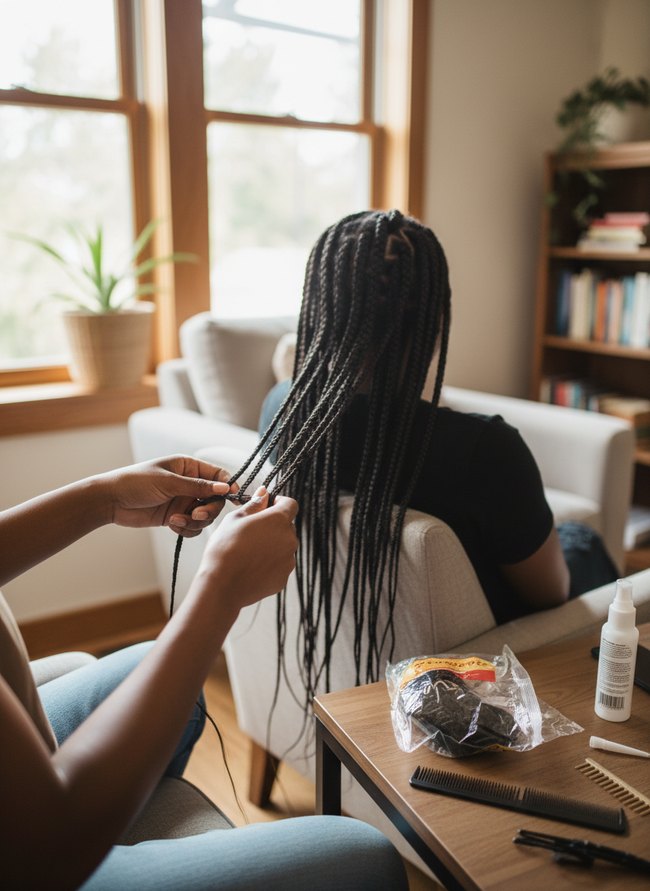
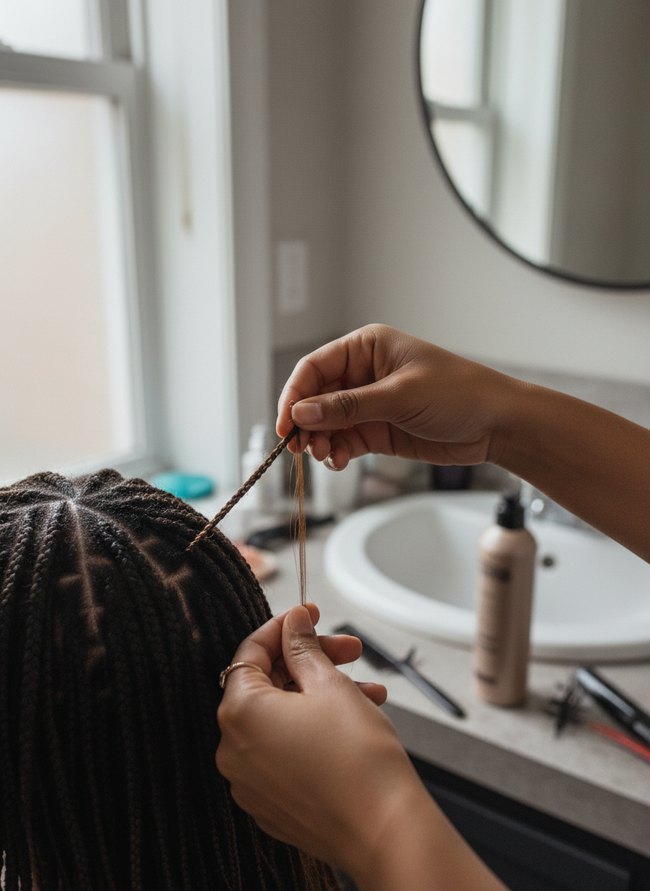
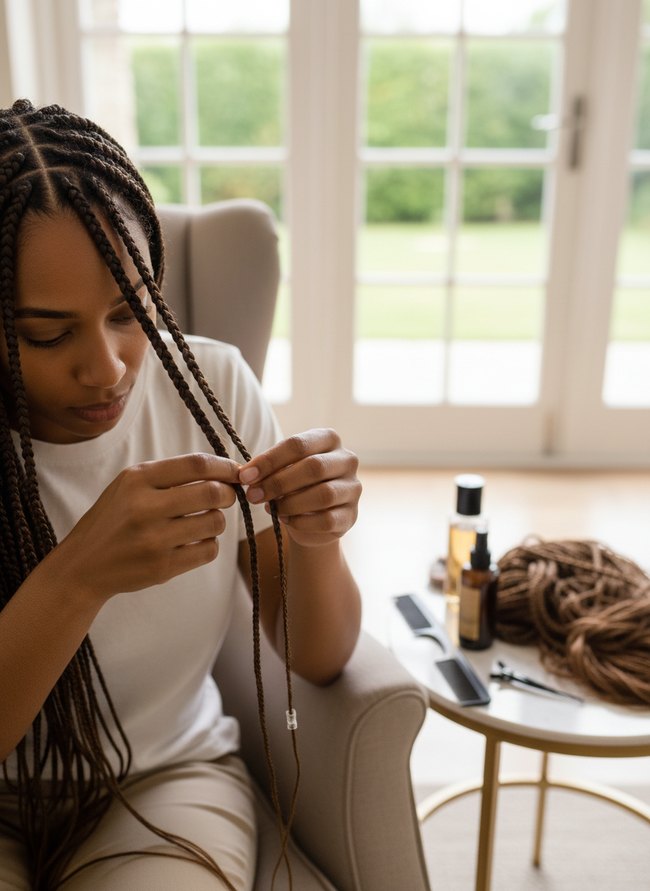
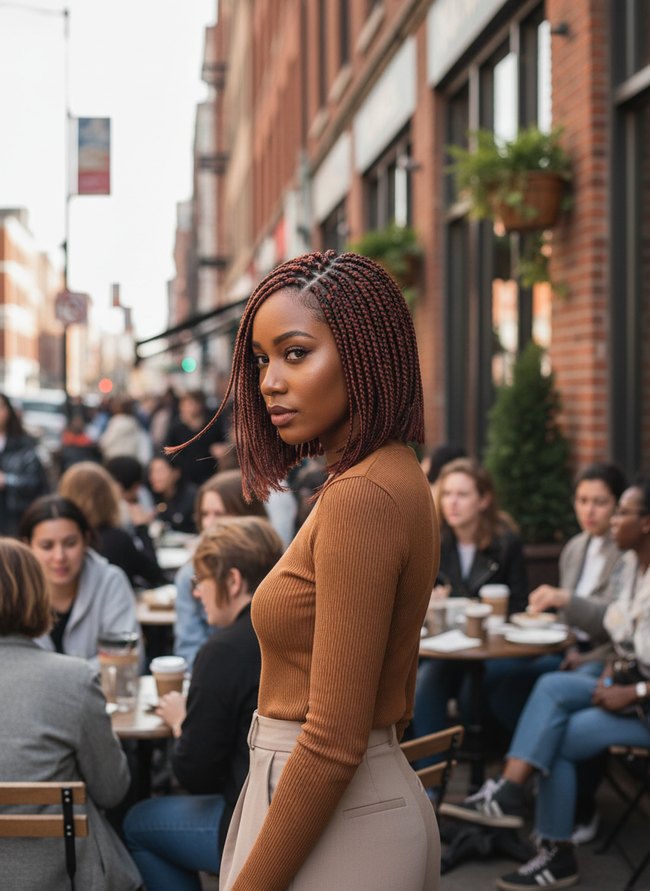
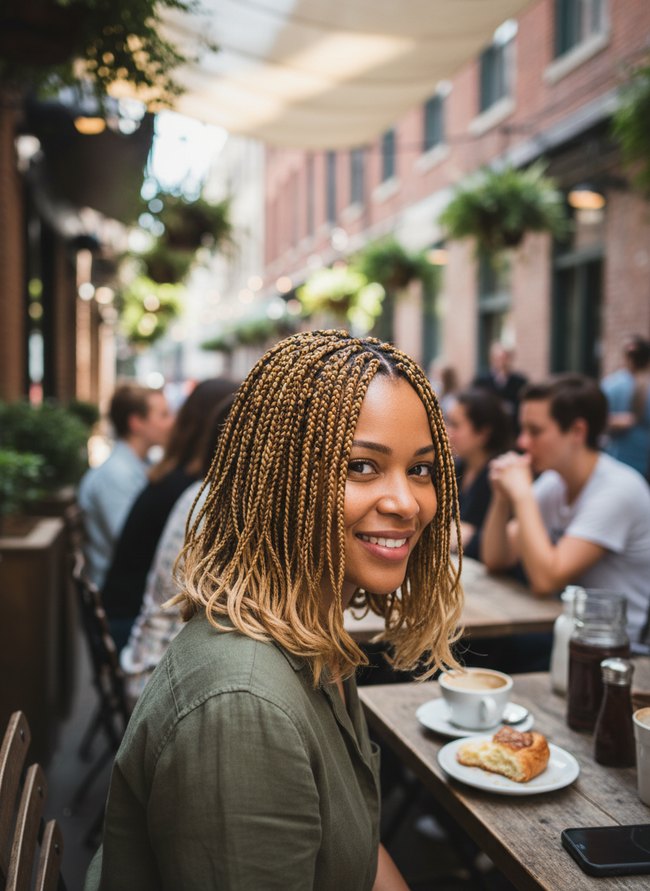
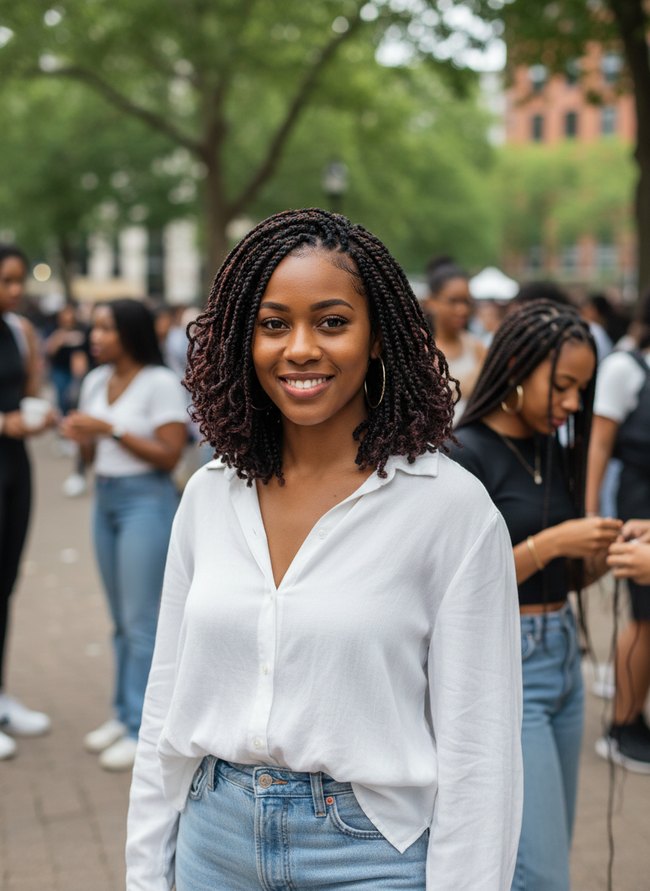
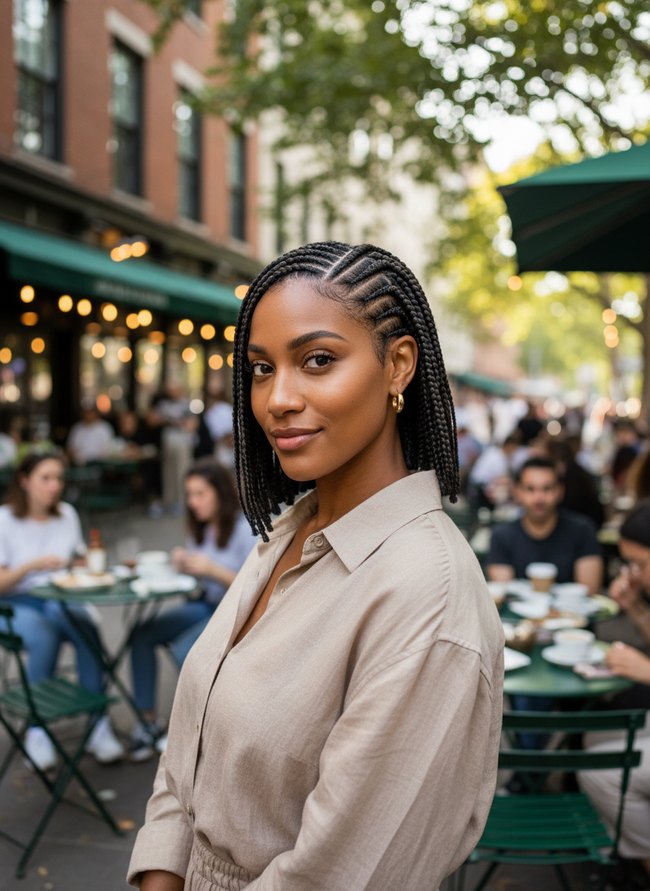
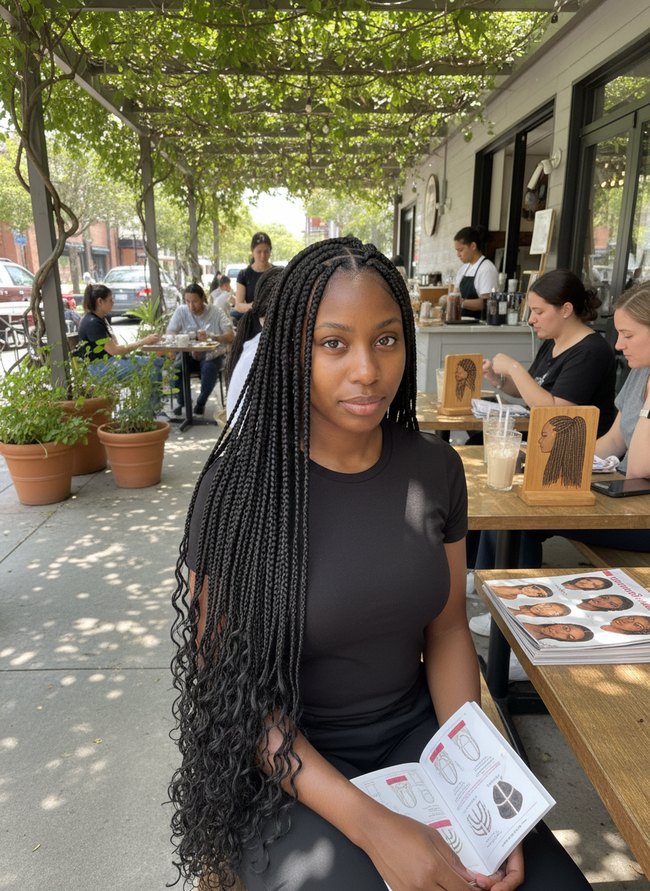
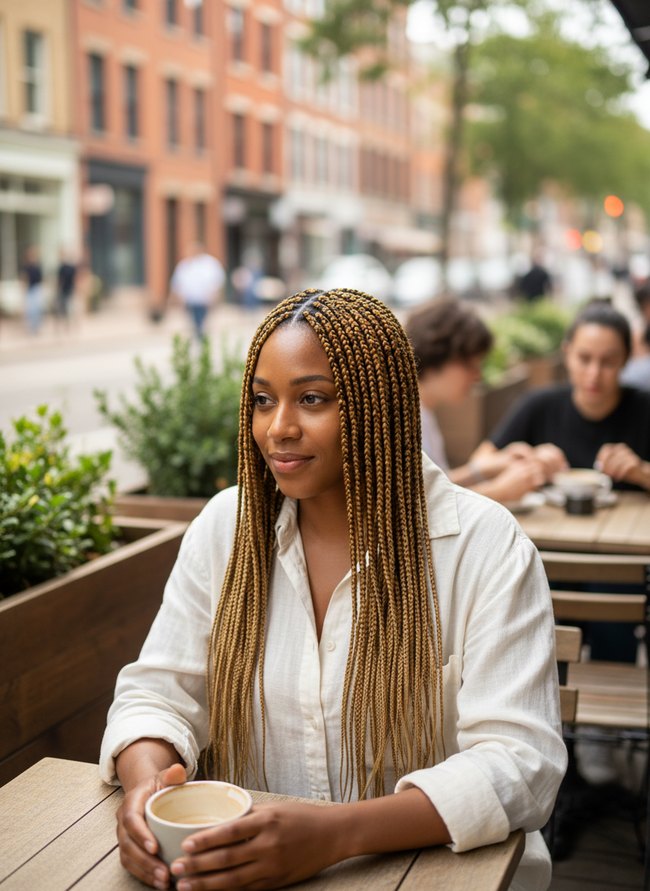
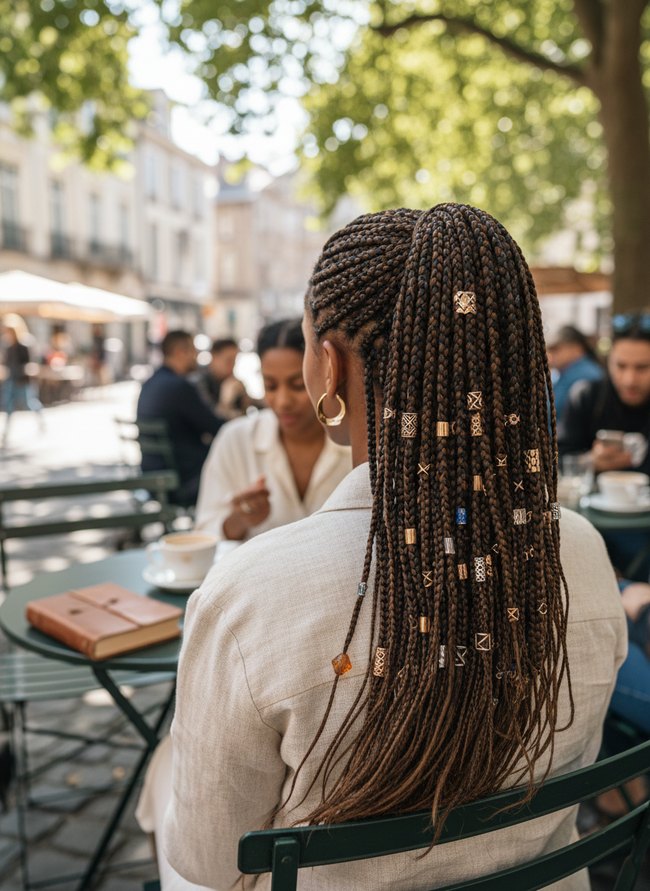
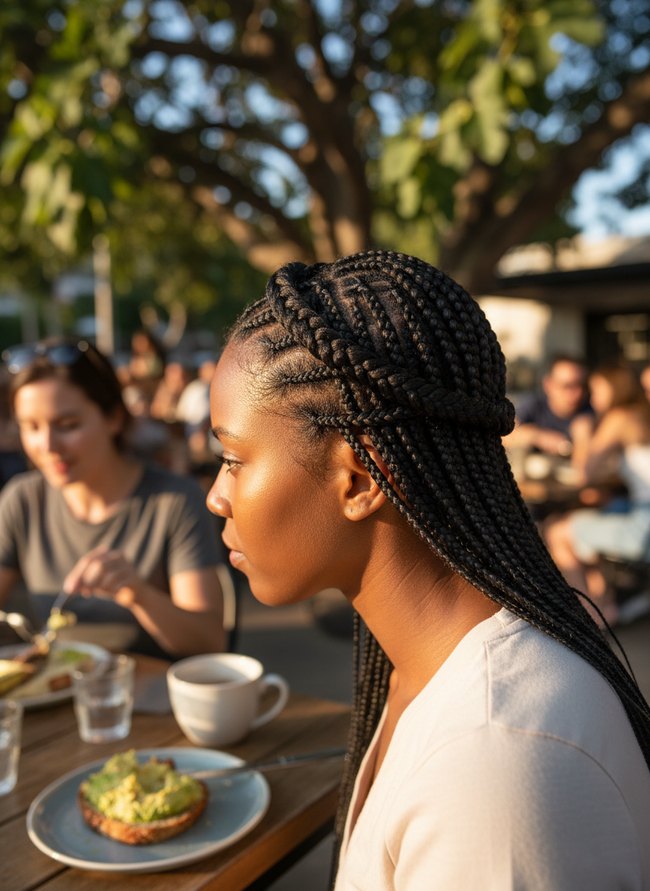
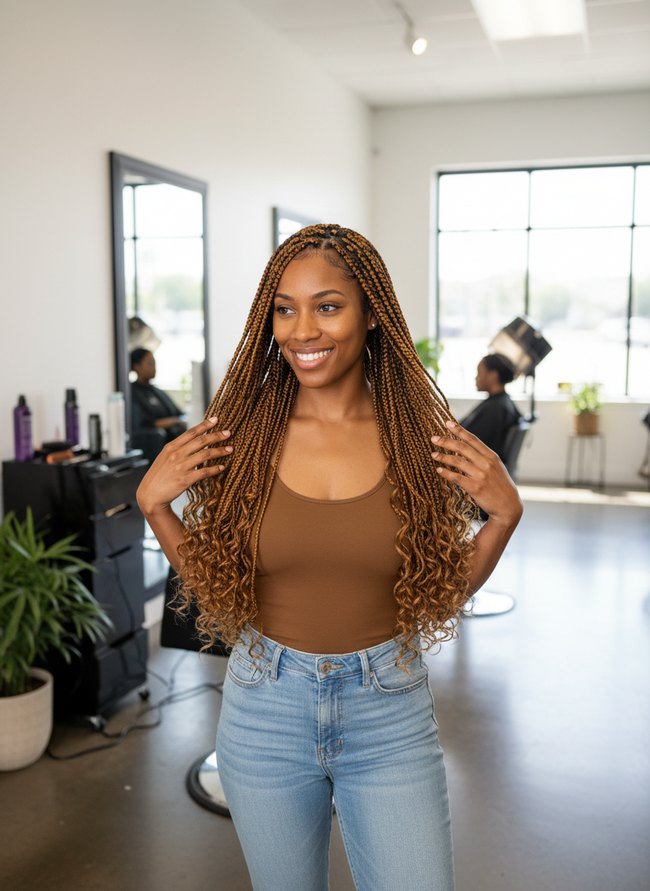
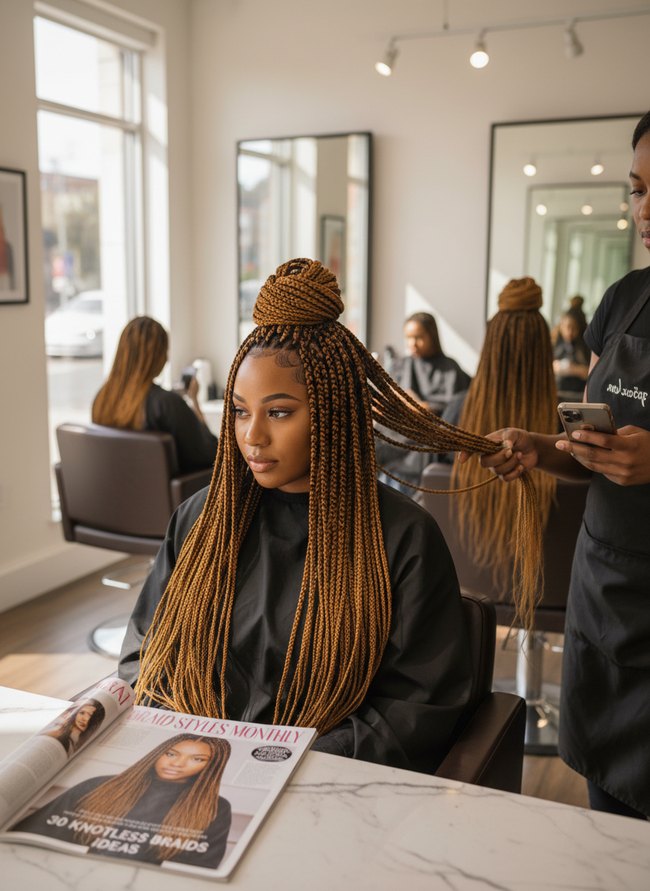
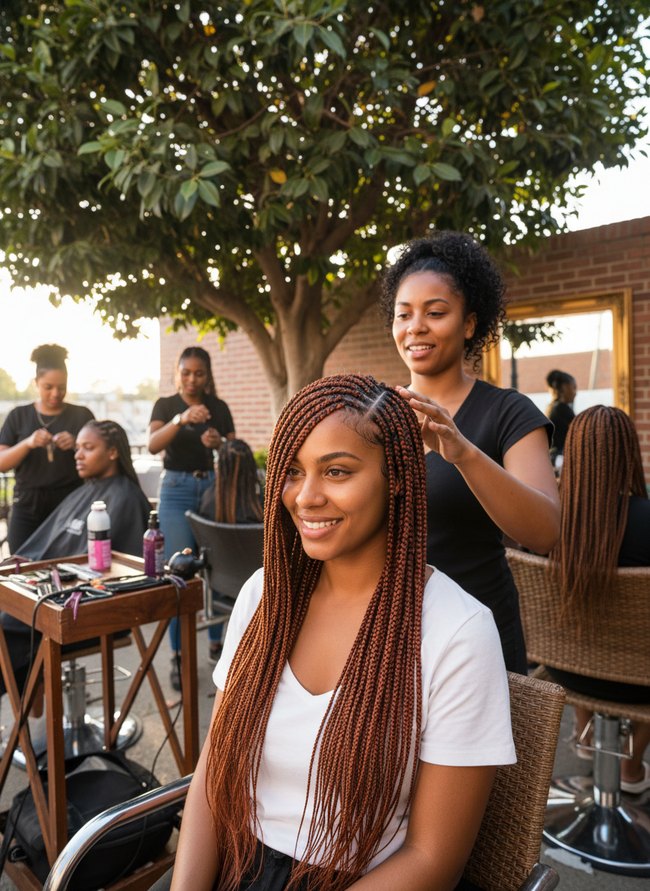
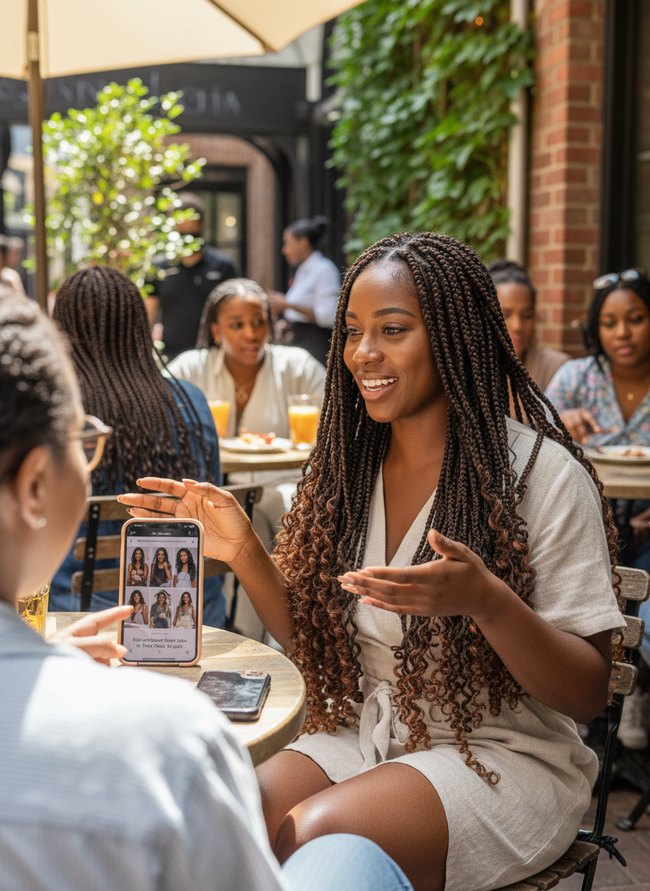
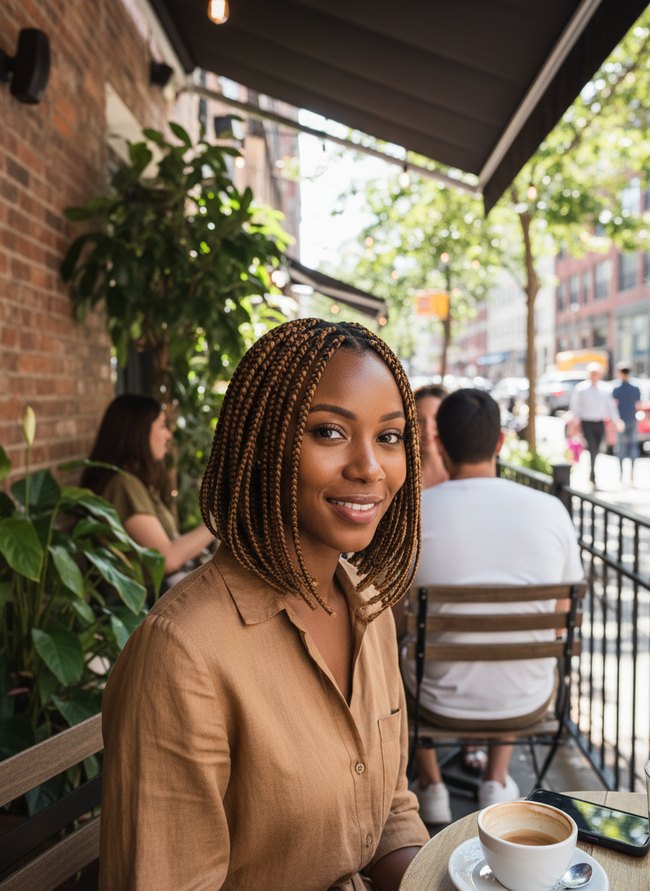
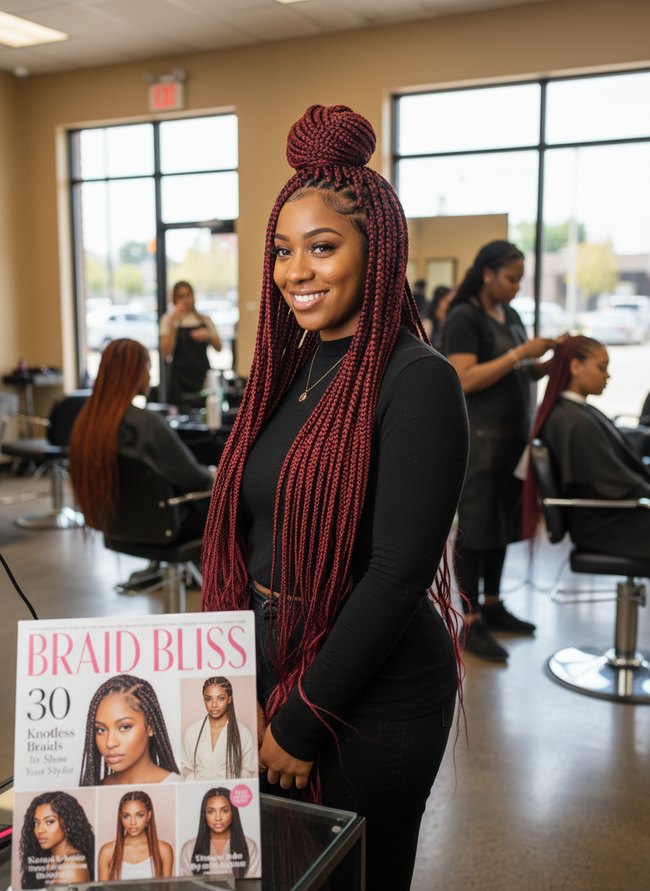
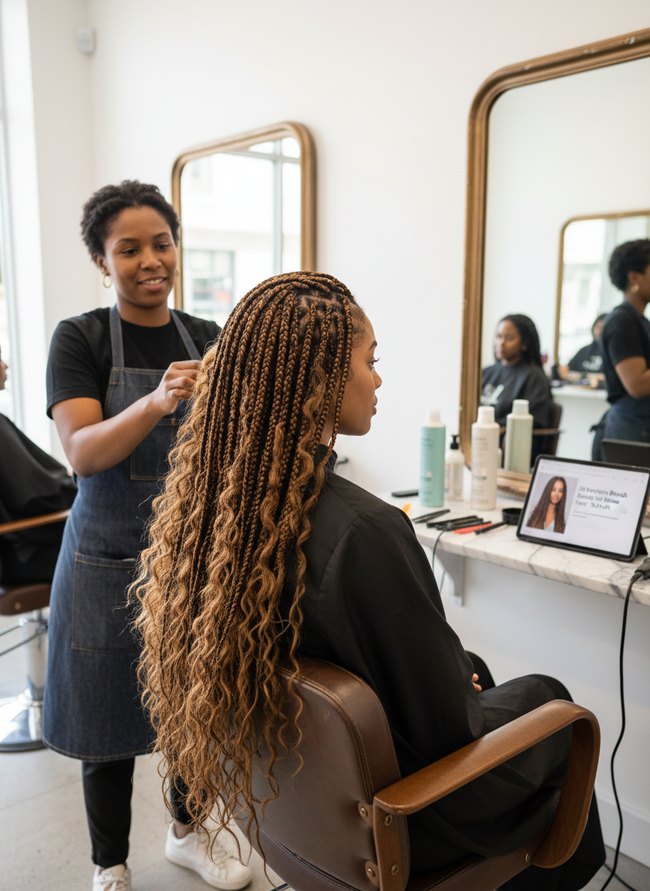
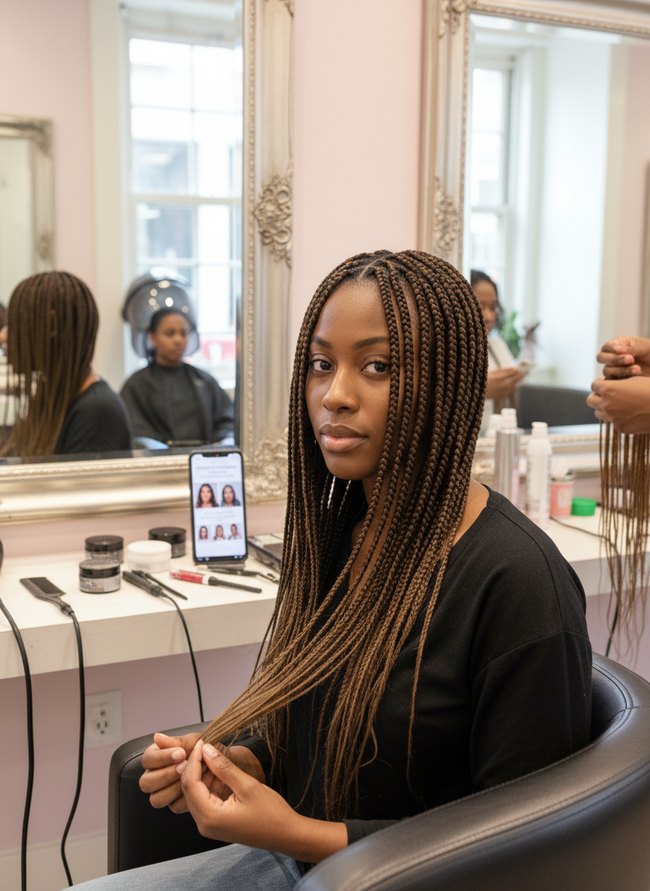
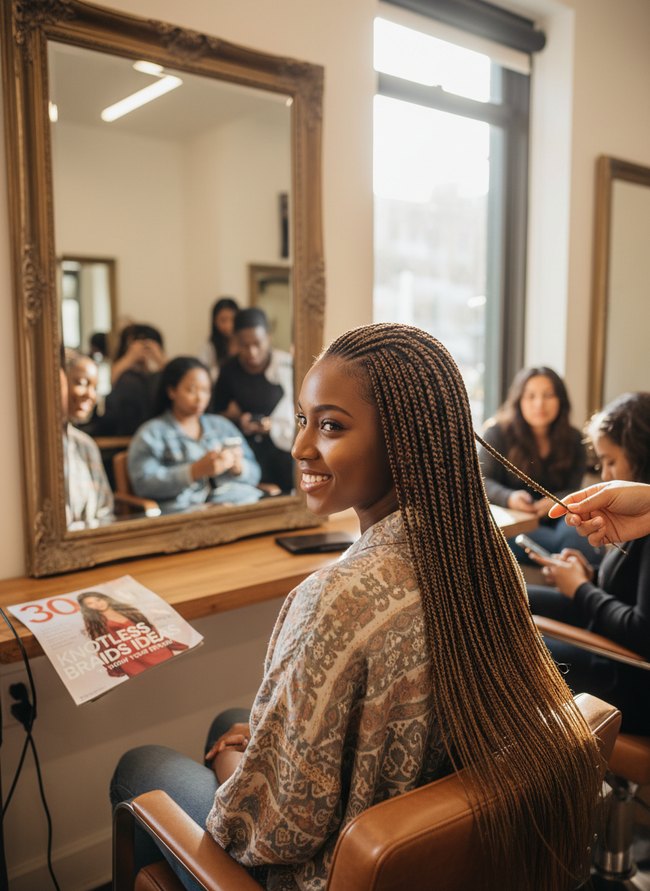
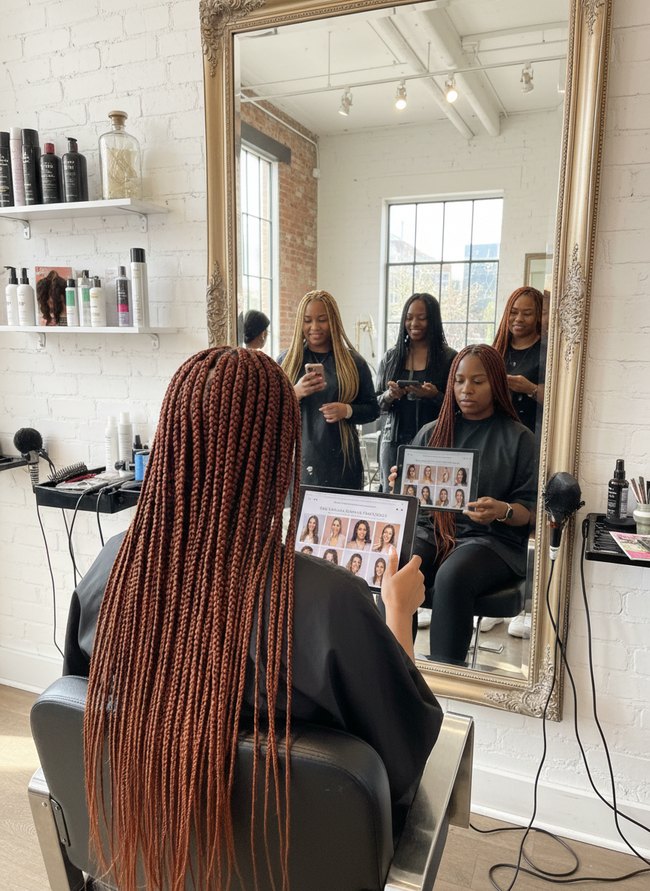
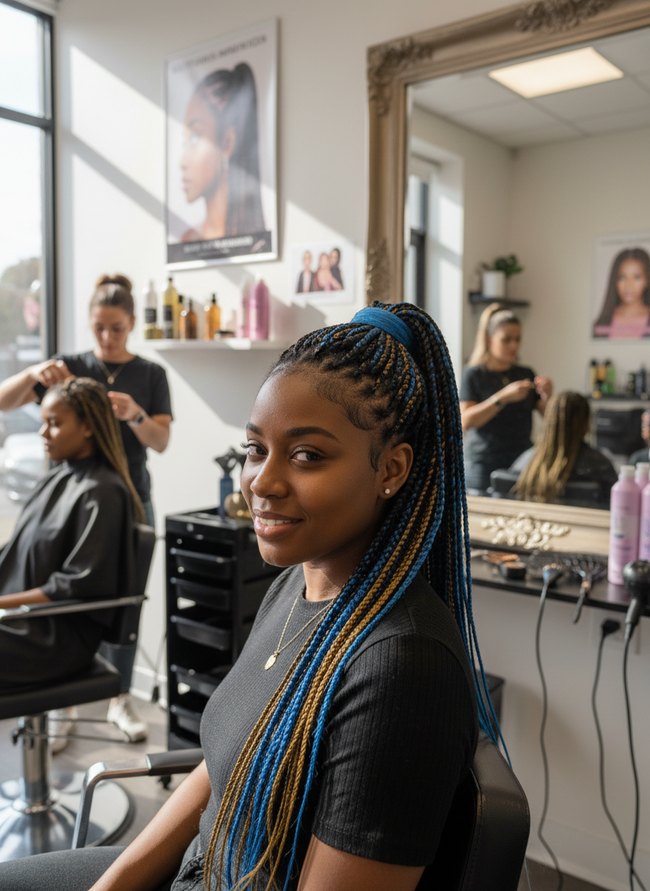
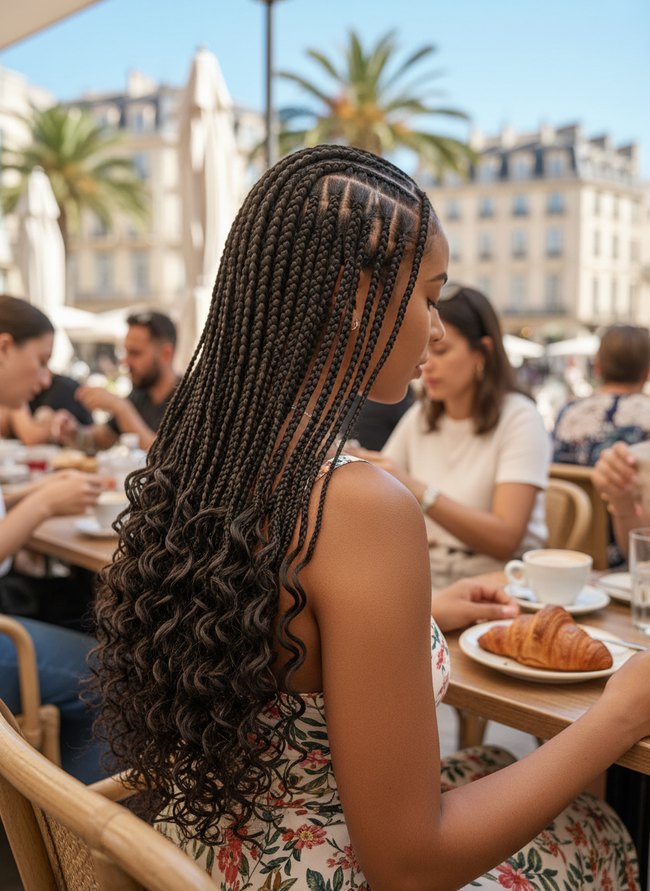
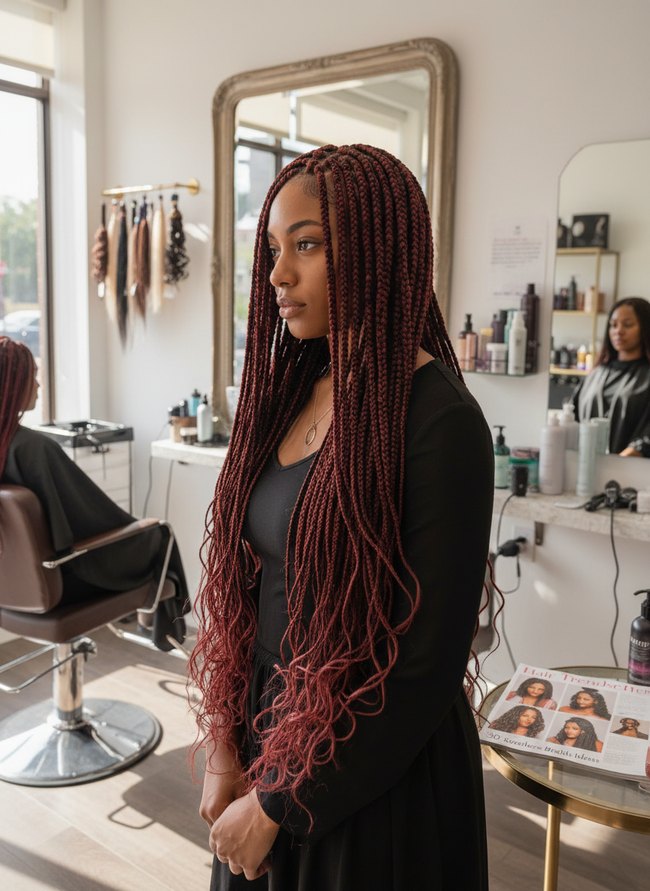
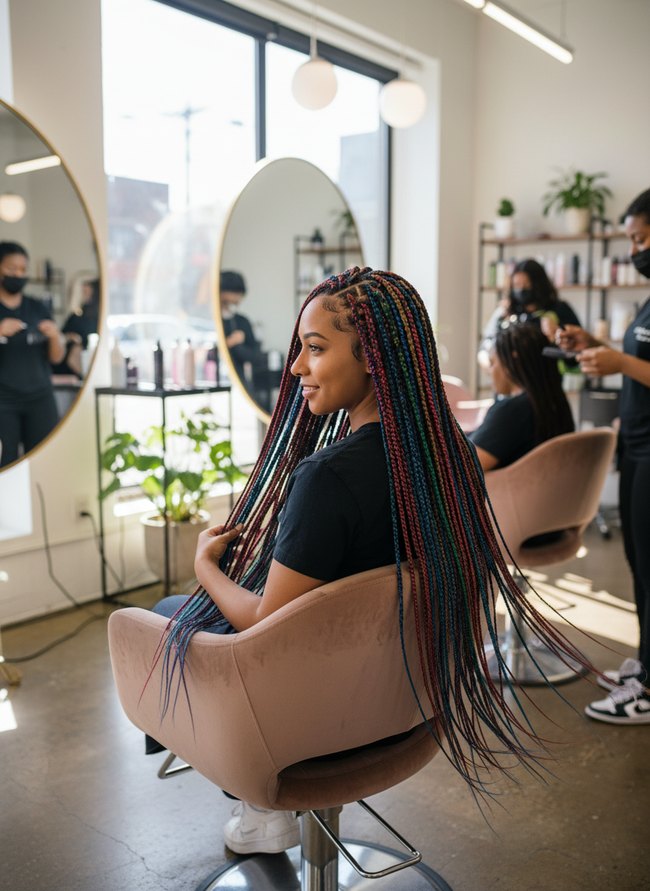
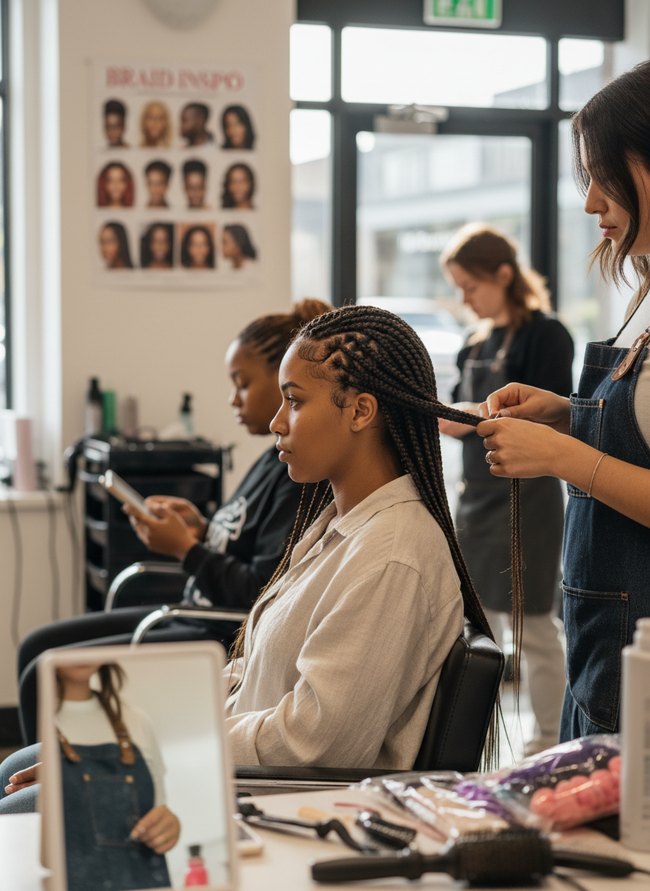
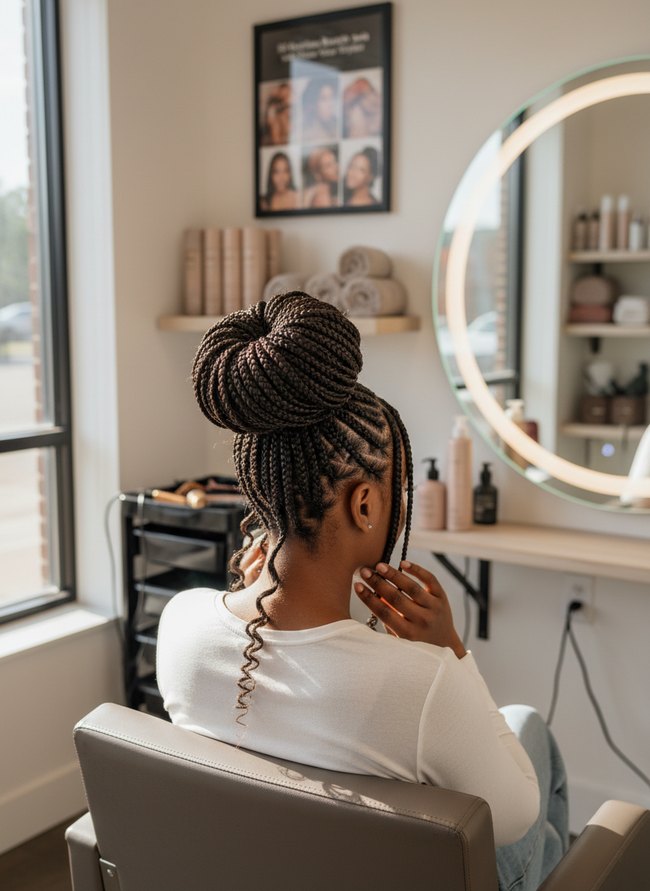
The hairline, that delicate strip of short strands around your face, deserves careful handling when choosing a protective style. Many people seek neat braids for a new look. Traditional box braids often start with a tight knot right at the root, pulling hard on sensitive hair follicles. Knotless braids, however, begin with natural hair before adding small pieces of braiding hair, creating a smoother transition. The gentler method reduces tension and protects fragile baby hairs along the forehead and temples from unnecessary stress. A style should last, but not at the cost of your natural hairline. Different braid types offer varying levels of protection for delicate edges.
1. Classic Box Braid Edges
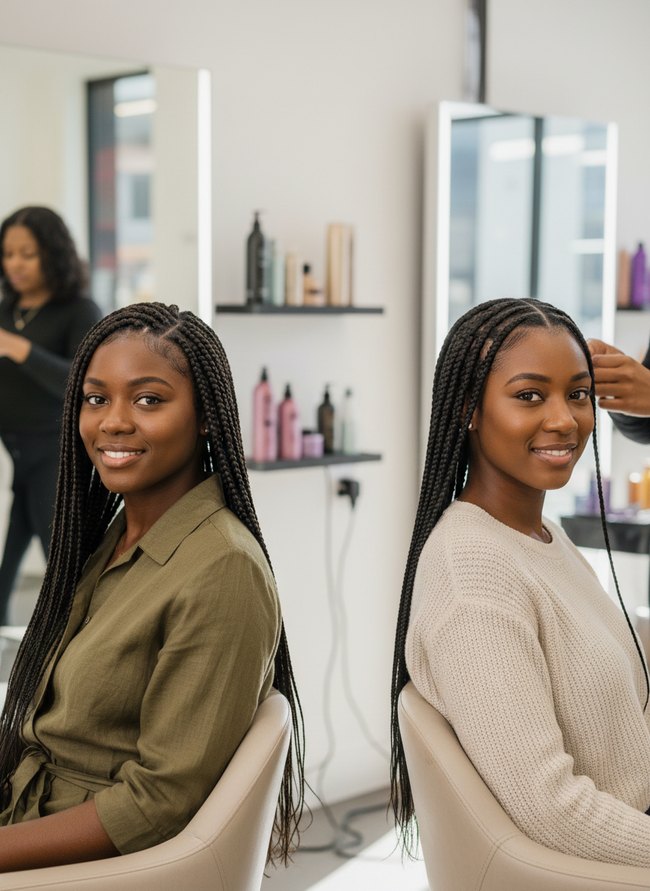
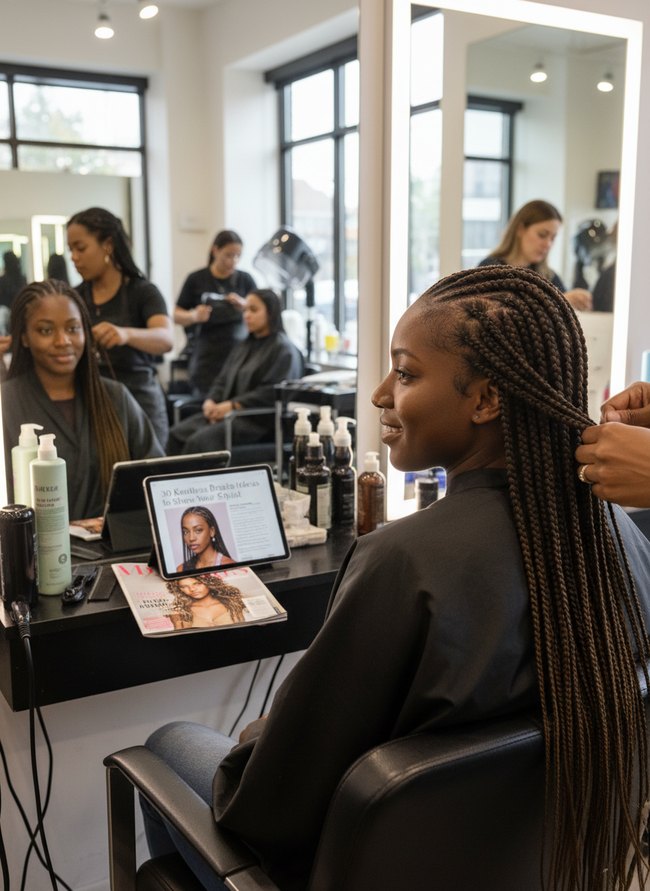
Two women with shiny dark box braids sit in a bright salon, showing off neat parts and smooth hairlines. The braids feature uniform sections and a classic, structured look around the edges. When comparing knotless vs box braids, consider how the defined base of the style offers a clean, lasting foundation.
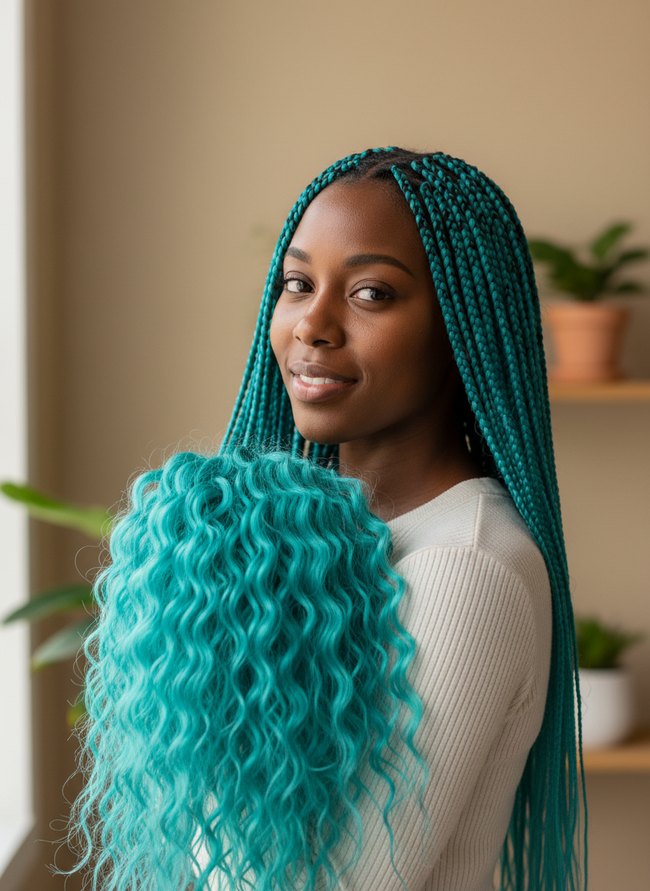
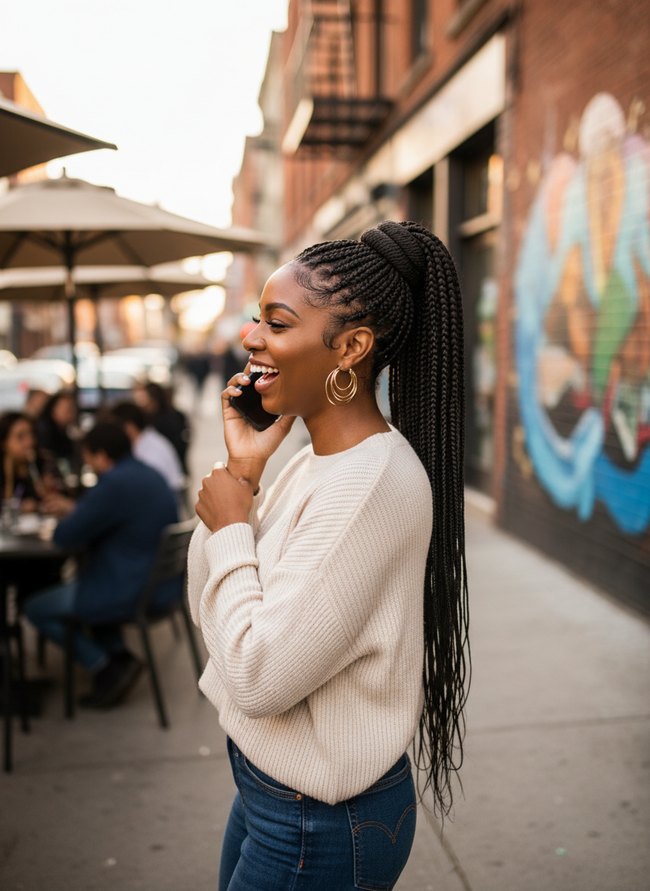
2. Knotless Fringe Braids
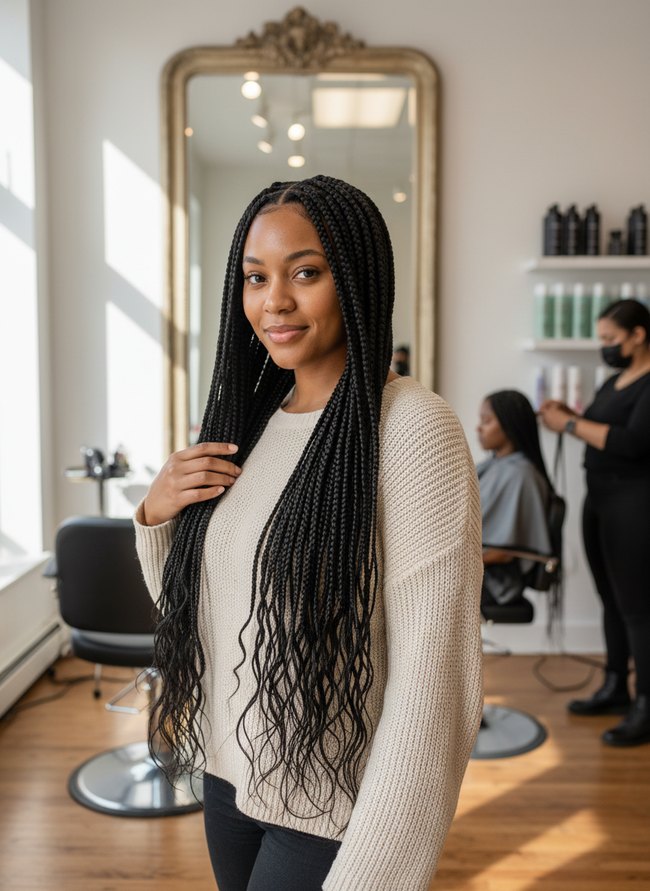
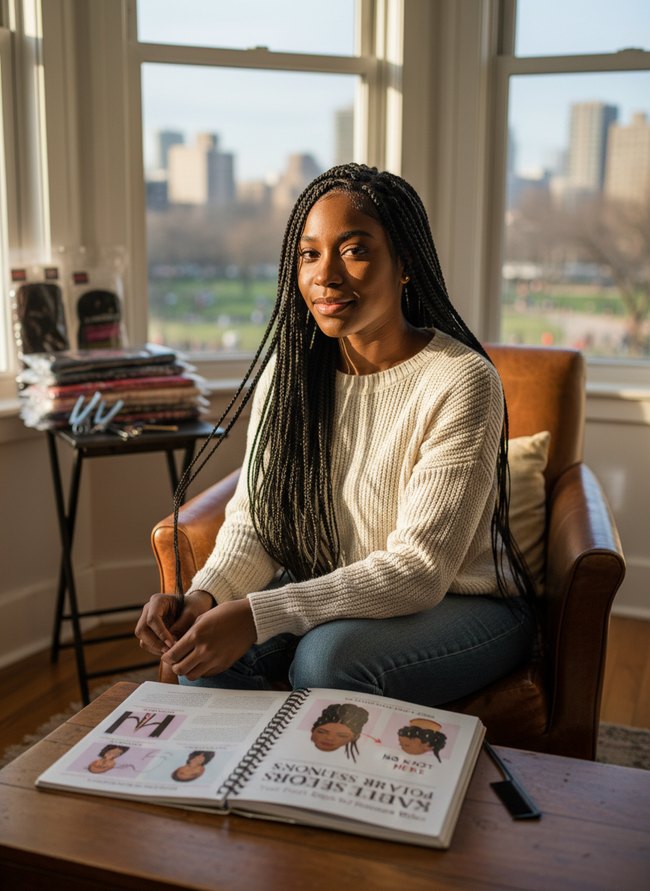
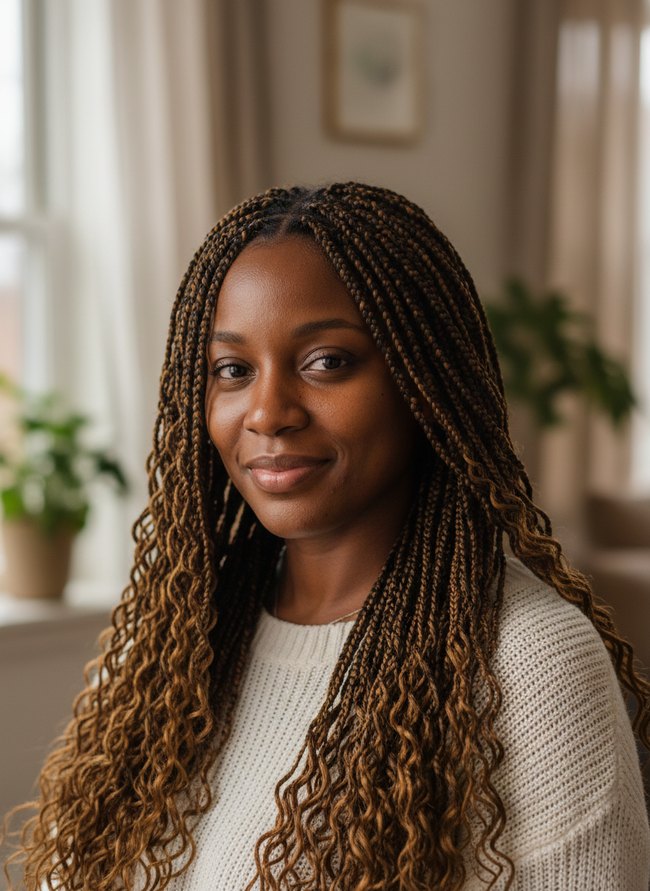
A woman with long, black knotless braids smiles softly, her hair falling past her waist. She wears a cream knitted sweater, which provides a soft contrast to her dark, flowing hair. The style demonstrates how knotless braids can offer a smooth, natural-looking finish for your edges.
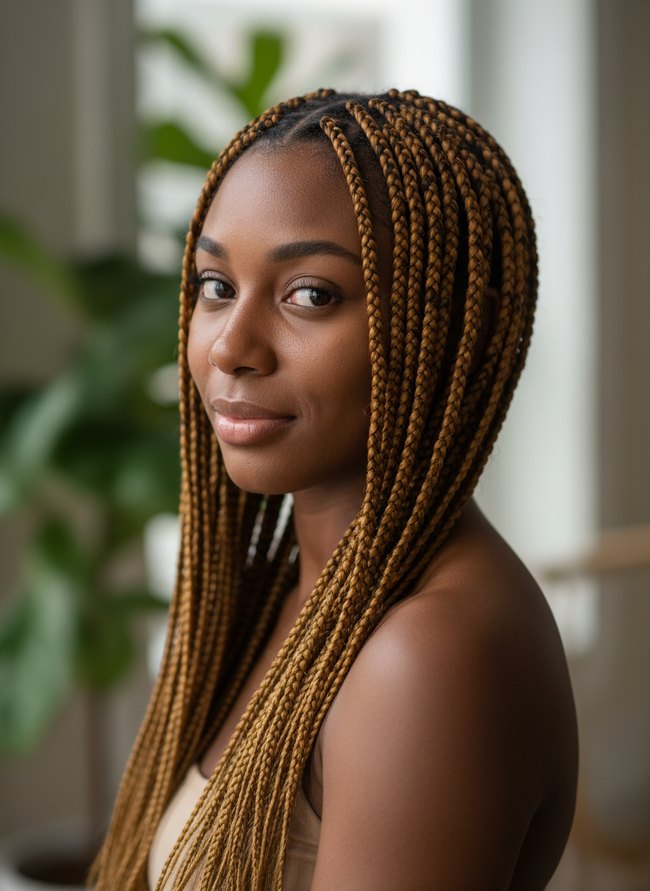
3. Soft Touch Box Braids

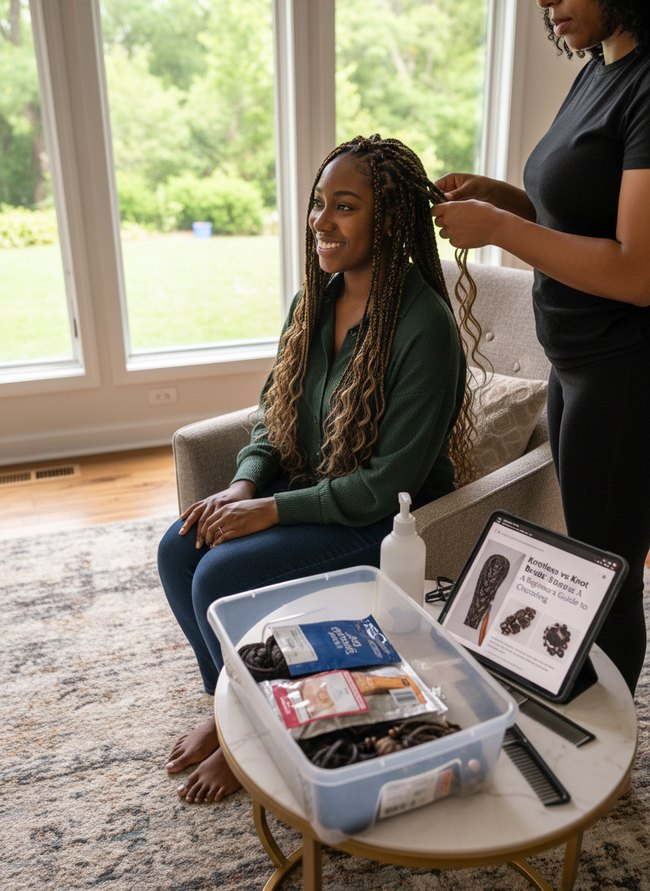
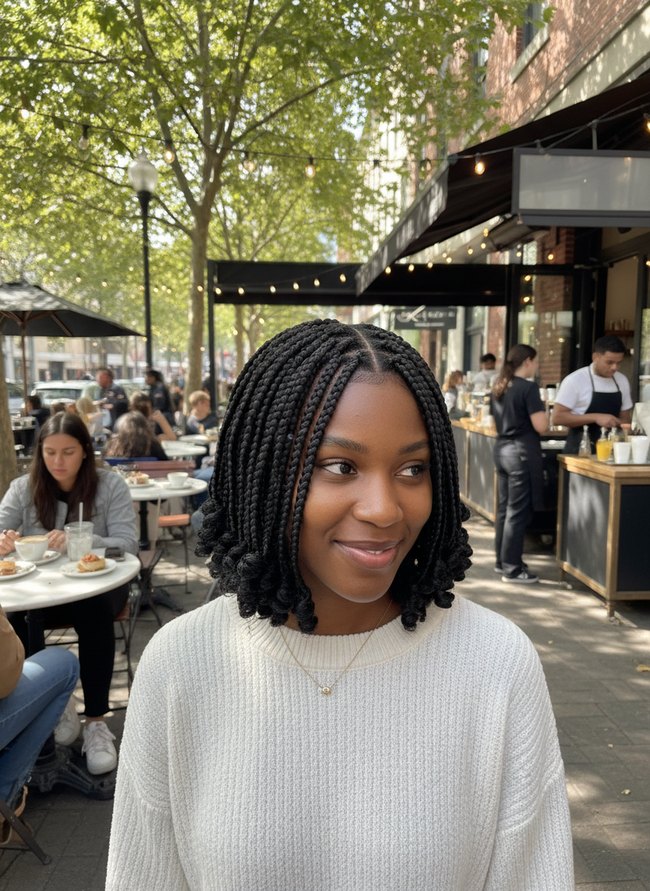
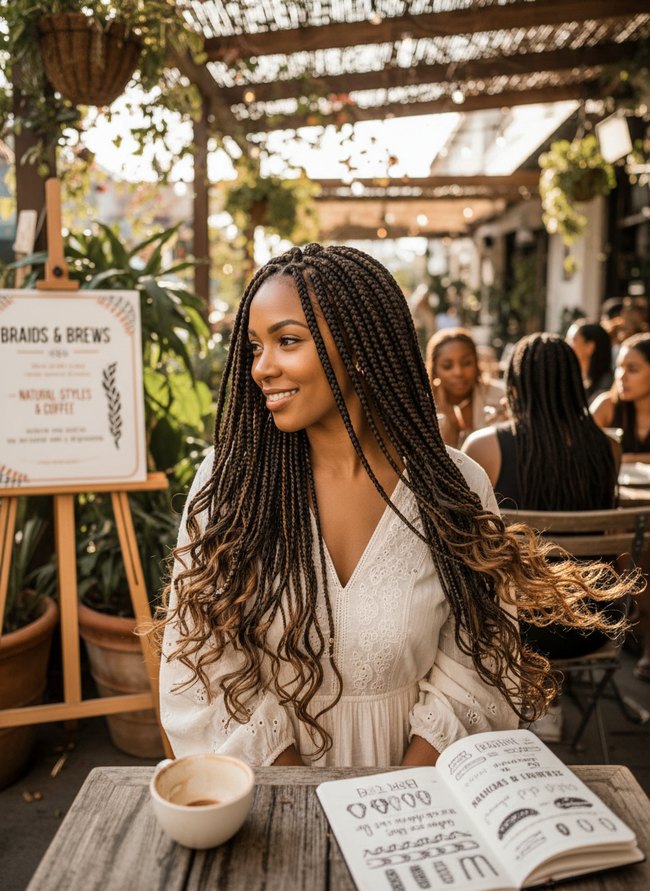
Light brown box braids frame the woman’s smiling face, with curly ends adding soft texture. Her part shows clean, neat lines, demonstrating the gentle installation of the braids. Consider the style for a protective look that also keeps natural hair healthy.
4. Defined Knotless Parting

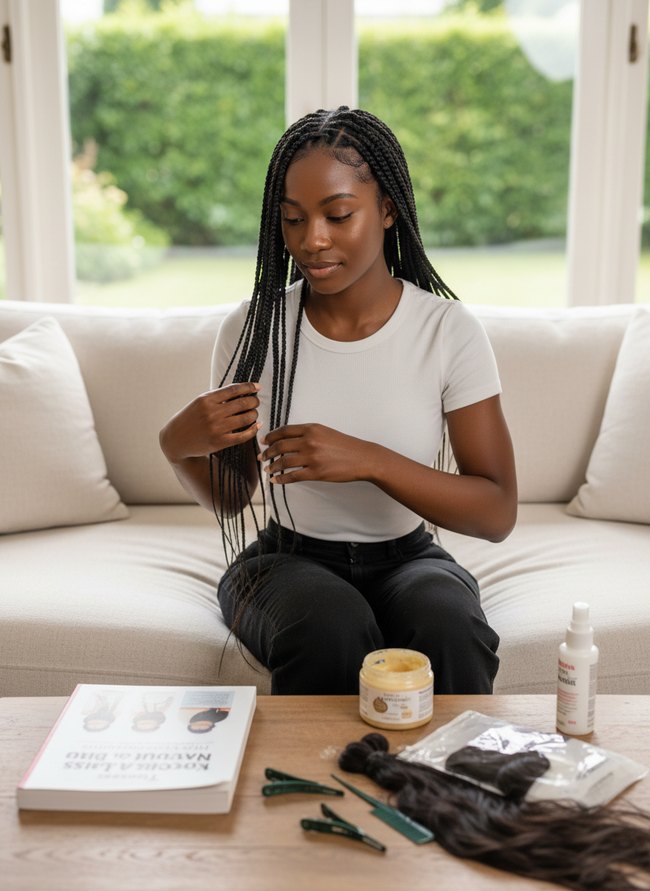
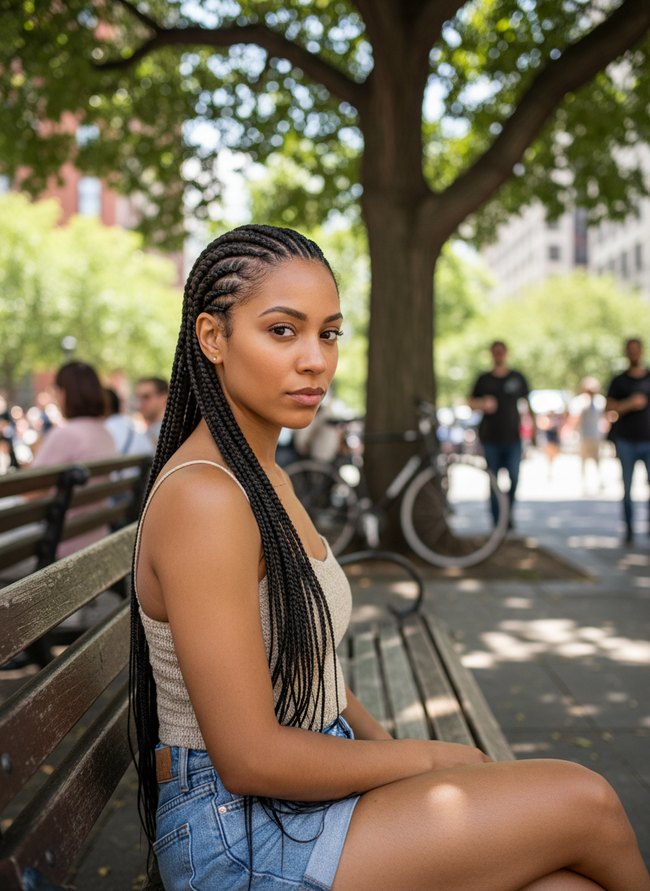
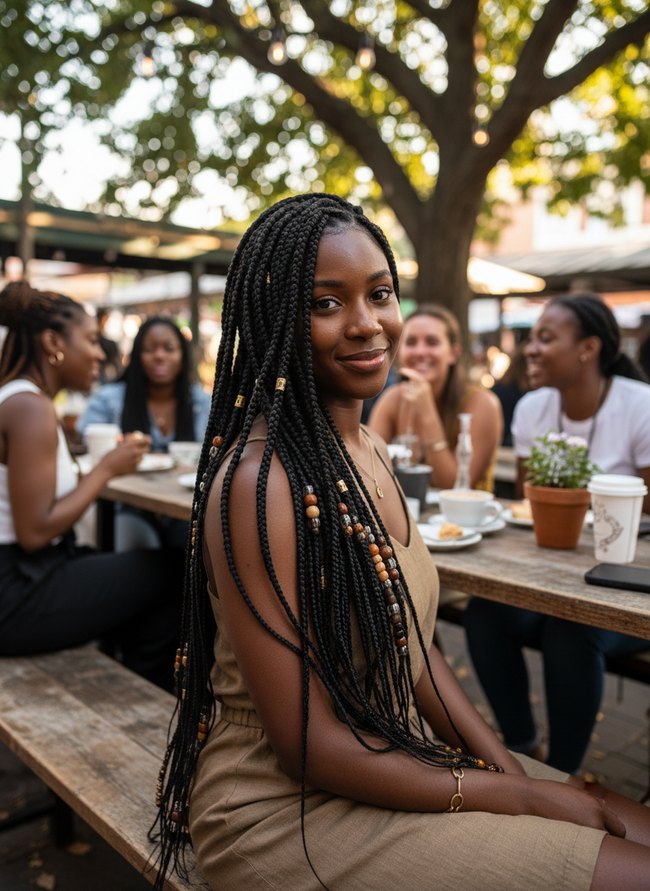
Long, black knotless braids fall over the shoulders of a person sitting outdoors. The braids show defined, clean parts at the scalp, indicating a gentle installation method. The style, often preferred over box braids, reduces tension on your hairline.
5. Goddess Box Braid Styles
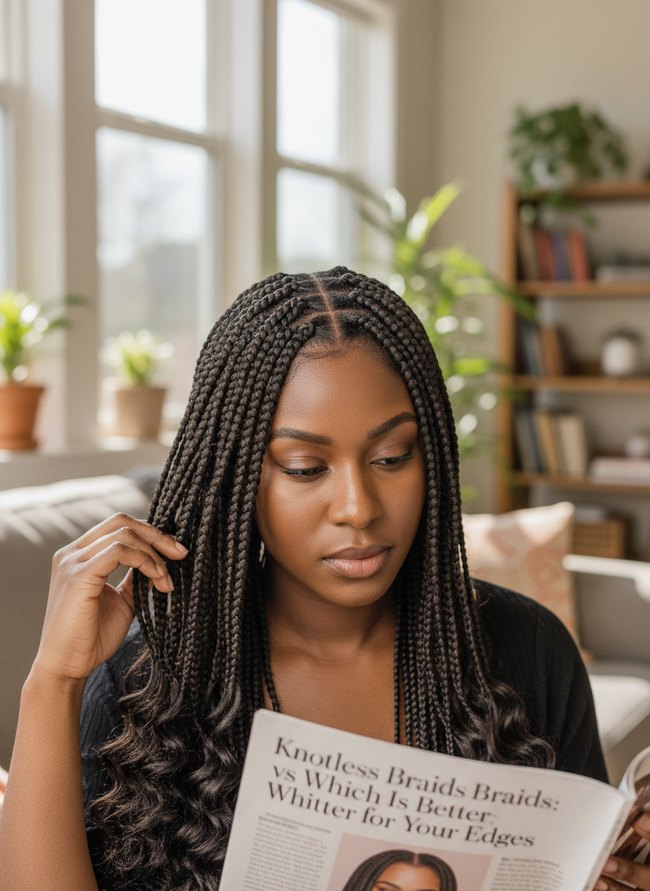
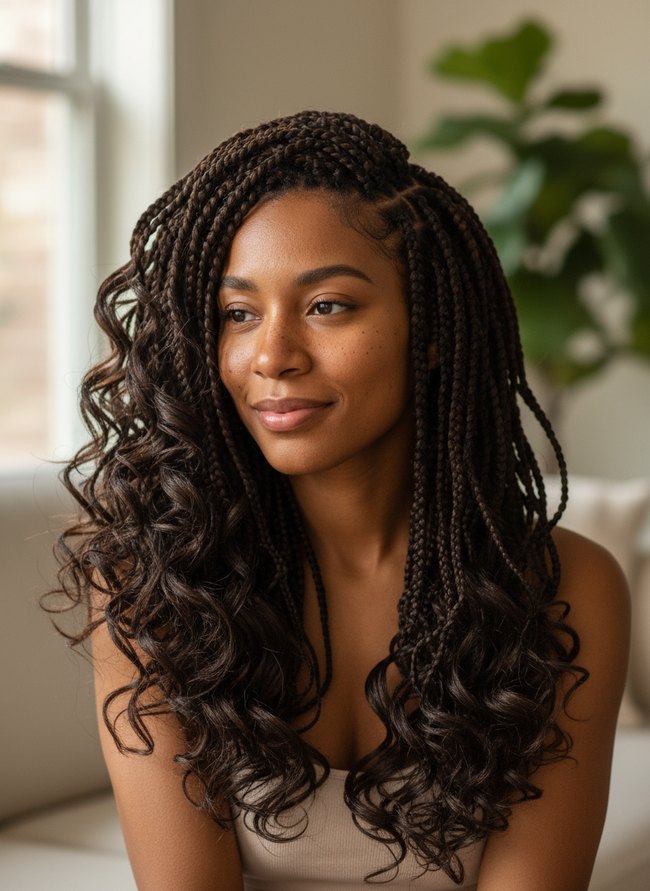
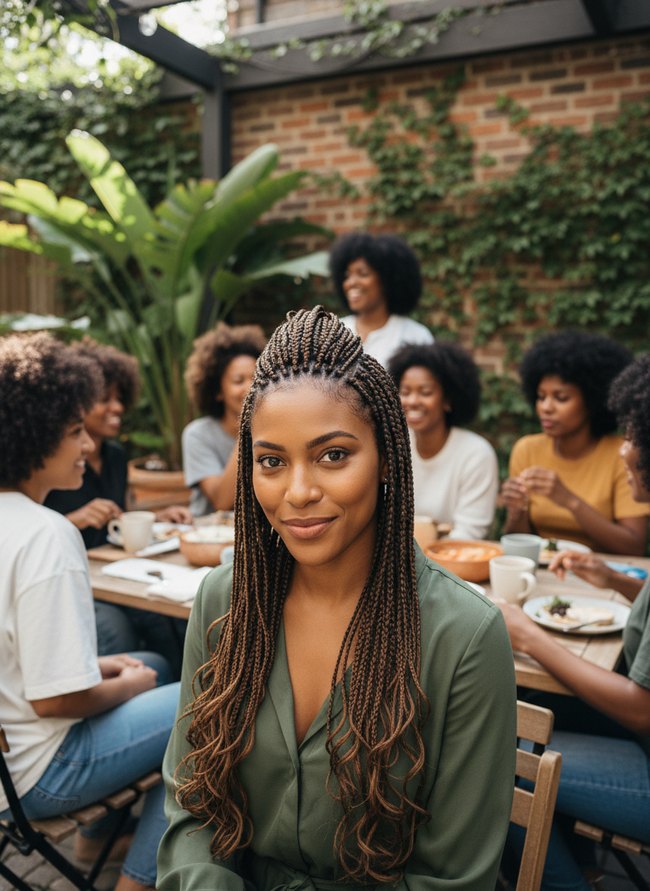
A woman wears dark brown goddess box braids with a clean center part, the curly ends spilling over her shoulder. Her braids have neat square sections at the root, showcasing a traditional box braid pattern. The style offers a full, textured look, bringing out the debate of knotless vs box braids for your hair.
6. Smooth Knotless Perimeter

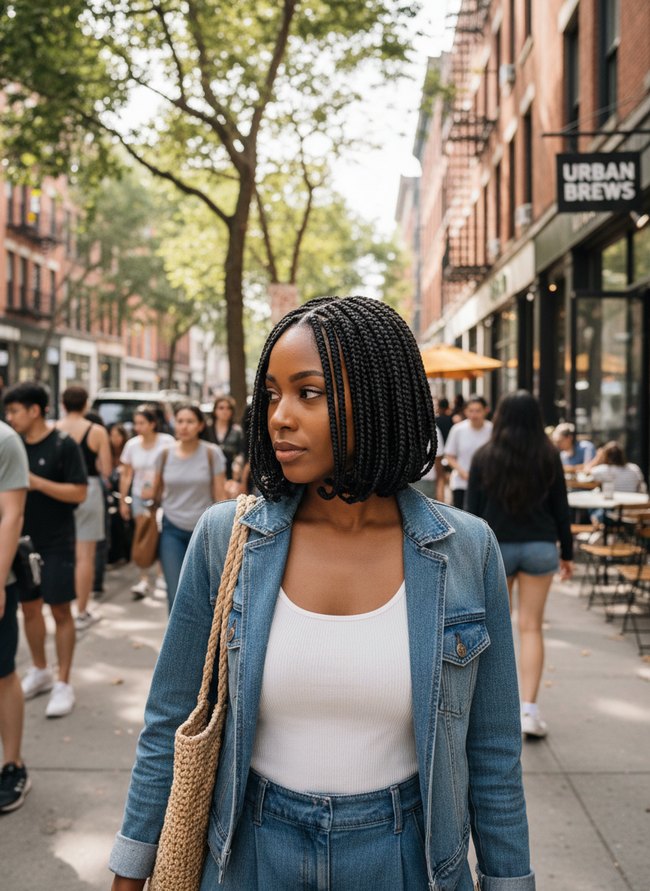
Dark knotless braids flow down a woman’s shoulders, framing her smiling face. A light blue denim jacket covers her white t-shirt, giving a casual look. The braids appear smooth and undisturbed, providing a clean perimeter without pulling the hairline.
7. Micro Box Braid Edging

Tiny, dark box braids cascade down a woman’s back, neatly parted to show a clean scalp. The braids reveal neat square sections of hair at the roots, a classic sign of the style. Micro braids offer a good option for people weighing knotless vs box braids for a polished, long-lasting look.
8. Invisible Knotless Base
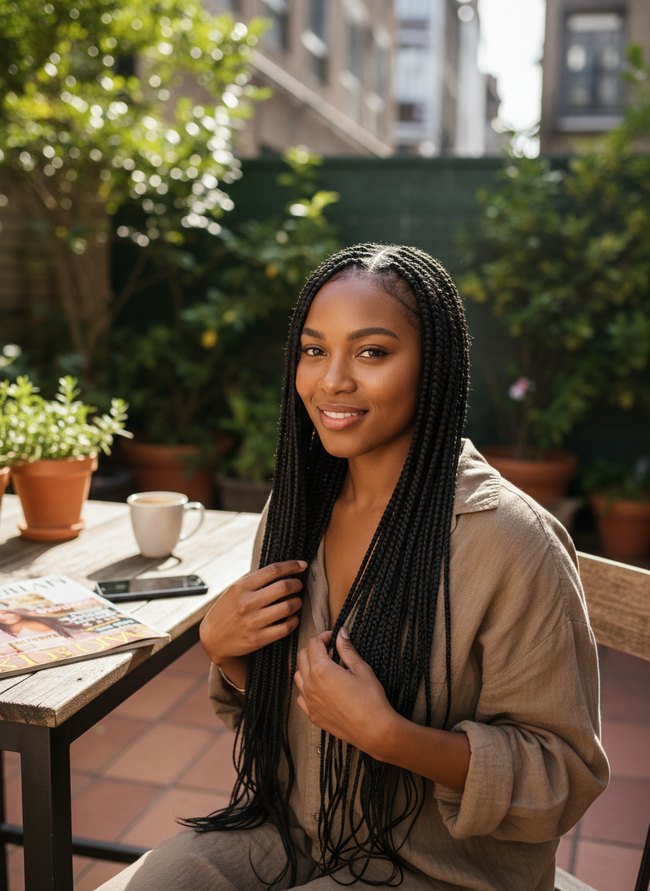
Long, dark braids flow over the woman’s shoulders, showcasing a neat center part and soft edges. The intricate knotless base blends seamlessly with her natural hair, creating a smooth, polished look. Knotless braids lay flat against the scalp, distinguishing them from traditional box braids.
9. Jumbo Box Braid Crown
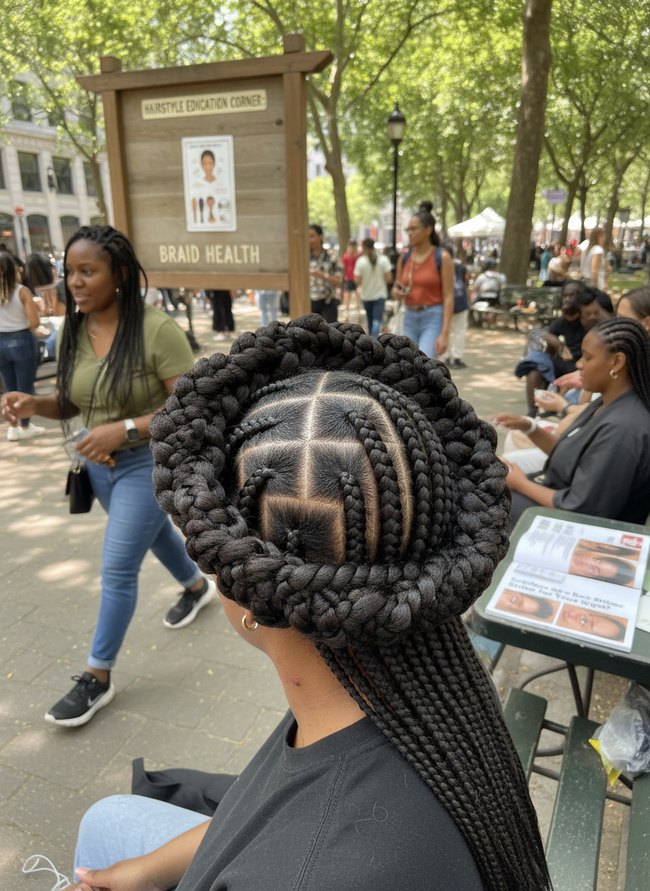
Dark box braids form an elaborate crown on the person’s head, showing off thick, neat sections. Small, square parts define the central pattern, giving the style a clean, structured appearance. Knotless or box braids achieve the intricate look, offering a bold statement for your edges.
10. Featherlight Knotless Ends

A woman showcases long knotless braids with a clear middle part, her hair a mix of black and light brown strands. The braids feature featherlight ends, some fading to a white color, creating a soft, natural finish. The style offers a gentle alternative to box braids, putting less tension on delicate edges. Consider the weight and tension on your scalp when choosing between knotless vs box braids for your next protective style.
11. Layered Box Braid Detail
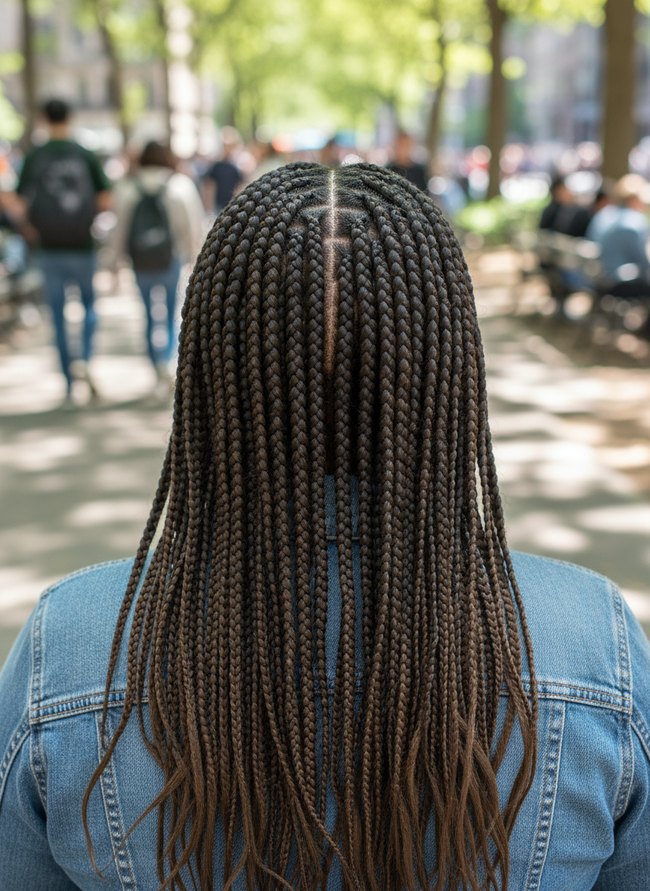
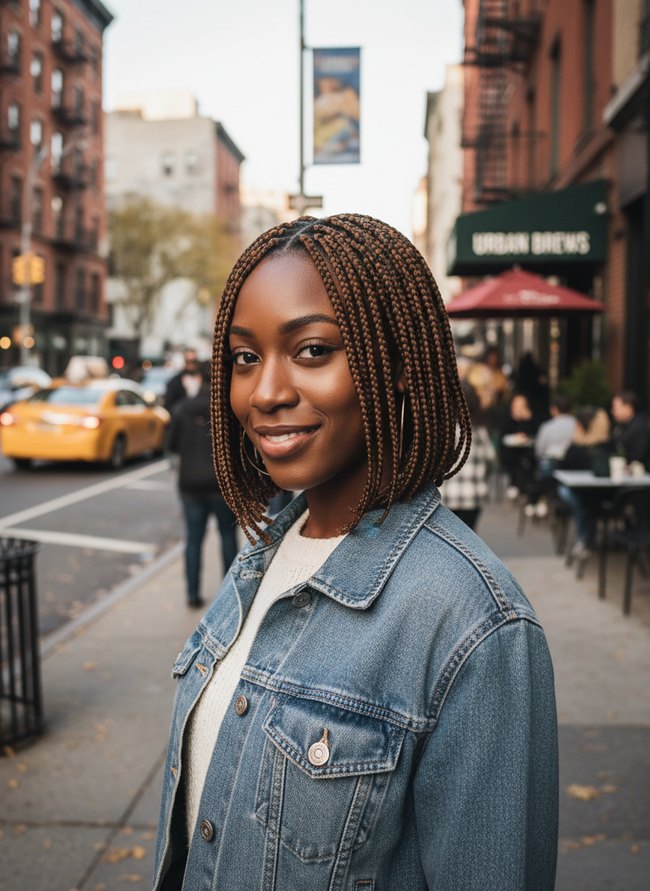
Neat box braids show a precise center part and smaller square sections across the crown. Dark brown hair cascades down the back, resting over a light blue denim jacket. The knotless vs box braids debate impacts the initial tension on your scalp.
12. Protective Knotless Edge
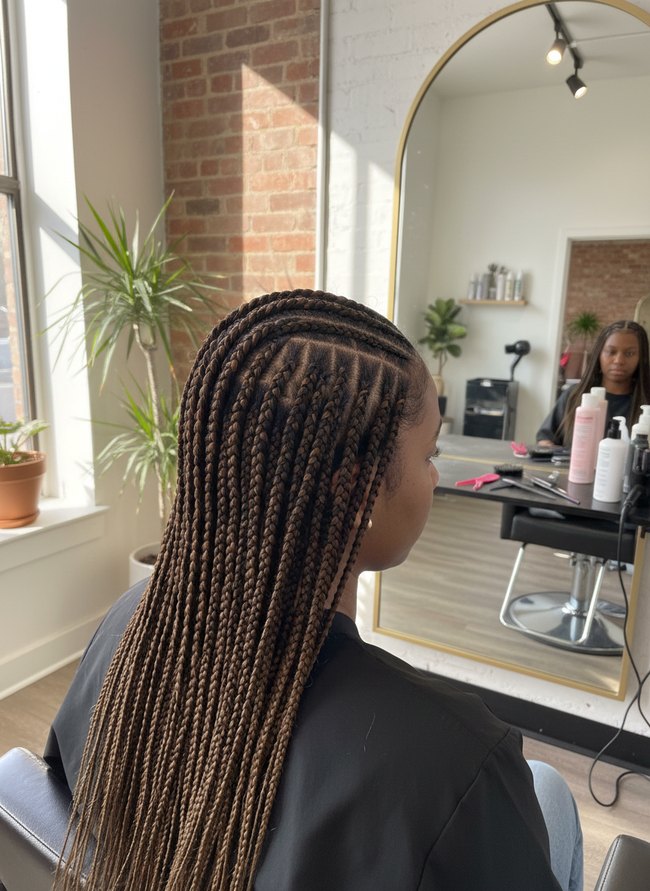
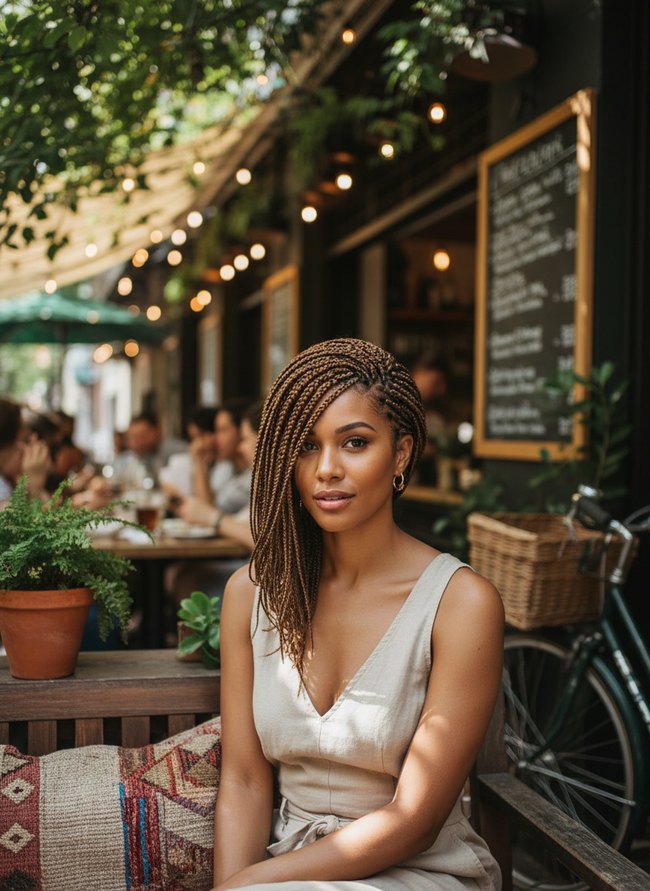
The woman’s head features many long, slender, medium-brown knotless braids that extend past her shoulders. Her neat, square parts create a clean, organized look along her scalp. Knotless braids offer a gentler option for your hairline. Consider a professional stylist to achieve the protective style.
The ‘Tension Test’: How to Self-Assess Braid Pressure on Your Edges
Your pinky finger can find too-tight braids. A small, clean finger can gently slide under the braid’s base at your temple line. If the finger meets solid resistance, the braid pulls too much. You should feel a slight give, not a firm wall of tension against the skin. A comfortable braid allows a little movement around the hair follicle. Pulling hair feels like a tiny tug at the scalp. Persistent pulling can damage tender new hair growth. Look closely at your hairline in a bright mirror. Small red bumps or raised skin around the braid’s root are early warning signs of excessive pressure. Your scalp should remain flat and its natural skin tone. A small, gentle head shake should not cause discomfort near your earlobe. Listen to your body’s signals. Headaches near the forehead often point to too-tight styles. You want a light, airy feel on your head.
Post-Braid Edge Revival: A 3-Step Routine for Hairline Recovery
Your hairline needs gentle care after braid removal. First, use a wide-tooth comb for detangling. Start at the ends of your long hair, moving slowly upwards to the roots. Next, give your scalp a deep cleanse. A sulfate-free shampoo with tea tree oil can soothe tender skin. Massage the rich lather into your scalp with soft fingertips. Rinse thoroughly with cool water to close hair cuticles. Follow with a moisturizing conditioner, focusing on dry ends. Leave the creamy conditioner on for five minutes. Rinse again until the water runs clear. Finally, apply a nourishing hair oil to your delicate edges. Castor oil or jojoba oil offers deep hydration. Rub a small, pearl-sized amount of oil into your temple lines and nape. This simple routine helps restore strength and shine to fragile new growth. Consistency brings healthy results.
Which Idea Will You Try First?
That’s 12 different takes on knotless vs box braids. The best ideas above are usually the smallest moves — one material, one layout shift, one piece of furniture in the right place. Pick whichever room feels closest to your space and start there before tackling the rest.
Found an idea worth keeping? Save this post to your Pinterest board so it’s waiting for you when you’re ready to start your own project.