Fresh braids or twists look sharp right now. New styles demand upkeep. Braids don’t just stay neat forever; a soft pillowcase can rough up the neat pattern. Friction makes tiny frizz, and frizz unravels careful work. A good night’s sleep should never mess up hair. Learning how to wrap hair at night saves trouble every morning. Silk wraps prevent snagging on cotton sheets. Protecting the careful style extends its life for weeks. The simple habit makes a big difference. Let’s get your nightly routine sorted.
1. Silk Scarf Head Wrap
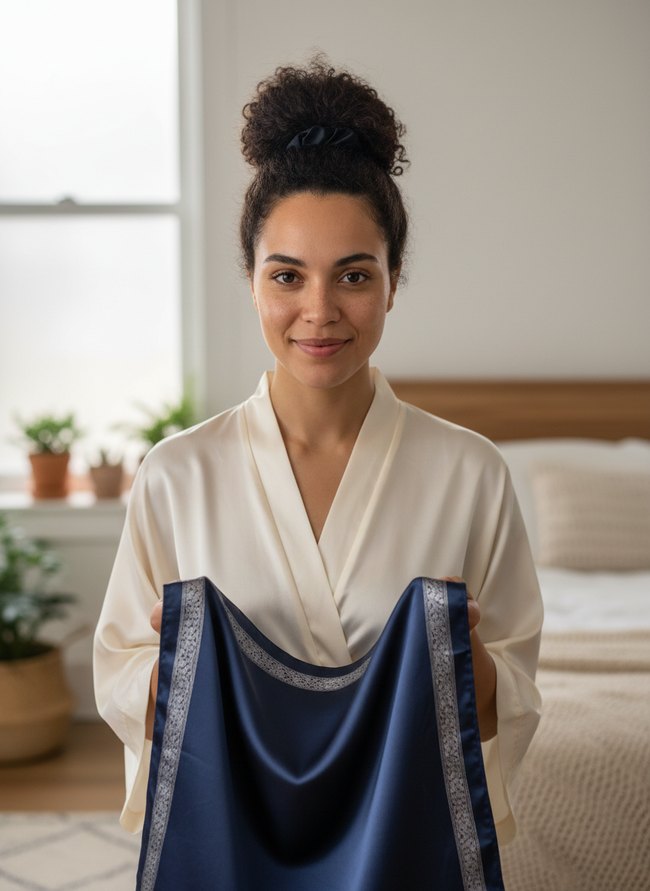
A woman holds a dark blue silk scarf; a silver patterned border catches soft light. Her curly hair sits in a high, messy bun, secured with a black scrunchie. A large scarf can protect curls when wrapped around hair at night.
2. Pineapple Updo Method
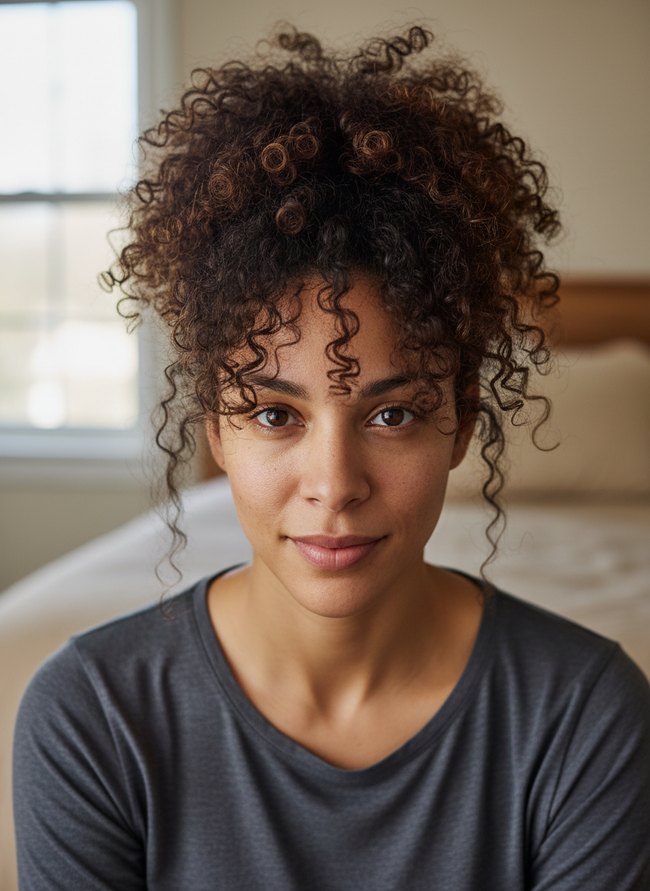
The model’s dark brown curly hair is gathered high on her head, forming a full, soft pineapple updo. The updo keeps delicate curls safe from flattening or frizzing while sleeping. Gather hair loosely at the very top of your head to protect strands at night.
3. Satin Bonnet Protection
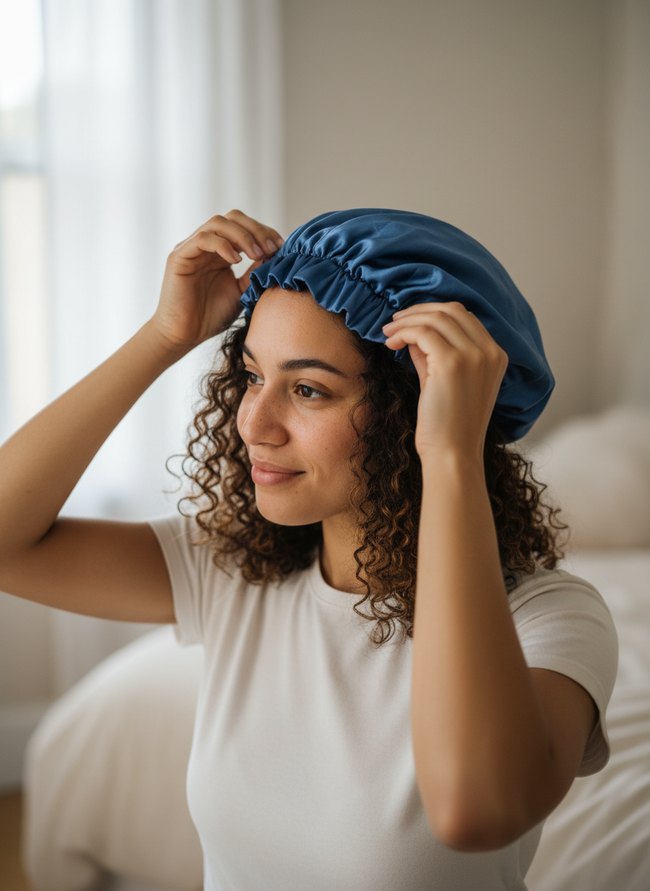
A dark blue satin bonnet covers most of a woman’s brown curly hair. She holds the gathered elastic edge of the bonnet in place with both hands. The bonnet secures firmly around your hairline to protect your hair at night.
4. Twist Out Preservation
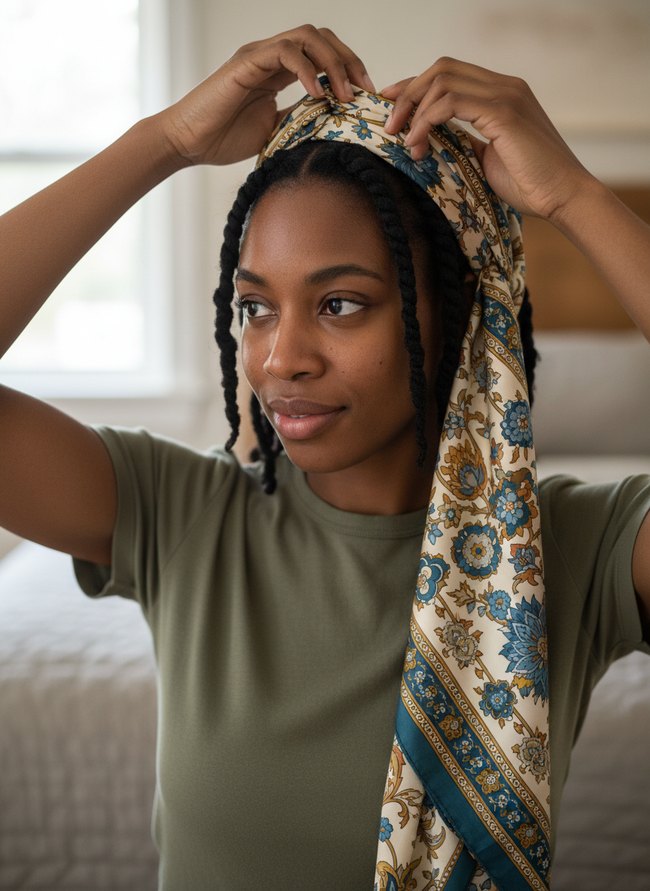
A woman secures a creamy patterned scarf around her head, protecting her dark twisted hair. Her hands guide the light fabric over her crown, keeping her twists smooth and contained. Always use a silk or satin scarf to wrap hair at night for less friction and frizz.
5. Braided Style Covering
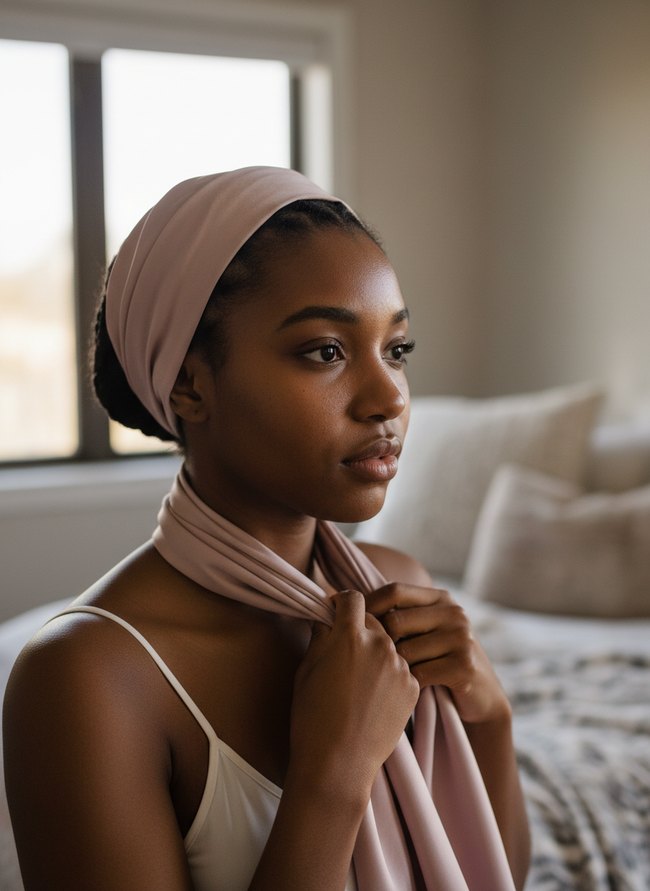
The soft pink satin scarf protects hair, keeping braids neat and smooth. The long, flowing fabric allows wrapping hair at night in many ways. Always choose a scarf with a smooth, slick surface to prevent frizz and damage.
6. Durag Lay Flat
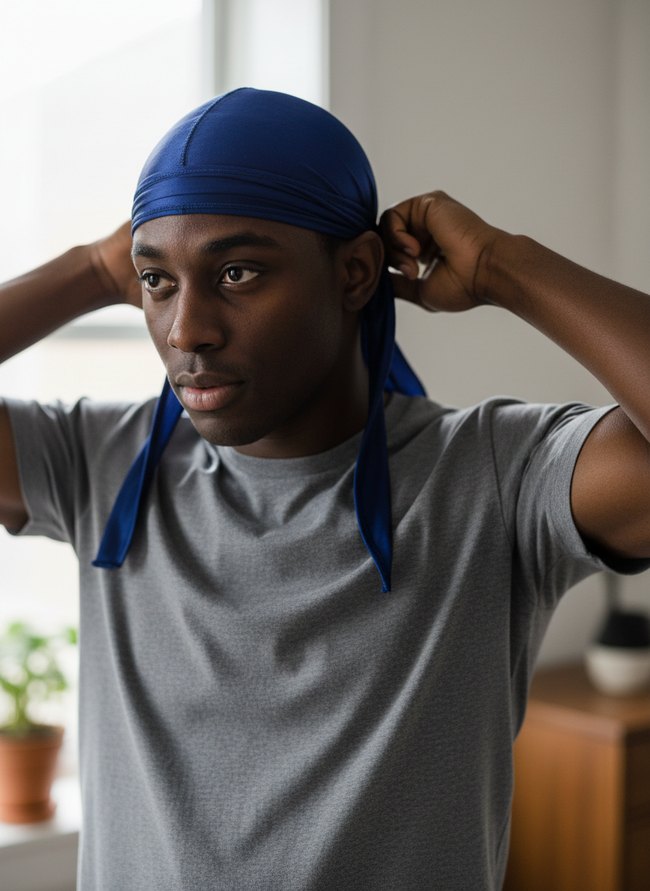
The royal blue durag on the man’s head shows a smooth, stretched fabric surface. He holds the two long, blue fabric ties near his ears, pulling them back to secure the head covering for the night. You should pull the ties taut enough to keep the durag flat against your hair.
7. Curl Definition Wrap
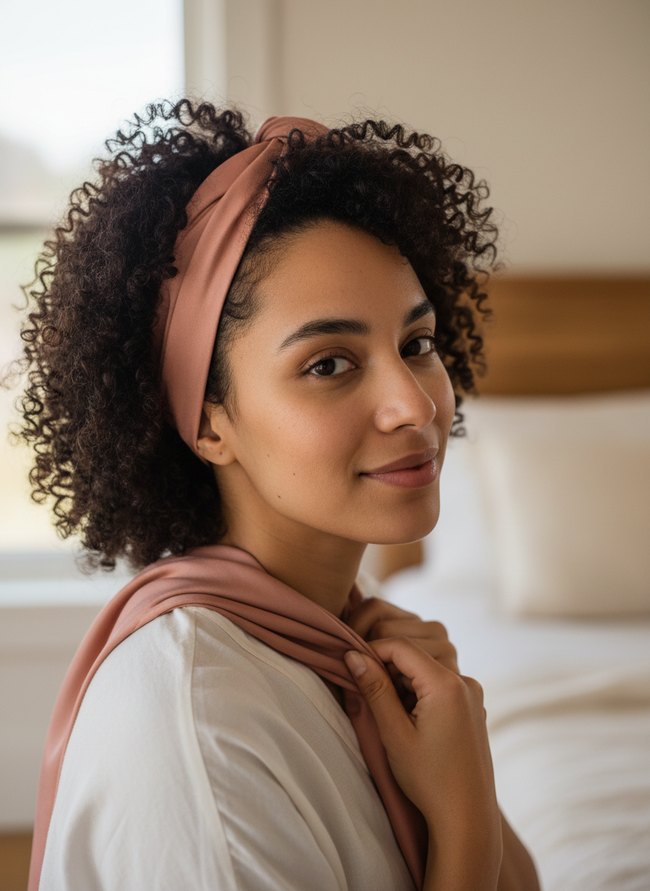
A rose pink satin scarf neatly gathers dark curls away from a woman’s face. The simple wrap protects natural curl definition while you sleep. Users should avoid pulling the fabric too tightly across the hairline.
8. Flexi Rod Securement
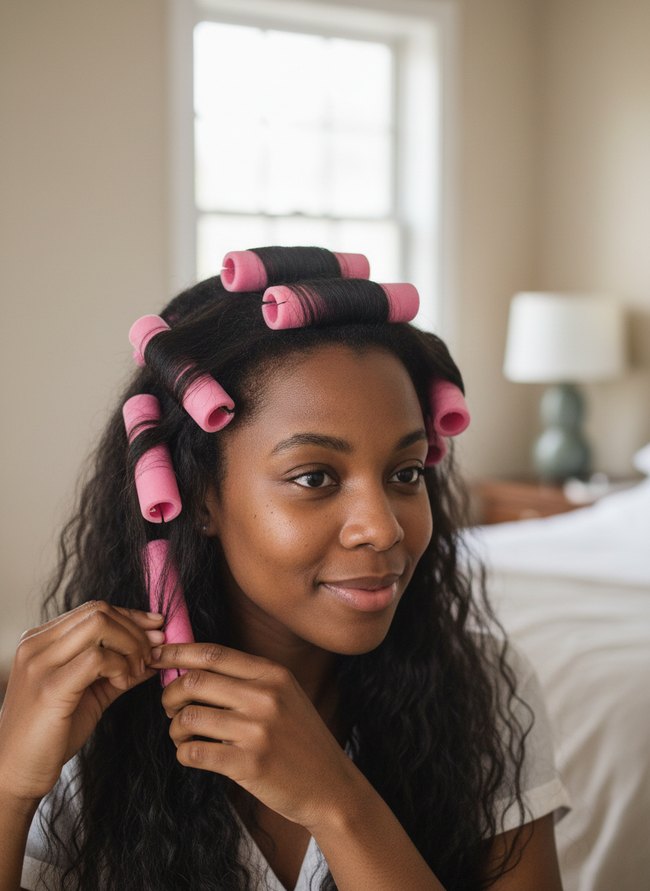
Pink foam flexi rods hold long black hair securely across the young woman’s head. Soft, bendable rods curl hair without heat. Every strand of hair stays tucked inside the rod for best results.
9. Locs Night Covering
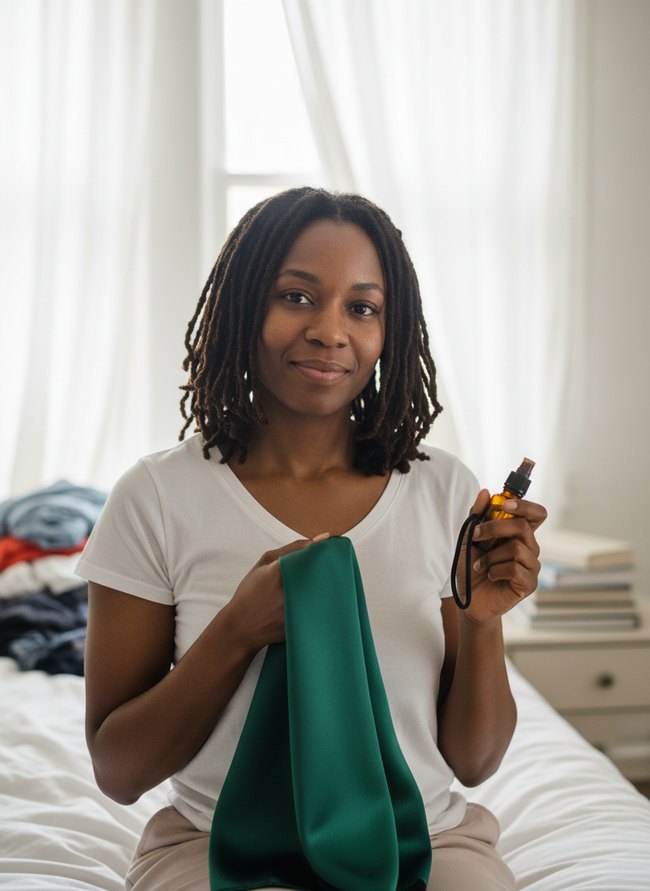
A woman with dark locs holds a green satin scarf and a small amber spray bottle. A silk or satin scarf wraps hair at night, protecting locs from friction. Never use cotton scarves or headwraps; cotton fibers absorb moisture from hair.
10. Wig Cap Base
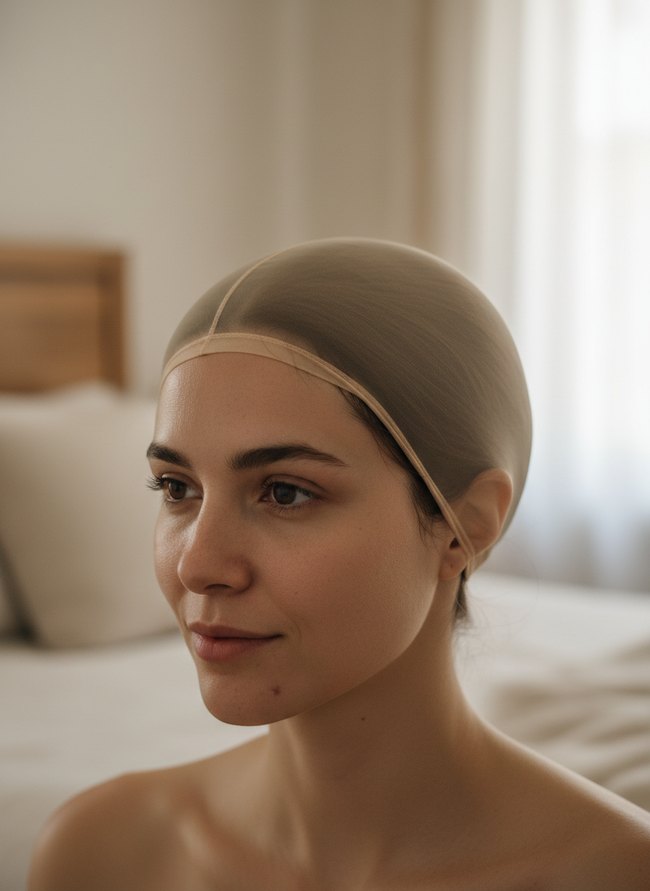
The sheer beige wig cap offers a smooth, snug fit over the model’s dark hair. The thin fabric layer creates a flat surface for your protective style, preventing stray hairs from escaping. Always choose a cap color that matches your skin tone for a natural appearance.
11. Bandana Edge Wrap
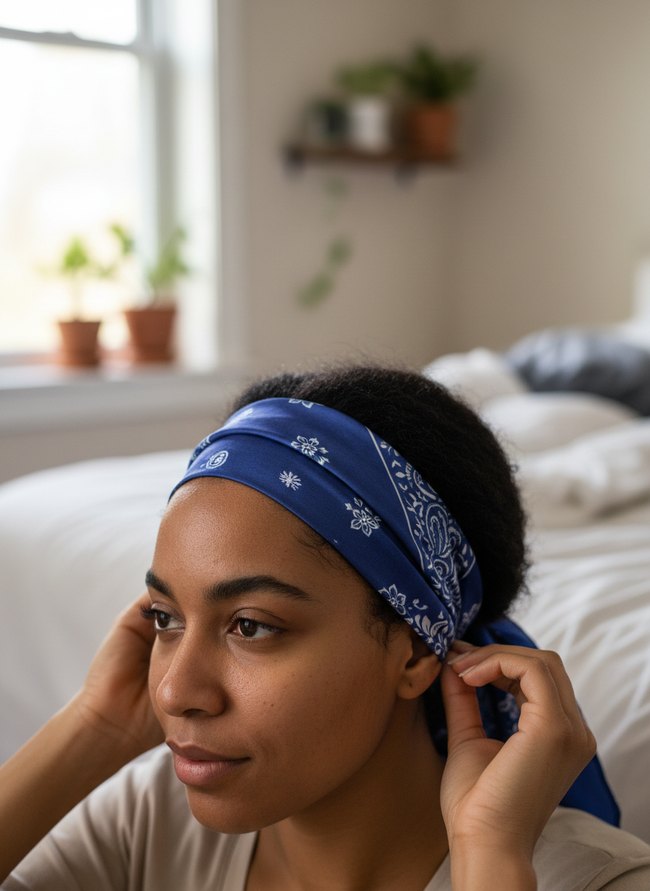
A patterned blue bandana tightly secures the woman’s dark hair around her head. A square bandana folds into a long strip, tying at the back of your head. The fabric covers your edges to protect them while you sleep.
12. Microfiber Turban Dry
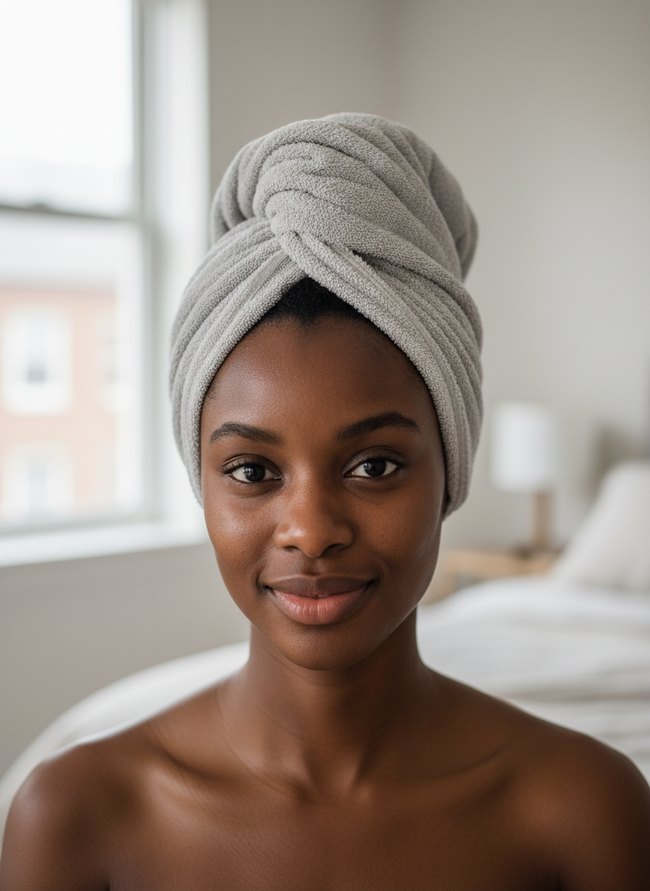
The soft gray microfiber turban wraps snugly around the head, securing damp hair with a smooth twist. The gentle fabric keeps hair protected and helps it dry without friction. Microfiber towels prevent damage and frizz when wrapping hair at night.
My Hair Still Looks Flat/Matted in the Morning: Why Your Wrap Isn’t Holding Up (And How to Fix It)
Many people believe a tight scarf holds everything perfectly in place. A slick satin scarf, tied too snug, however, flattens your careful curls. Your hair needs room to breathe, not a restrictive vice. Most folks pull their wraps down low, covering the entire hairline. This common practice pushes delicate temple hairs backward, creating a matted texture. Instead, position the silk fabric just behind your hairline, leaving those tiny baby hairs free. Some tutorials suggest wrapping wet or damp hair. Moisture trapped under a dark polyester cap molds your strands into unwanted shapes. Always wait for completely dry hair before attempting any overnight protective wrap. Plenty of individuals use a single, thin headscarf. A flimsy cotton cloth offers little structural support for a voluminous style. Try layering a wide satin bonnet over a light silk scarf for double-layered protection. The double layer creates a soft dome, allowing your styled hair to maintain its airy shape. Others sleep directly on a cotton pillowcase, even with a wrap. Rough cotton fibers still snag and pull at the edges of your hairline. A smooth silk pillowcase under your bonnet adds another soft barrier against friction. Your gorgeous curls will thank you.
The Dreaded ‘Wrap Lines’: How to Avoid Unwanted Indentations and Marks on Your Hair
Many people believe a tight scarf holds hair best, creating those deep fabric creases. Most assume pulling a silk scarf taut across the forehead prevents all flyaways, but that firm pressure actually makes visible forehead lines and hair indentations. Instead, a loose satin bonnet, with a wide, soft elastic band, offers gentle protection without leaving unwanted marks on your fresh style. You might think cotton pillowcases are fine for overnight, but their coarse fibers tug at delicate strands, causing frizz and leaving little rumpled patterns on your hair shafts. A smooth, charcoal satin pillowcase lets your wrapped hair glide freely, preserving its sleek shape and preventing friction damage. Some stylists tell you to twist your hair tightly into a high bun before wrapping, thinking a compact shape is less prone to disruption. However, that tight twist forms a rigid coil, which then takes on the precise circular indentation of your elastic band. A soft, low ponytail or a single, loose braid, secured with a fabric scrunchie, keeps hair contained without creating harsh bends. You may have heard that wrapping hair when it is still damp helps set a style. Unfortunately, damp hair molded under pressure dries in that compressed shape, showing every fold and crease from your wrapping material. Always allow your hair to dry completely before any nighttime wrapping.
Which Idea Will You Try First?
That’s 12 different takes on how to wrap hair at night. The best ideas above are usually the smallest moves — one material, one layout shift, one piece of furniture in the right place. Pick whichever room feels closest to your space and start there before tackling the rest.
Found an idea worth keeping? Save this post to your Pinterest board so it’s waiting for you when you’re ready to start your own project.