A fresh protective style, with its tight braids or smooth twists, feels like a shield for your hair. Sometimes neat rows and coiled ends hide real trouble. Many people just starting out make little slips that lead to big headaches. Tiny errors, like pulling too hard at the temple or leaving a style in for months, can actually cause hair breakage. Nobody wants brittle strands or thin patches where thick hair should be. A loose braid or stretched curl provides comfort, not damage. Learning common protective style mistakes will keep your coils strong and healthy, ready for whatever life throws at them.
1. Overly Tight Braiding Tension

The woman’s taut, dark braids pull her natural hairline upward. Tight braids damage hair follicles and cause lasting hair loss along the hairline. The protective style should feel comfortable, not painful.
2. Neglecting Scalp Hydration

The woman’s dark scalp shows dry, white flakes at her part line. Dryness can cause itchy skin and lead to hair breakage. Avoid this protective style mistake by regularly moisturizing your scalp with light oils or sprays.
3. Inadequate Hair Preparation

The woman’s dark curly hair shows frizz near her scalp, suggesting a need for better moisture or a smoother base. Always prepare natural hair by washing, deep conditioning, and moisturizing it well before installing any protective style. Ensure hair is properly detangled from root to tip.
4. Ignoring Edge Care

The dark braided hairstyle on the young woman shows neat, tight braids pulled back from her face. The braids appear to put little tension on her delicate temple hair, a common protective style mistake. Always make sure your protective styles do not pull too tightly on your hairline.
5. Leaving Style Too Long

The woman’s dark braided hair shows small flyaways around the hairline, indicating growth. Leaving a protective style too long can cause new hair growth to tangle and break. Hair stylists recommend taking down the style after the recommended time.
6. Improper Takedown Technique
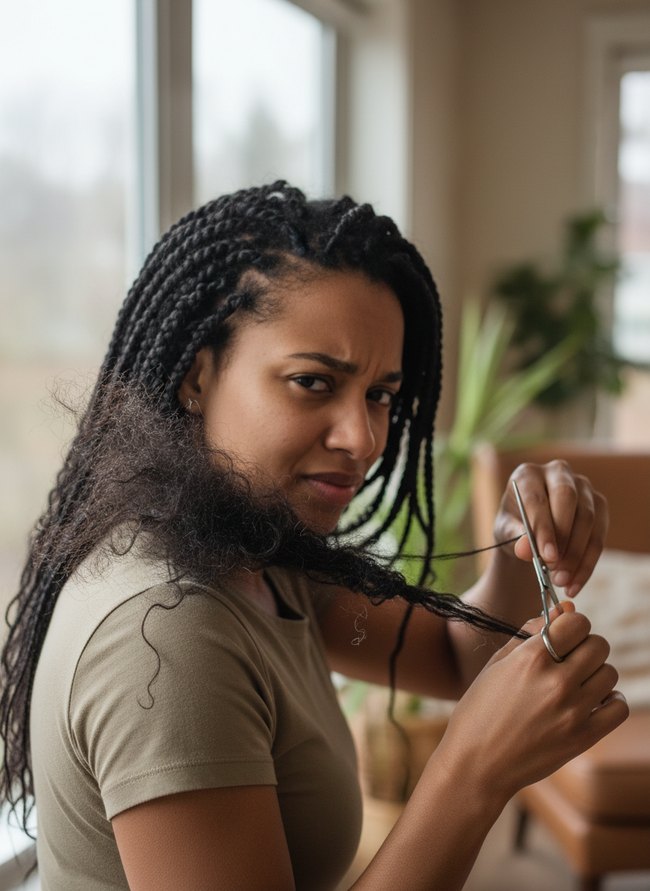
A young woman holds small silver scissors to a dark braided strand of hair. Her worried face shows the risk of cutting hair to remove a protective style. Avoid sharp tools near the scalp; instead, carefully unravel each braid with fingers.
7. Using Wrong Hair Products

White product residue clings to dark curly hair, creating an uneven, flaky look. Wrong products can cause frustrating buildup and dullness on a protective style. Always research ingredients and choose hair products made for your specific hair type.
My Braid-Out Looked Great, But My Edges Are Thinning: What Went Wrong?
Your new protective style felt so good, a neat braided look. Many people think a tight braid holds hair best. However, tight styles put harsh tension on delicate edges. These fine hairs around your face suffer from constant pulling. Instead, consider gentle, looser braids near the hairline. A soft touch prevents breakage. You might also believe using strong hold gel gives a clean, long-lasting finish. That sticky product can clog tiny hair follicles. Blocked follicles weaken new hair growth. Try a lightweight mousse or a natural oil for edge control. This lighter product keeps your hairline smooth without suffocation. Another common mistake involves leaving the style in for too long, past four weeks. Your natural hair needs regular air and moisture. Leaving braids in for months creates matted sections. Unbraid your protective style after a month. Then, give your hair a deep conditioning treatment. A healthy scalp grows strong, vibrant strands. Remember, your hairline requires extra care, not extra strain.
How Do I Know If My Protective Style Is Too Tight *Before* It’s Too Late?
Many people think a little pain means your protective style will last longer. Your scalp should never hurt. A sharp tug on a single braid or cornrow means too much tension. Most folks wait for red bumps or shiny skin at the hairline before worrying. That visible skin irritation shows damage already started.
Instead, lightly touch your entire scalp after a fresh style. Feel for tight spots, stiff sections, or throbbing pulses. Gentle pressure on your head should not make you flinch. Many stylists say a tight feeling is normal for a few hours. A snug feeling is okay. True discomfort, like a pulling sensation on your brown hair follicles, is not. When you try to sleep, your head should rest comfortably on a soft pillow. Any trouble lying down without pressure means the style is too tight. Do not wait for headaches or bumps. Take out the offending braid or twist quickly.
Which Idea Will You Try First?
That’s 7 different takes on protective style mistakes. The best ideas above are usually the smallest moves — one material, one layout shift, one piece of furniture in the right place. Pick whichever room feels closest to your space and start there before tackling the rest.
Found an idea worth keeping? Save this post to your Pinterest board so it’s waiting for you when you’re ready to start your own project.