Many online guides suggest a single “best” way to begin a loc journey. The approach misses the vast textural landscape of natural hair. A curl pattern, tight spring or loose wave, impacts how first-stage locs form. The pages show twenty distinct starter loc ideas. Each example highlights a different technique, from two-strand twists that create a plump, uniform coil to small comb coils that yield a delicate, rope-like strand. You will observe various parting styles, including precise square sections and free-form organic shapes. The visual evidence presented demonstrates the wide array of foundational options available for developing locs. Individual hair density and scalp exposure also shape the final look of these initial phases. The collection proves that personal preference and hair type dictate a unique, visually compelling beginning for every set of locs.
1. Coil Method Starters
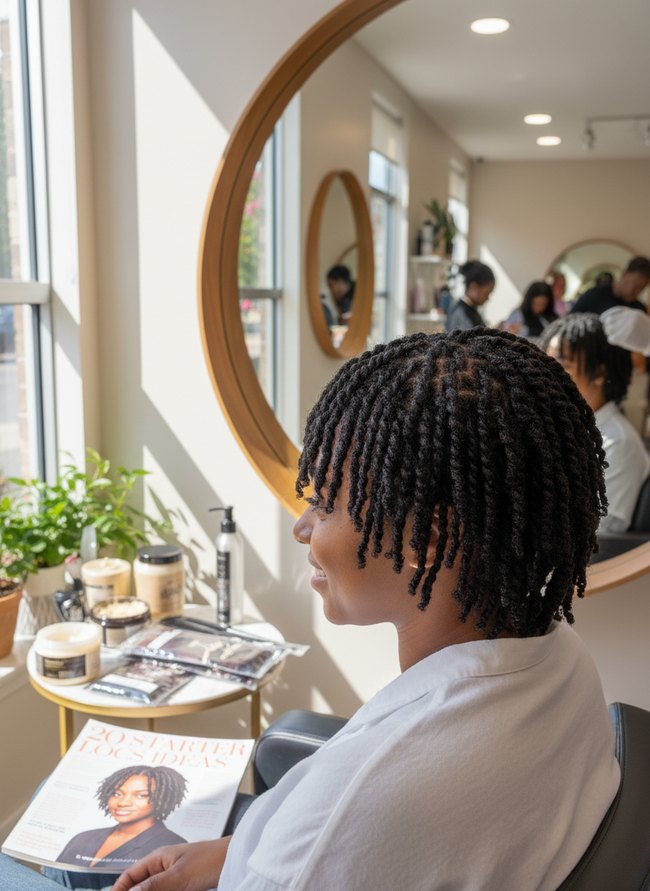
Neat coiled parts create a clean, organized foundation for these starter locs. Precision ensures each individual loc forms with consistent thickness and direction, helping them mature evenly. Dark hair shines under bright window light, showing the defined twists. The careful, uniform parting is the move to steal here.
2. Two Strand Twist
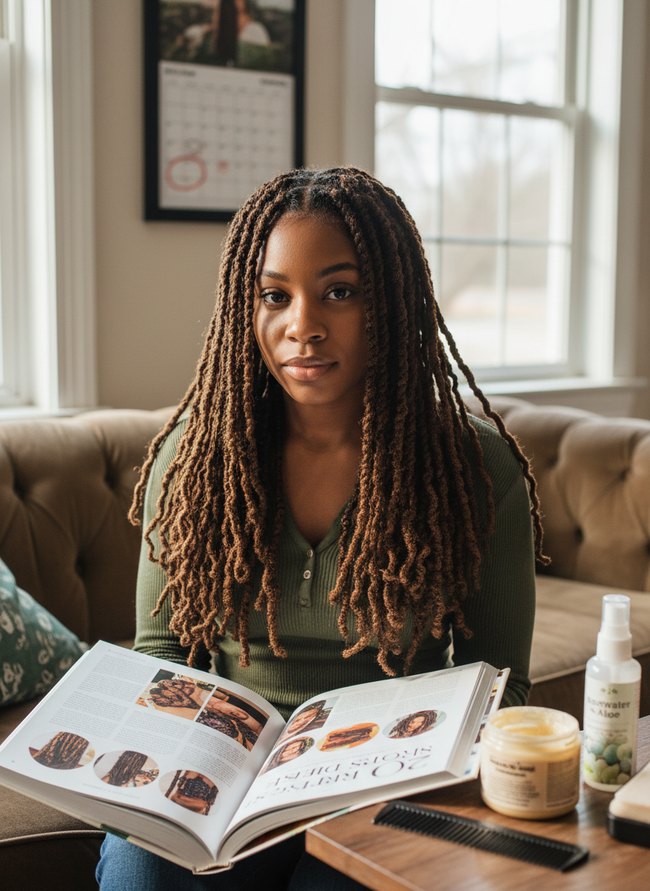
Two-strand twists offer an excellent foundation for starter locs ideas, providing a neat, textured appearance from day one. Clean, dark brown twists cascade down the model’s shoulders, presenting a uniform yet natural aesthetic. A simple side part creates a balanced frame for the face, while a tufted brown couch and large window add soft background elements. The key takeaway for your own loc journey is the consistent, even sizing of each twist.
3. Braided Base Foundation
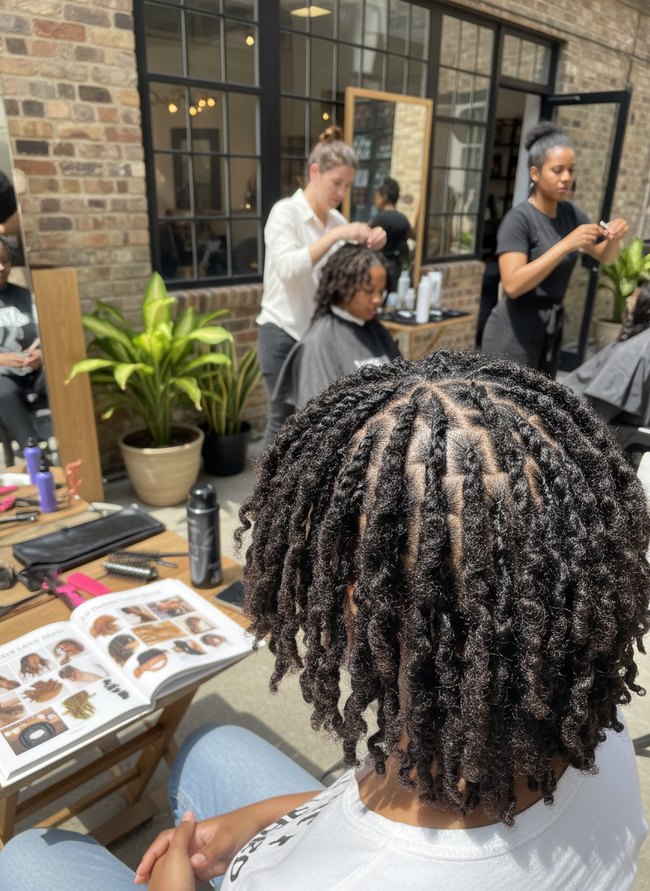
The neat braided base anchors these starter locs firmly to the scalp. Precise square partings ensure each dark loc grows out cleanly. A white t-shirt and light blue jeans complete the ensemble. The clean square sections create a polished loc look.
4. Interlocking Starter Locs

Medium-length dark locs offer a natural look that highlights the wearer’s facial features. A light tan button-up shirt and a patterned golden-brown neck scarf complement the warm skin tone. The locs’ soft, natural parting is easily replicated.
5. Crochet Method Beginnings

Neat crochet locs create a uniform, textured appearance, showcasing a well-maintained foundation for your loc journey. Dark brown hair falls naturally around the face, framing your smile with soft volume. Small metal beads add subtle decorative accents to individual locs, offering a touch of personal flair. The precise, even locs are a move worth stealing.
6. Comb Coil Defined
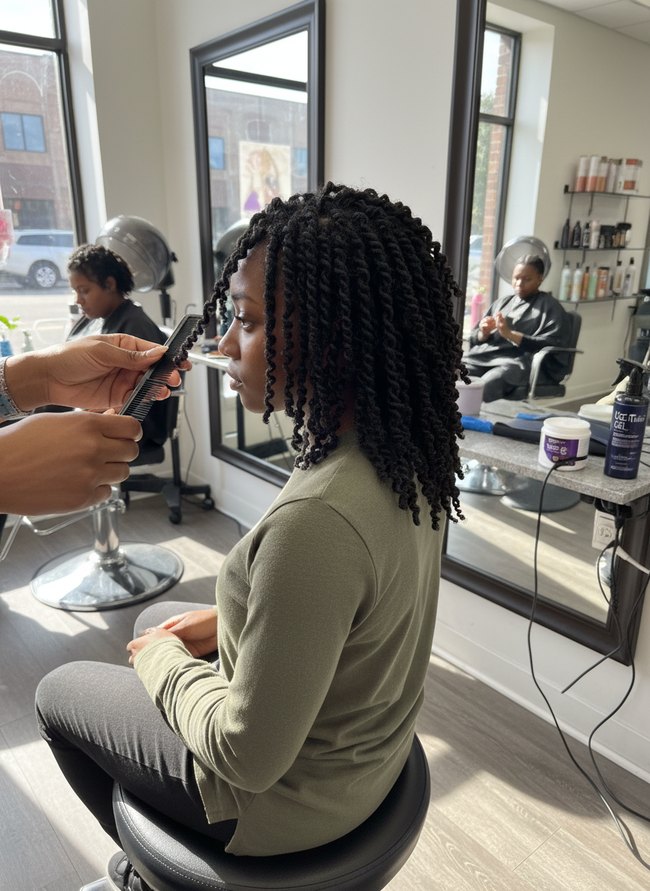
Neat, small sections of dark hair are carefully twisted, creating a uniform, natural look. Each coil starts at the scalp and extends down the back, showcasing a consistent pattern. The stylist’s hands hold a black comb, demonstrating precise sectioning for the locs.
7. Freeform Journey Start
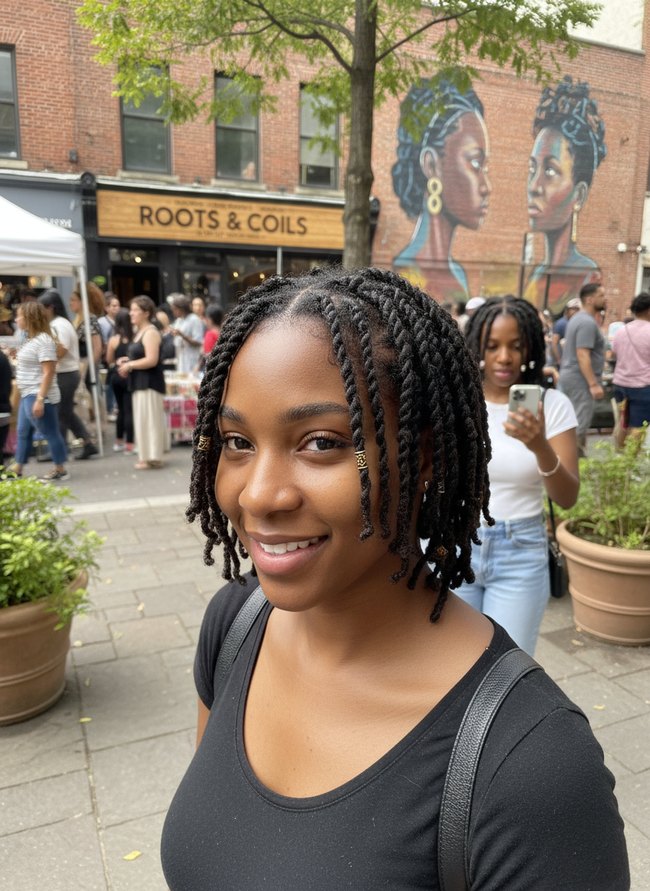
The two-strand twist technique offers a clean, defined beginning for starter locs, allowing hair to mature gracefully. The method creates uniform locs, which many find pleasing during the early stages. Small gold beads add subtle metallic accents to the dark twists. Steal the neat two-strand twists for a polished loc foundation.
8. Finger Coil Definition

Finger coils give each loc a distinct, rope-like texture from root to tip, establishing clear separation and volume. The uniform dark brown coils create a full, rounded shape around your head, offering a soft frame for your face. A simple side part allows the curly locs to fall naturally, enhancing facial symmetry. For defined, voluminous starter locs, use finger coils.
9. Sisterlocks Installation Starter
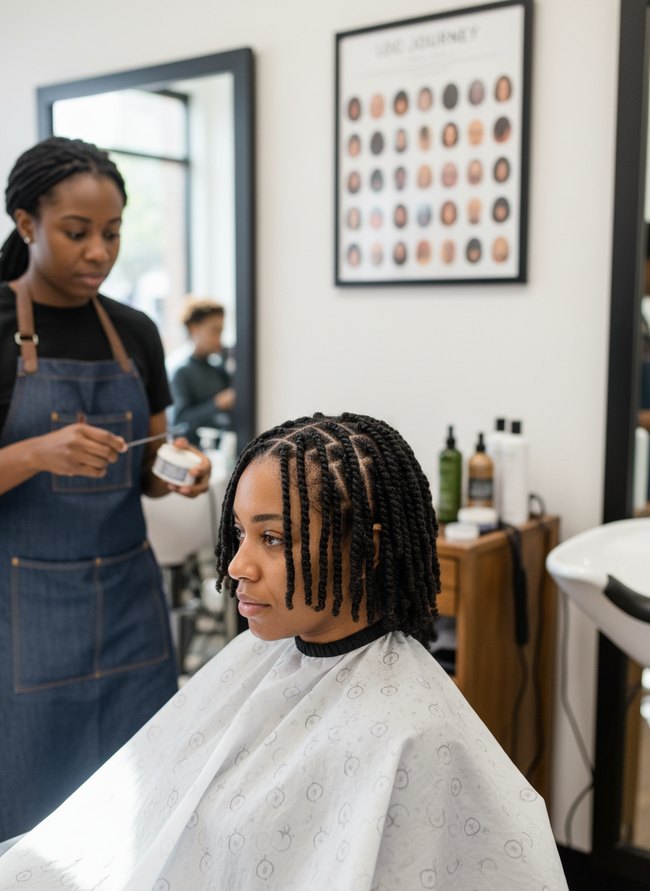
A neat grid parting across the scalp creates a crisp foundation for the starter locs. Precise sectioning ensures each dark loc forms a clean, uniform shape, allowing for even growth and easy maintenance. A white barber cape with small gray patterns covers the client’s shoulders. Borrow the precise square parting for a well-defined loc base.
10. Micro Locs Initiation
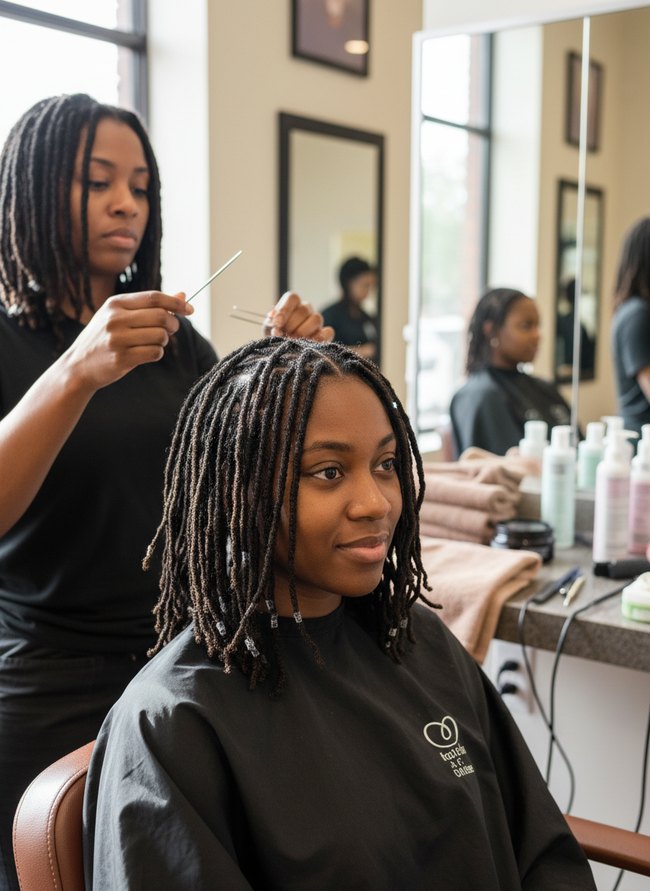
Small, uniform partings on the scalp create a neat grid for these starter locs, allowing each individual loc to grow distinctly. Precise sectioning ensures even tension and encourages a clean foundation for the growing hair. Clear plastic hair beads at the ends of several locs add subtle visual interest. Consistent, small sections create a tidy, manageable look.
11. Wick Locs Foundation
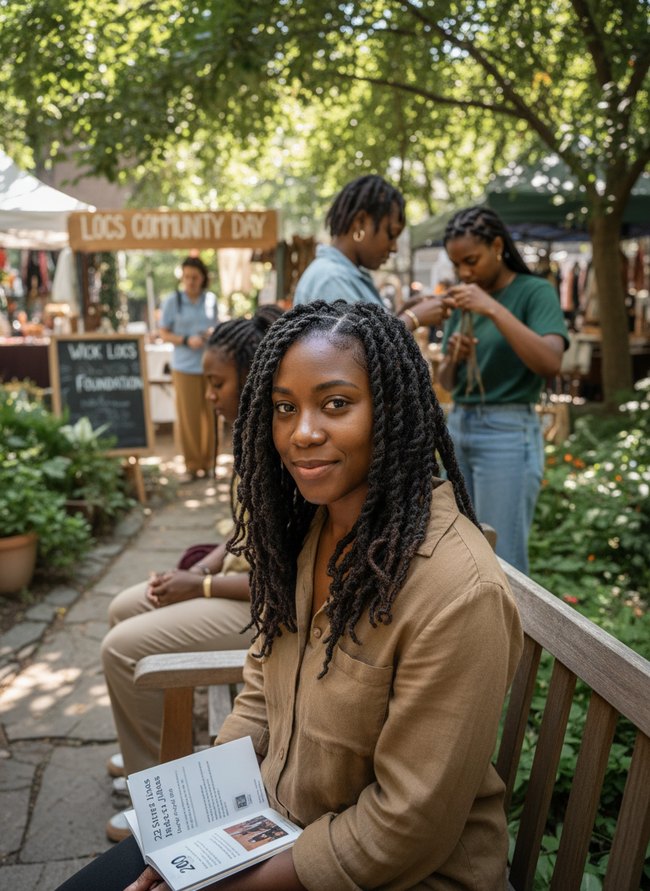
The neat, dark wick locs showcase a uniform size and clean parts, creating a polished foundation. Consistent starter locs allow each twisted strand to develop evenly. A wooden bench offers a natural backdrop, complementing the earthy tones of the woman’s linen shirt. Uniform twists offer a strong, early loc journey.
12. Barrel Twist Starters
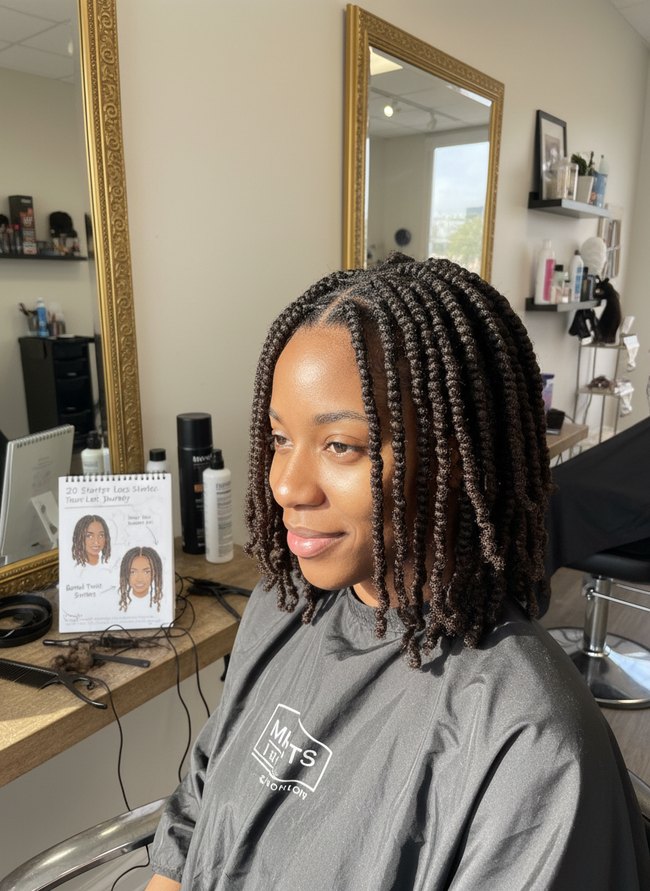
Barrel twists create a uniform, medium-length bob shape, offering a polished look for new starter locs. The consistent length and thickness provide a neat foundation for your loc journey. Square partings across the scalp ensure clean divisions for each dark brown twist. The clean, even shape works well for early loc styles.
13. Cornrowed Base Locs

Cornrowed roots create a neat, organized base for starter locs, giving a clean look. The method works well for managing new growth and achieving uniform sections. Long, dark locs fall over her shoulders, complementing the green garden setting. The cornrowed base provides a polished foundation.
14. Temporary Loc Style

Dark brown locs cascade freely over the shoulders, providing a natural, relaxed look. Small, colorful beads woven into several locs add playful accents. A wooden garden bench provides a casual backdrop for the temporary starter locs.
15. Grid Parting Precision
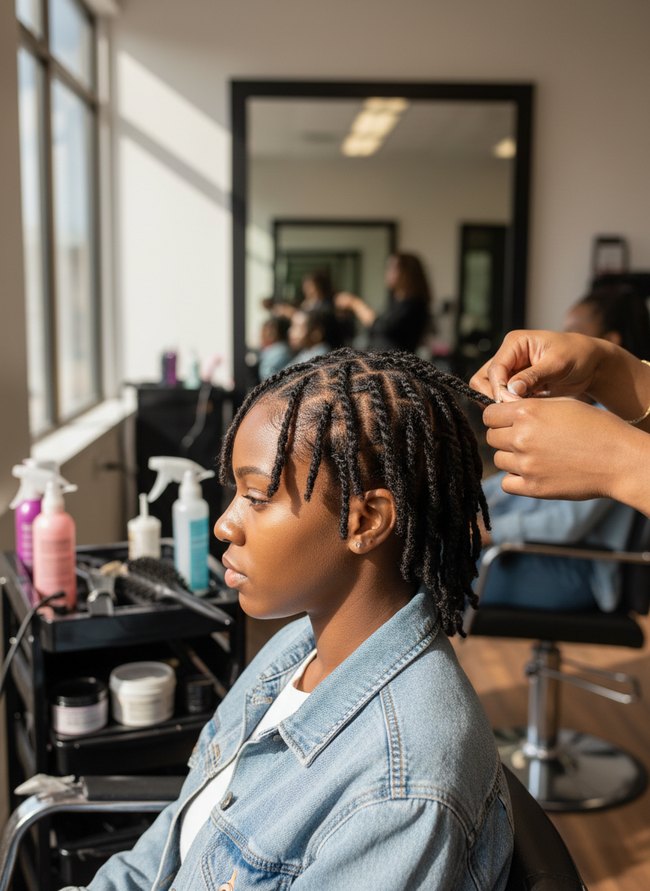
The neat grid parting creates a clean, structured foundation for each starter loc. Precise division of the dark hair allows for even tension and promotes uniform growth, making future retwists simpler. Subtle shine on the locs comes from a light hair product and the even length of each loc. The grid parting offers an excellent base for any loc journey.
16. Spiral Coil Starters
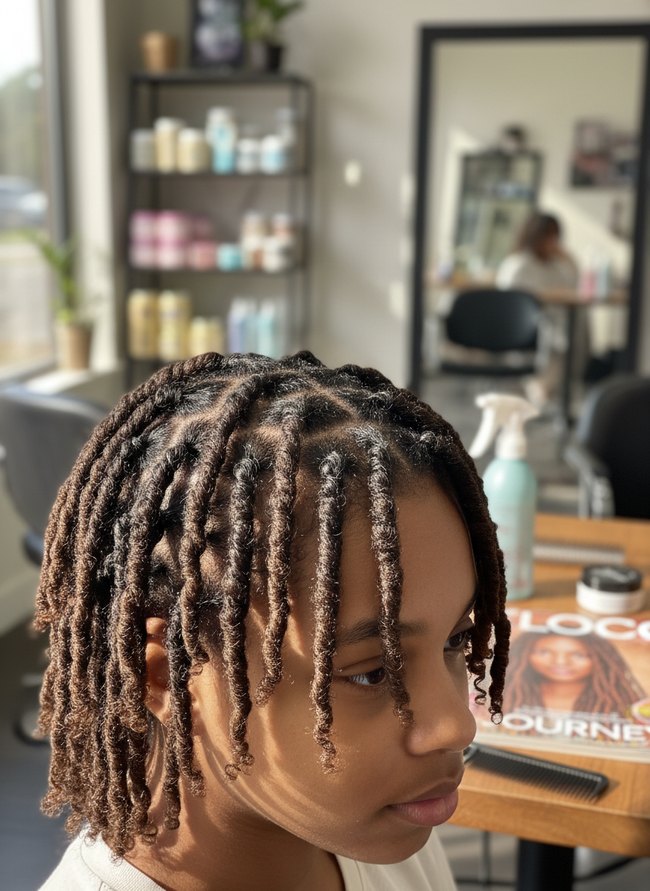
Visible spiral coil starter locs create instant texture, forming tight, springy curls from the scalp. The technique works well for shorter hair, providing immediate definition and a consistent pattern. Neatly parted sections of dark brown hair, each twisted into a distinct loc, are visible, with a small black comb resting nearby on a light wood table. The spiral coil method offers crisp, uniform starter locs.
17. Loc Extensions Beginning
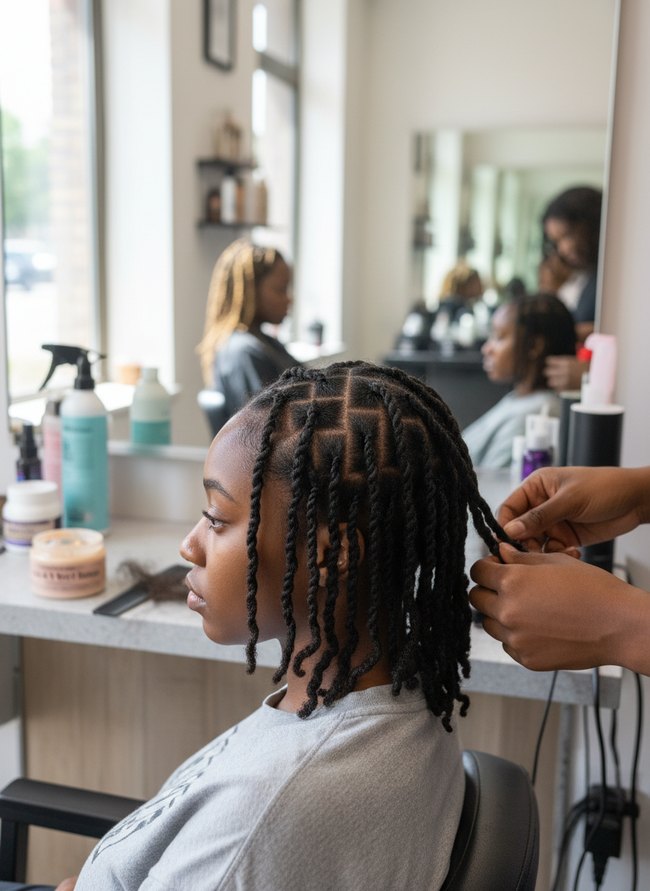
Square partings create a clean, geometric pattern across the dark scalp, showcasing neat foundational work for the starter locs. Smooth black twists hang freely, offering a uniform appearance that will mature into thick locs. A hairstylist’s hands meticulously twist a new section of hair, demonstrating the careful process involved. Steal the precise square grid for your own loc journey.
18. Twist Out Foundation
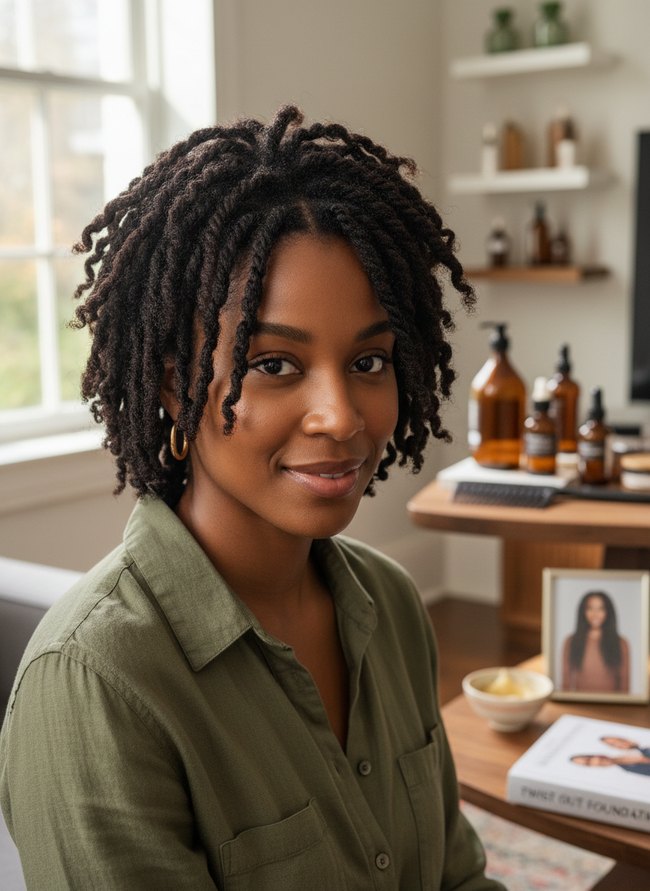
Medium-length dark twists create a soft, full shape around the woman’s face. The cropped top allows for easy management during the early stages of your loc journey, providing a neat appearance. Her olive green shirt and golden hoop earrings add simple, warm tones to the picture. You can steal the subtle, face-framing length for your starter locs ideas.
19. Sectioned Box Locs
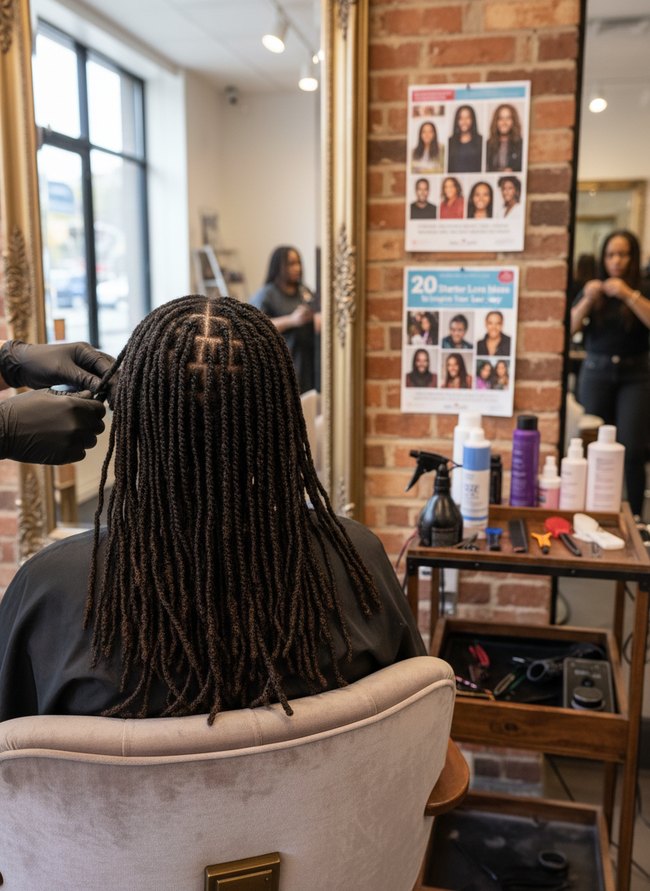
Clean square sections provide a crisp, geometric foundation for dark brown starter locs. Precise parting creates an organized grid across the scalp, showcasing each individual loc with clear definition. The stylist’s gloved hands carefully twist a new loc, demonstrating the careful process involved. Square partings offer a sharp, tailored look for any loc journey.
20. Faux Locs First Step

Dark, twisted faux locs provide a structured yet soft initial texture, creating a full appearance without much weight. The style works well for new loc wearers, offering an immediate, established look. Small, silver hair rings add subtle metallic accents, catching light and breaking up the dark strands. Copy the defined, uniform twists for an easy, impressive starter loc idea.
The Biometric Resonance of Coil-Twist Starter Loc Proportions in Domestic Spaces
Visual harmony between your starter locs and room elements creates subconscious comfort. A single long, thin dreadlock, for example, often mirrors the vertical lines of a narrow oak doorframe. Conversely, many short, thick starter locs might clash with a wide, low-slung charcoal sofa. Your hair’s shape and density directly influence a room’s perceived balance. An open-plan living area with high, vaulted ceilings can easily absorb the visual weight of dense, rope-like starter locs. Smaller, more contained hair patterns, like tight, pencil-thin starter locs, feel more at home in a cozy reading nook with a low, beamed ceiling. Ignoring these proportional relationships leads to a disjointed visual experience. A series of thick, chest-length dreadlocks can overwhelm a small, sun-drenched breakfast nook. Consider your hair’s overall footprint within your personal environment. Matching your locs’ visual energy to your living space enhances a feeling of relaxed ease. This mindful approach brings subtle joy to your daily routines.
Interrogating the Geometric Efficacy of Two-Strand Twist Loc Grids in Minimalist Home Aesthetics
The underlying grid of two-strand twist starter locs greatly impacts a minimalist home’s aesthetic. Small, perfectly squared loc bases, like those found on a dark charcoal grid, create a visual echo of crisp architectural lines. Larger, more relaxed circular partings, however, can introduce a softer, organic counterpoint. A white plaster wall behind a head of tightly gridded locs gains a subtle textural depth. Randomly sectioned loc foundations, conversely, disrupt the serene visual flow of a light oak floor. Your chosen parting pattern directly influences the room’s perceived order. An exposed brick wall benefits from the structured rhythm of neatly separated locs. Messy divisions, in contrast, introduce a chaotic element. Remember, a minimalist space thrives on intentionality; every element, even your starter locs, contributes to the overall calm.
Which Idea Will You Try First?
That’s 20 different takes on starter locs ideas. The best ideas above are usually the smallest moves — one material, one layout shift, one piece of furniture in the right place. Pick whichever room feels closest to your space and start there before tackling the rest.
Found an idea worth keeping? Save this post to your Pinterest board so it’s waiting for you when you’re ready to start your own project.
Leave a Reply