Your hair sits wet, fresh from a long wash, ready for styling. Your arms ache from holding them up to braid or twist a dense, dark mane. A dry, brittle strand snaps between your fingers, leaving a tiny piece on your peach blouse. Many of us have seen more hair on the comb than we prefer. Understanding protective styles can change your hair journey. Clever hairstyles safeguard delicate strands from daily wear. A good style helps hair grow long and strong, without constant breakage. The guide shares some easy options and explains how each one works to keep hair healthy and looking sharp.
1. Classic Box Braid Style

The woman’s long, dark box braids fall past her shoulders, showcasing neat, square parts at the scalp. The protective style keeps natural hair tucked away, helping it grow long and strong. Braids offer a versatile look that requires minimal daily styling.
2. Elegant Cornrow Updo

A woman with smooth, dark skin smiles while reading a book at a light wooden table. Her dark brown hair features tightly braided cornrows styled upwards into a high, full bun, keeping her hair away from her face. The cornrow updo protects natural hair from daily wear.
3. Simple Flat Twist Out

Black twists cascade over the woman’s shoulders, showing a simple flat twist out. Small, uniform twists create a textured crown, protecting hair from daily styling. Loose, curly ends add playful movement to the long, dark hairstyle.
4. Chic Faux Locs Design
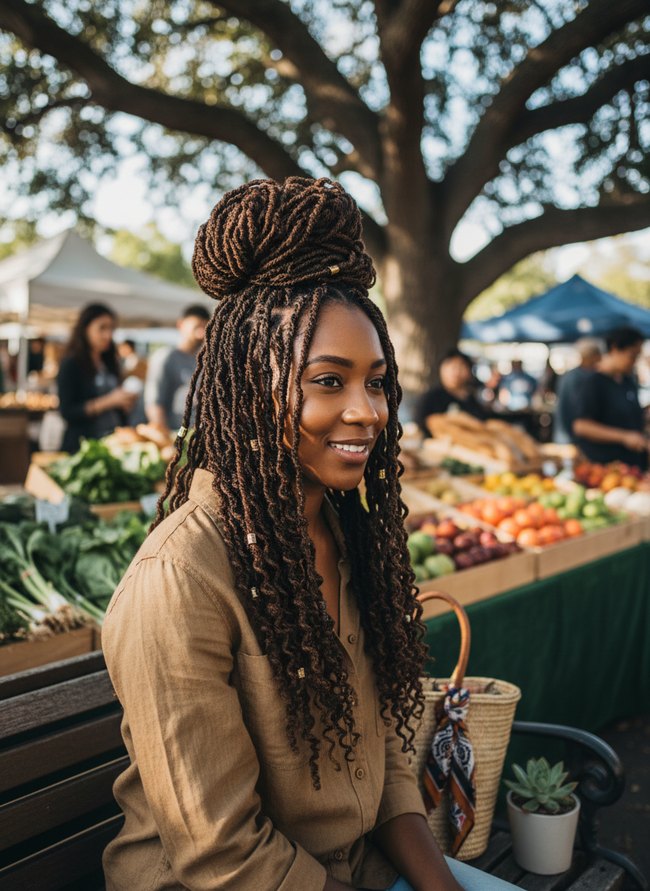
Dark brown faux locs cascade over the woman’s shoulders, with individual locs gathering into a neat, high bun at the crown. Tiny golden beads sparkle throughout the textured strands, adding a metallic shine to the long, flowing style. The protective style keeps natural hair tucked away, offering both a beautiful look and easy care.
5. Modern Passion Twists

A woman wears dark passion twists pulled high on her head, creating a tall, rounded style that protects natural hair. Her decorative pink, cream floral head wrap keeps flyaways smooth and adds a soft accent to the bold updo. The free-hanging twists frame her face, offering a stylish, low-maintenance protective option.
6. Knotless Braid Foundation
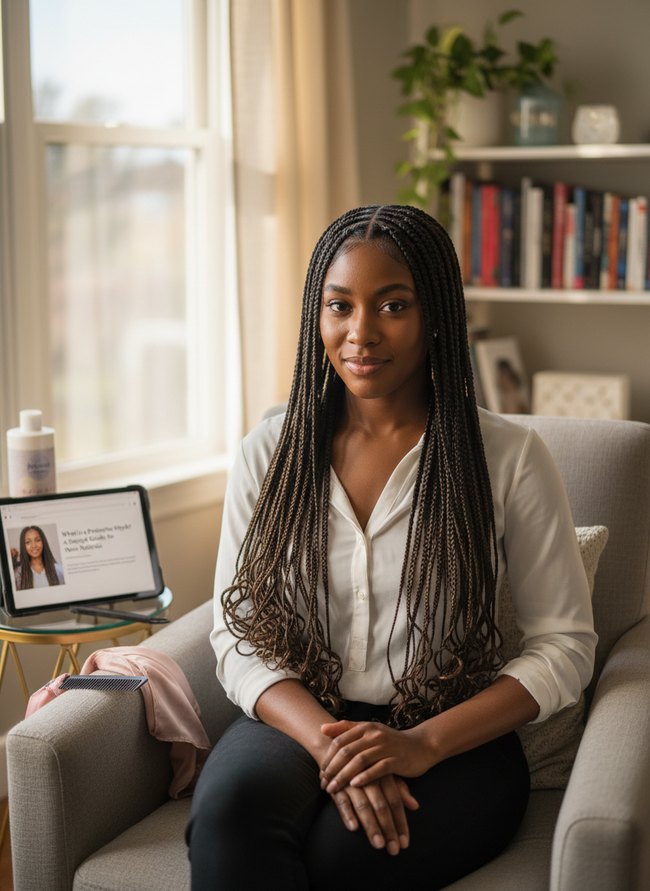
Long, dark braids cascade over the woman’s shoulders, reaching her waist. Her hair parts cleanly down the middle, showing a neat knotless foundation. The protective style gives a polished look with minimal effort.
7. Crochet Braid Artistry
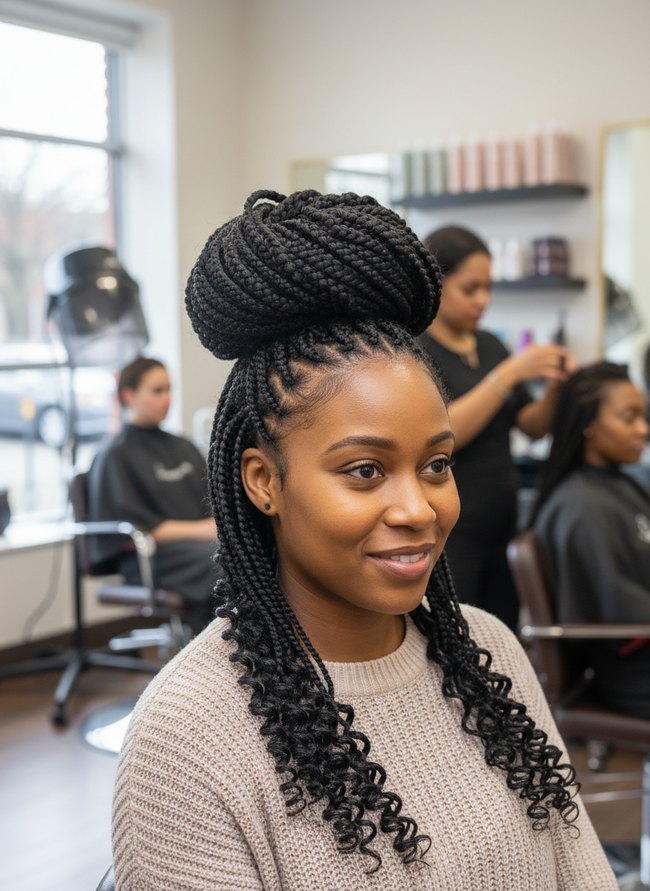
Tiny black braids cover the woman’s scalp, providing a base for the crochet hair. Dark wavy extensions are looped through the braids, creating a full, voluminous look. A high bun of thick black braids keeps hair off your neck, offering a versatile, stylish protective style.
8. Sleek Bantu Knot Setup
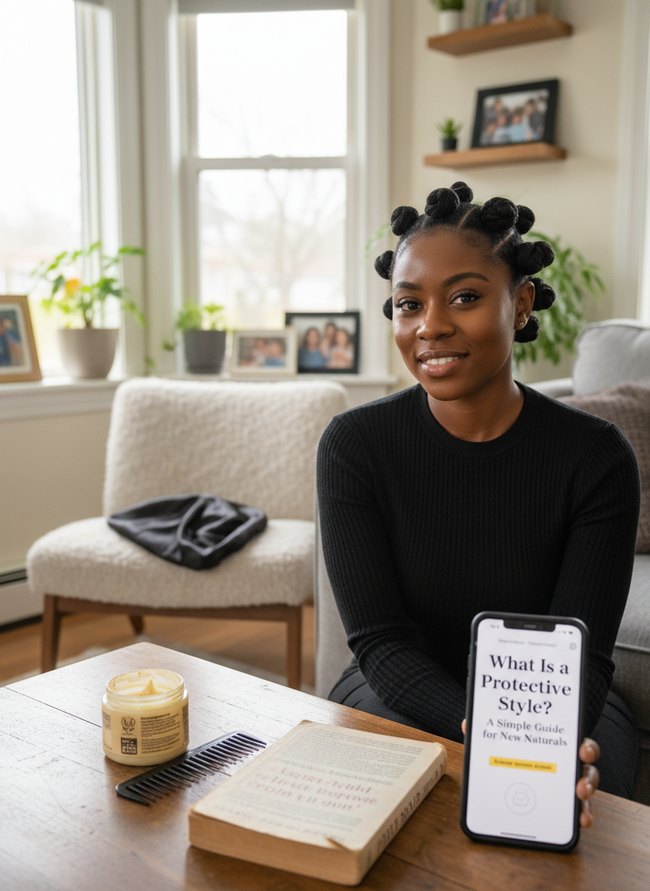
Dark bantu knots, arranged in neat rows across her head, coil hair into compact bundles. The small, rounded formations keep strands tucked away. The popular protective style shields delicate ends from daily friction, promoting healthy hair growth.
9. Twist Out Definition
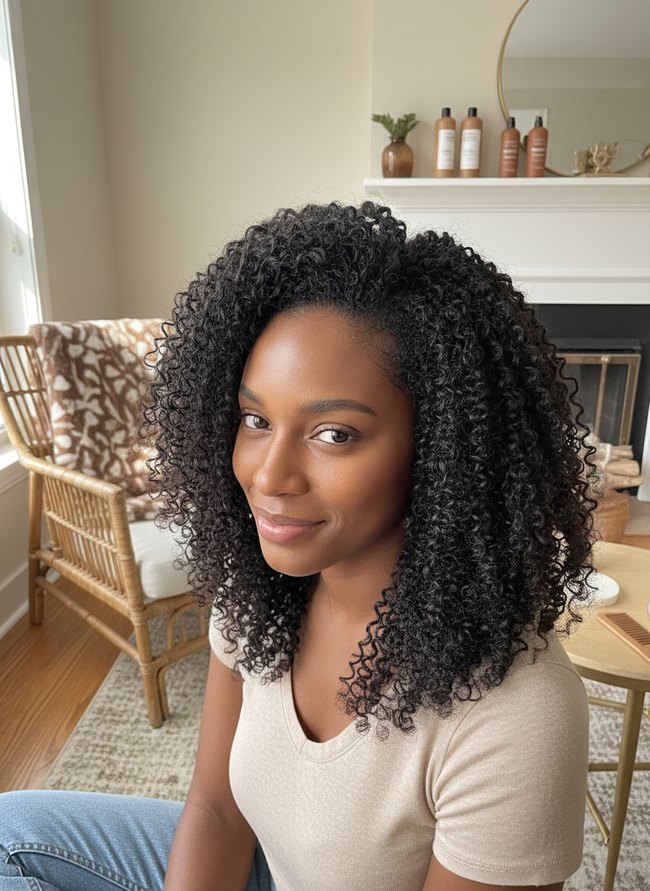
Dark brown curls frame the woman’s smiling face, offering a protective style that keeps hair tucked away. The textured hair falls around her shoulders, showcasing a twist out that adds volume and definition. The simple style helps protect natural hair from daily wear and tear.
10. Protective Bun Creation

A dark-skinned woman creates a high curly bun with a beige scrunchie, keeping delicate strands loose around her face. Her simple dark green top and matching sweatpants suggest a relaxed routine as she stands at a white bathroom sink. The protective style keeps hair safe from daily damage.
11. Defined Two Strand Twists
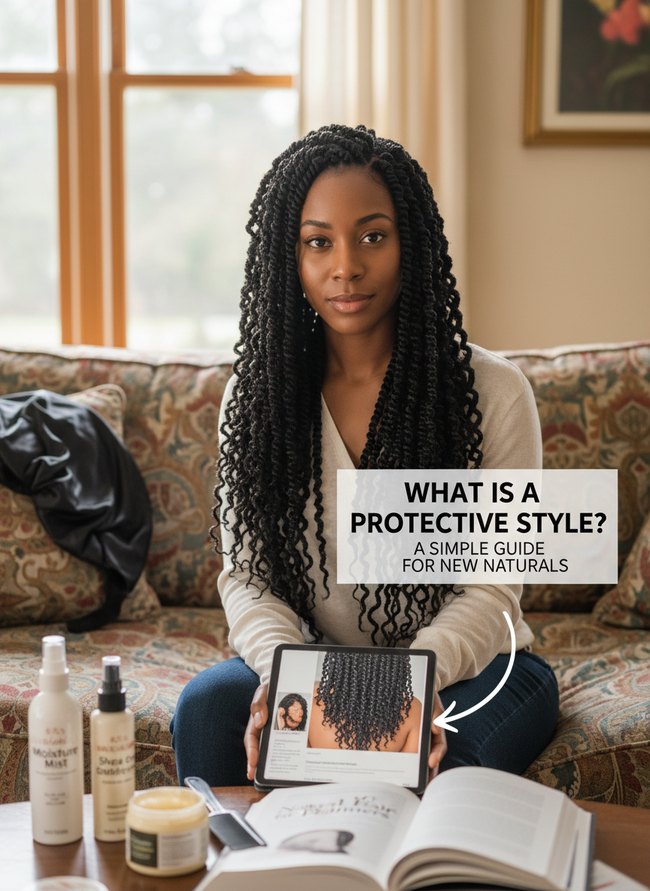
Dark, thick two-strand twists fall past the woman’s shoulders, offering a long, textured style. The small, neat twists protect natural hair from daily wear. The style offers a low-maintenance look that keeps strands tucked away.
12. Wig Cap Installation
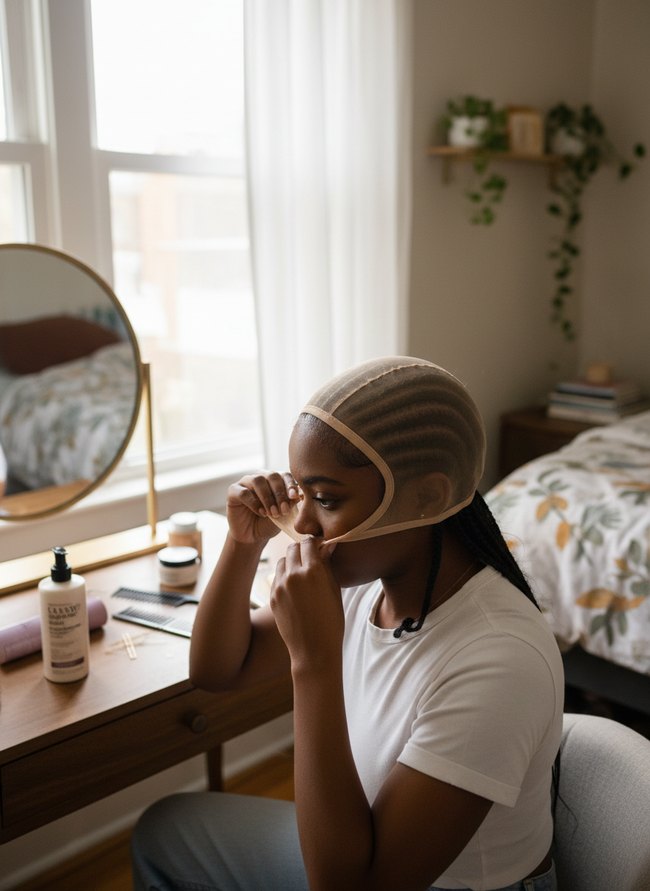
A sheer beige wig cap stretches over a person’s neatly cornrowed dark hair, creating a smooth base for a wig. The cap provides a layer of protection for natural hair, keeping it flat and secure underneath the wig. The installation technique helps distribute the wig’s weight evenly across the scalp.
The ‘Big Chop’ and Protective Styles: A Match Made in Hair Heaven (or Necessity)
…and a big chop becomes a fresh start for your natural hair. New growth needs gentle handling. Braids, twists, and Bantu knots protect delicate strands from daily wear. These methods keep your hair tucked away, reducing friction against clothes or pillows. Many new naturals worry about breakage; a loose French braid down your back prevents constant pulling on fragile ends. Your hair texture also reveals itself without constant heat or styling. You will learn your curl pattern by letting it rest in low-tension styles. Some stylists suggest daily detangling for all hair types. However, this advice can stress new, short hair. Finger-detangling with a rich, creamy conditioner once a week works better. This approach minimizes manipulation. A silk scarf at night further guards your crown against rough cotton pillowcases. These simple habits support healthy hair growth. Your new, short hair thrives with less fuss. Protective styles build confidence during your hair journey.
Beyond the Braid: When ‘Low Manipulation’ Isn’t Enough (and Why You Need a True Protective Style)
…Sure, a loose ponytail limits tugging, but true protective styles actively shield your hair from the world, really helping you keep your length. A low bun, for example, gathers strands but still exposes fragile hair ends to rubbing on your wool coat or cotton shirt collar. Many people think daily buns protect hair, however, this simple style offers little defense against environmental damage like dry winter air or harsh sun. Instead, a well-made cornrow style keeps delicate black strands completely tucked away. Your hair needs full protection from friction and weather, especially if you have fine, textured hair. Braids fully enclose vulnerable sections. You see, true protection means those precious ends are not brushing against anything. A wrapped scarf around a coiled bun provides much better security than a plain elastic tie. This method works because less exposure equals less breakage for you.
Which Idea Will You Try First?
That’s 12 different takes on what is a protective style. The best ideas above are usually the smallest moves — one material, one layout shift, one piece of furniture in the right place. Pick whichever room feels closest to your space and start there before tackling the rest.
Found an idea worth keeping? Save this post to your Pinterest board so it’s waiting for you when you’re ready to start your own project.
Leave a Reply