Rough brushing causes lasting damage to young, delicate strands. Most hair care advice overlooks the specific challenges of styling children’s hair textures. Six common kids hair mistakes highlight repeated patterns you likely miss. Harsh elastic bands snap fine hairs, creating short, frizzy patches near the temples. Improper product application leaves thick residue, attracting dirt and dulling natural shine. Wet hair stretches easily, making detangling a risky venture for fragile roots. Fingernails might inadvertently cause scalp irritation during shampooing. Incorrect drying techniques lead to excessive frizz, making daily styling a frustrating chore for both parent and child. Your child’s healthy hair growth depends on gentle care.
1. Overly Tight Braids
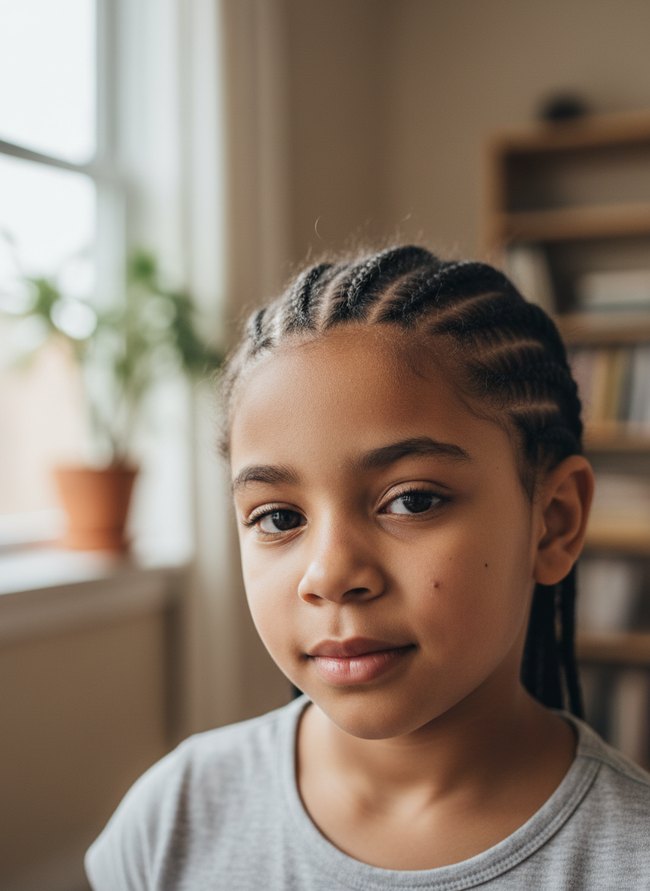
The child’s dark braids show no pulling or redness at the hairline. Careful styling avoids common kids hair mistakes like overly tight braids, preventing pain and damage. Her smooth scalp and soft expression suggest comfortable natural hair care. Look for gentle tension when styling your child’s hair.
2. Skipping Moisture Routine
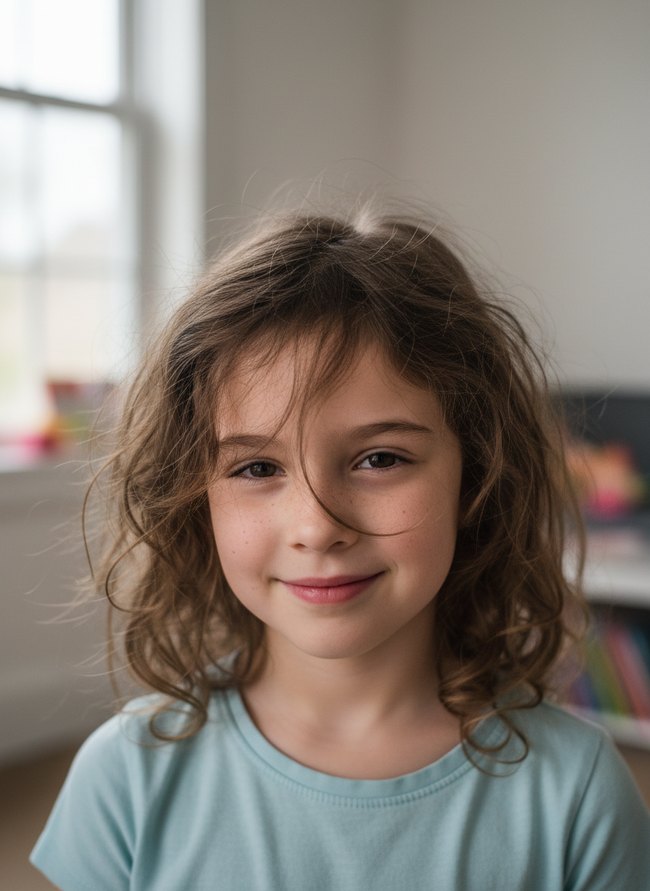
The child’s light brown hair appears dry and frizzy, showing a clear lack of moisture. Loose strands stand out from the head, suggesting you missed a key step in preventing common kids hair mistakes. Skipping a regular moisturizing routine causes this dry, unkempt texture.
3. Ignoring Detangling Process
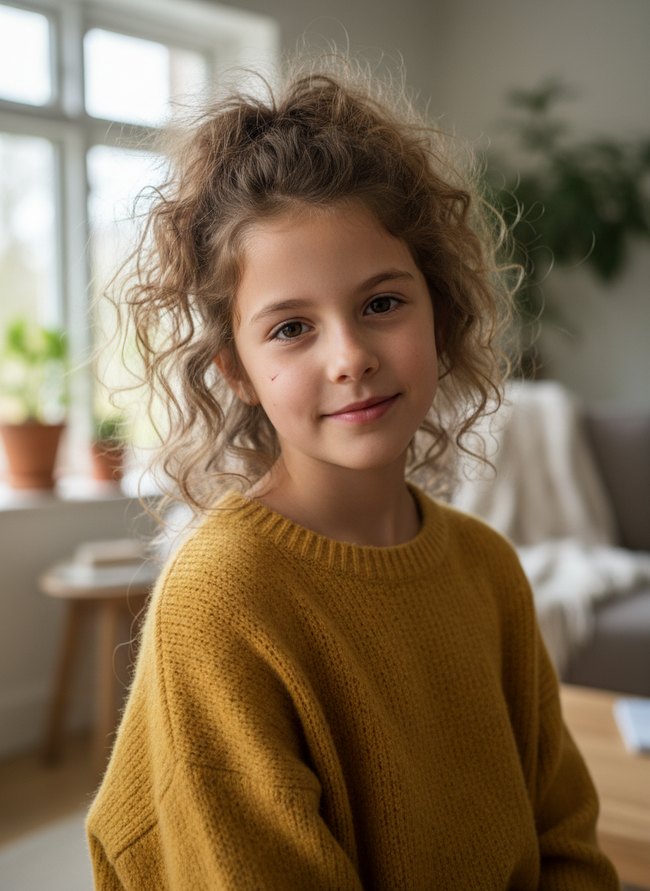
The girl’s messy brown curls show clear signs of skipped detangling. Dry hair strands fly around her head, creating a fuzzy, undefined look. Parents can prevent kids’ hair mistakes by taking time to comb out tangles gently.
4. Using Wrong Products
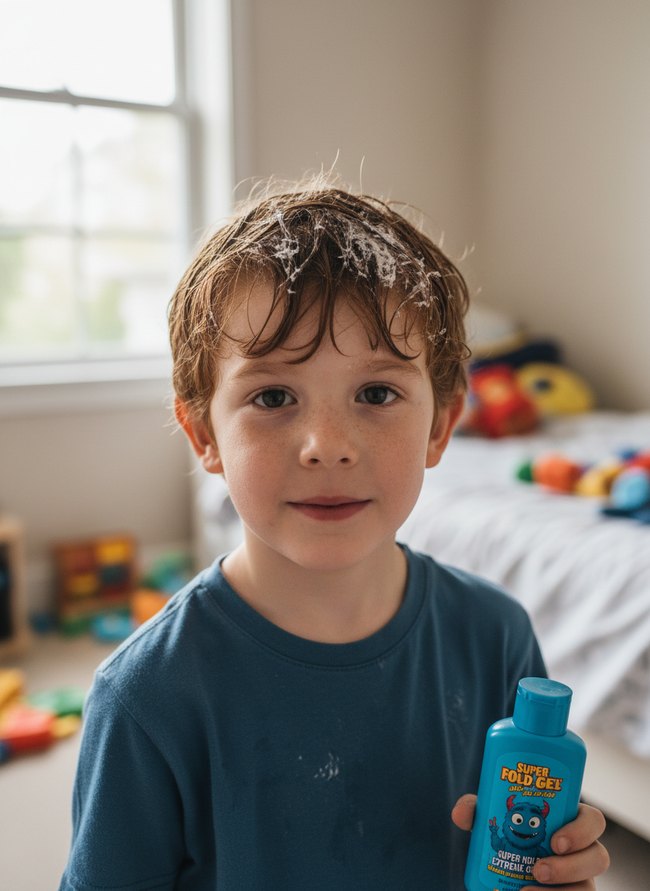
The child’s red hair shows white, flaky residue, illustrating a common problem with kids’ hair. Visual evidence clearly demonstrates how certain products can leave unwanted buildup, especially on fine, short strands. A small blue bottle of “Super Hold Gel” in the child’s hand suggests the product causing the issue. Avoid products that create visible flaking.
5. Rough Towel Drying
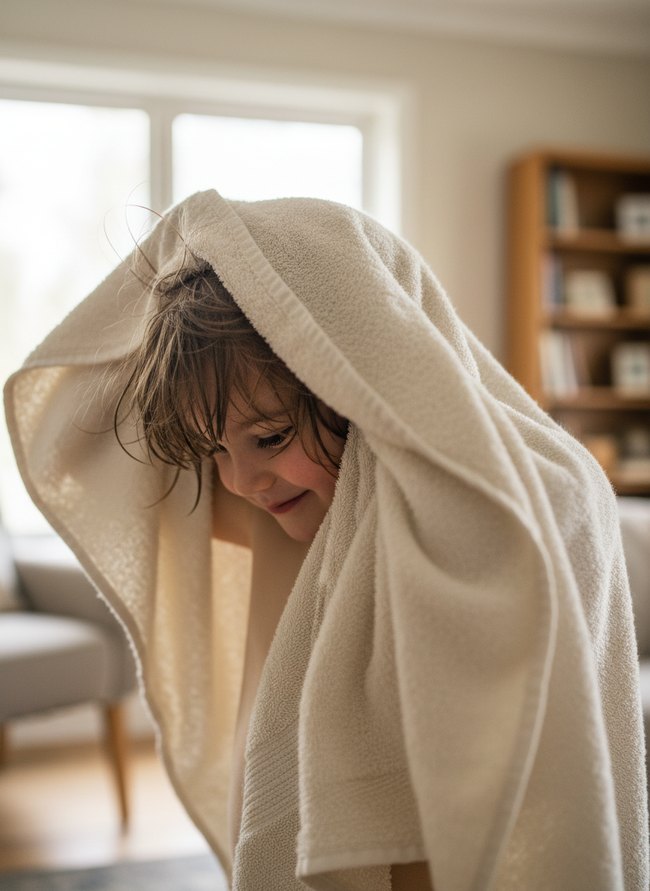
A child’s wet brown hair shows signs of rough towel drying, with individual strands tangled and frizzy. The texture indicates friction against the thick ivory towel, which causes damage to delicate hair cuticles. The child’s facial expression reveals no discomfort; however, you want to avoid unnecessary hair damage. Always blot wet hair gently.
6. Excessive Heat Styling
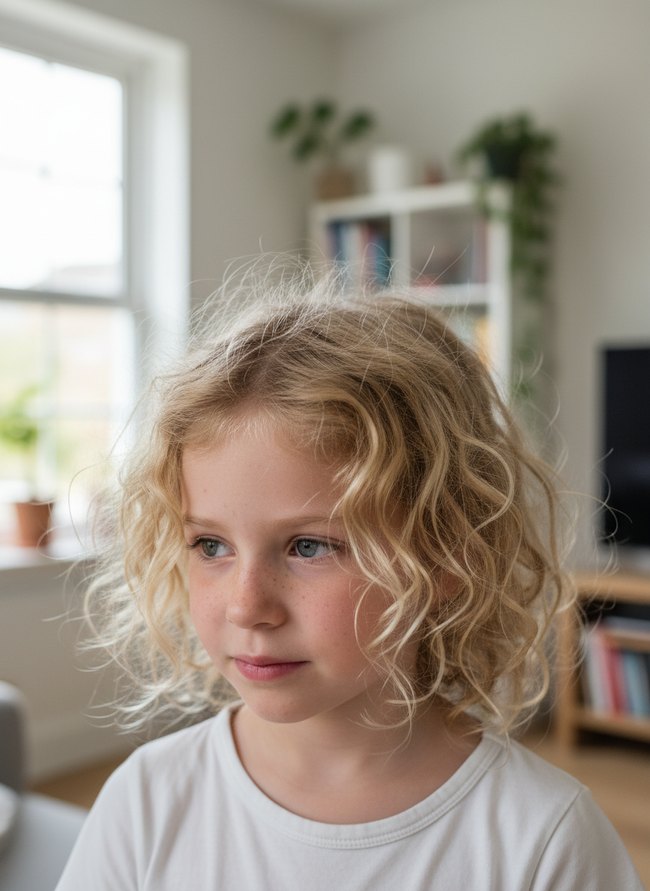
The child’s light blonde hair shows damage from heat styling, with frizz disrupting the natural curl pattern. Delicate strands float outward, indicating dryness and breakage caused by excessive heat. A light white t-shirt offers little contrast to the bright hair. Avoid excessive heat styling to keep the hair healthy.
The Biomechanical Implications of Tension Distribution in Natural Hair Fiber Alignment
Uneven tension during detangling causes microscopic damage to a child’s delicate hair strands. A single hair fiber, with its outer cuticle scales, stretches and frays under too much localized force. Parents often pull a wide-tooth comb through a large section of thick, curly hair, believing bigger sections save time. However, this technique concentrates pulling pressure on a small number of strands at the comb’s leading edge, not distributing the load across the entire section. Those few stressed hairs bear the full brunt of the detangling effort. Instead, smaller, finger-width sections allow the comb’s plastic teeth to glide through with uniform resistance. Each individual hair strand receives a more even, gentle pull, preserving the natural hair’s structural strength. Consistent, distributed tension prevents the tiny cracks and weakened points that lead to breakage later on. Your child’s hair will show fewer split ends and less overall thinning with this careful approach.
Optimizing Hydration Retention: A Substantive Analysis of Emollient and Humectant Synergy in Pediatric Hair Care Regimens
Water stays inside your child’s coarse hair strands with proper layering. Coconut oil, a thick natural emollient, seals the outer layer of each dark brown curl. You need to apply a humectant first; glycerin-based leave-in conditioners pull moisture from the air into the hair shaft. This two-step process creates a flexible, protective barrier on delicate hair. Applying a heavy oil before a lighter, water-attracting product blocks the humectant from reaching the inner hair structure. That common error leaves fine natural hair feeling dry and brittle to the touch. Your child’s coiled hair maintains its soft texture and prevents breakage with this careful routine. Consistent layering keeps the hair hydrated, reducing frizz and tangles throughout the week. Proper moisture retention ensures healthy hair growth.
Which Idea Will You Try First?
That’s 6 different takes on kids hair mistakes. The best ideas above are usually the smallest moves — one material, one layout shift, one piece of furniture in the right place. Pick whichever room feels closest to your space and start there before tackling the rest.
Found an idea worth keeping? Save this post to your Pinterest board so it’s waiting for you when you’re ready to start your own project.
Leave a Reply